
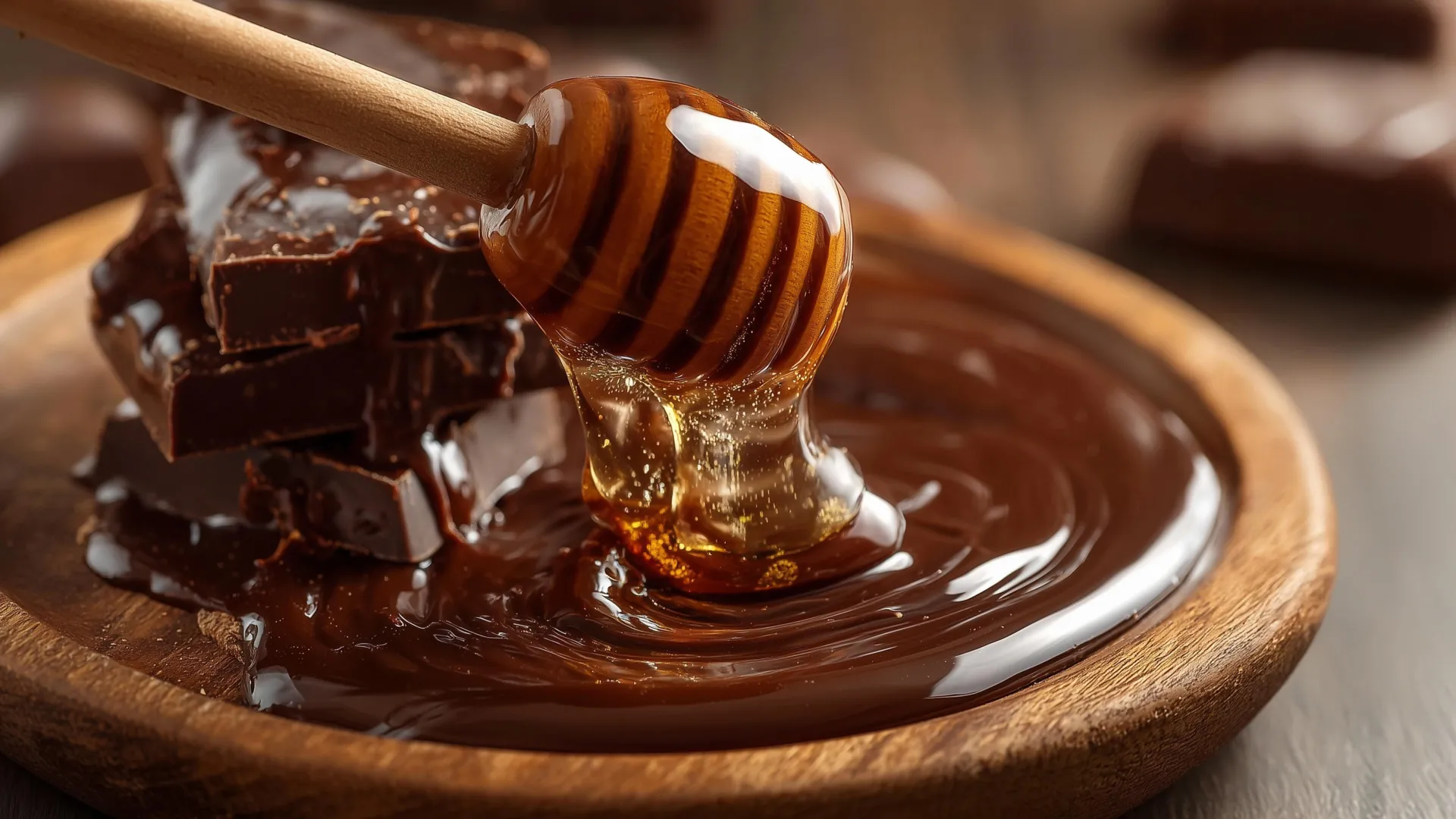
Brazilian researchers have developed a novel, sustainable food product by combining native bee honey with cocoa bean shells, a byproduct of chocolate production. The innovation, detailed in the latest issue of ACS Sustainable Chemistry & Engineering, aims to reduce food waste and create a new revenue stream for local producers.
The team at the State University of Campinas (UNICAMP) utilized ultrasound-assisted extraction to infuse the honey with compounds from the cocoa shells, including theobromine and caffeine, both linked to cardiovascular benefits. The process also increased the levels of phenolic compounds in the honey, known for their antioxidant and anti-inflammatory properties, according to the study’s first author, Felipe Sanchez Bragagnolo.
“Of course, the biggest appeal to the public is the flavor, but our analyses have shown that it has a number of bioactive compounds that make it quite compelling from a nutritional and cosmetic point of view,” Bragagnolo said. The research was conducted at UNICAMP’s Faculty of Applied Sciences (FCA) with funding from FAPESP.
The project leverages the unique characteristics of honey produced by native Brazilian bees. These honeys generally have a higher water content and lower viscosity compared to those from European honeybees, making them more effective solvents for extracting compounds from the cocoa shells. Researchers tested honey from five species: borá (Tetragona clavipes), jataí (Tetragonisca angustula), mandaçaia (Melipona quadrifasciata), mandaguari (Scaptotrigona postica), and moça-branca (Frieseomelitta varia). Cocoa shells were sourced from the São Paulo State Department of Agriculture and Supply.
Mandaguari honey was initially selected for refining the extraction process due to its moderate water content and viscosity. However, Bragagnolo emphasized that the process can be adapted to utilize locally available honey varieties, accounting for variations in climate, storage, and temperature.
The ultrasound extraction method employs sound waves to create microscopic bubbles that collapse, briefly raising the temperature and aiding in the breakdown of the cocoa shells, releasing their beneficial compounds into the honey. This technique is considered environmentally friendly due to its speed and efficiency compared to conventional extraction methods.
Sustainability was formally assessed using Path2Green software, developed at FCA-UNICAMP, which evaluated the process against the 12 principles of green chemistry. The product received a score of +0.118, highlighting the benefits of using a local, edible solvent. Professor Mauricio Ariel Rostagno, who supervised the research, suggested the product could be particularly valuable for small businesses and cooperatives already involved in cocoa and native bee honey production.
“We believe that with a device like this, in a cooperative or small business that already works with both cocoa and native bee honey, it’d be possible to increase the portfolio with a value-added product, including for haute cuisine,” Rostagno stated.
Researchers are now investigating the impact of ultrasound on the honey’s microbiology, hypothesizing that it may eliminate microorganisms and extend the product’s shelf life. Native bee honey typically requires refrigeration, maturation, dehumidification, or pasteurization, unlike European honeybee honey, which can be stored at room temperature. The team is also exploring the potential of using native bee honey as a solvent for extracting compounds from other plant residues.
Working with INOVA UNICAMP, the university’s innovation agency, the researchers are actively seeking a commercial partner to license the patented method and bring the product to market.
