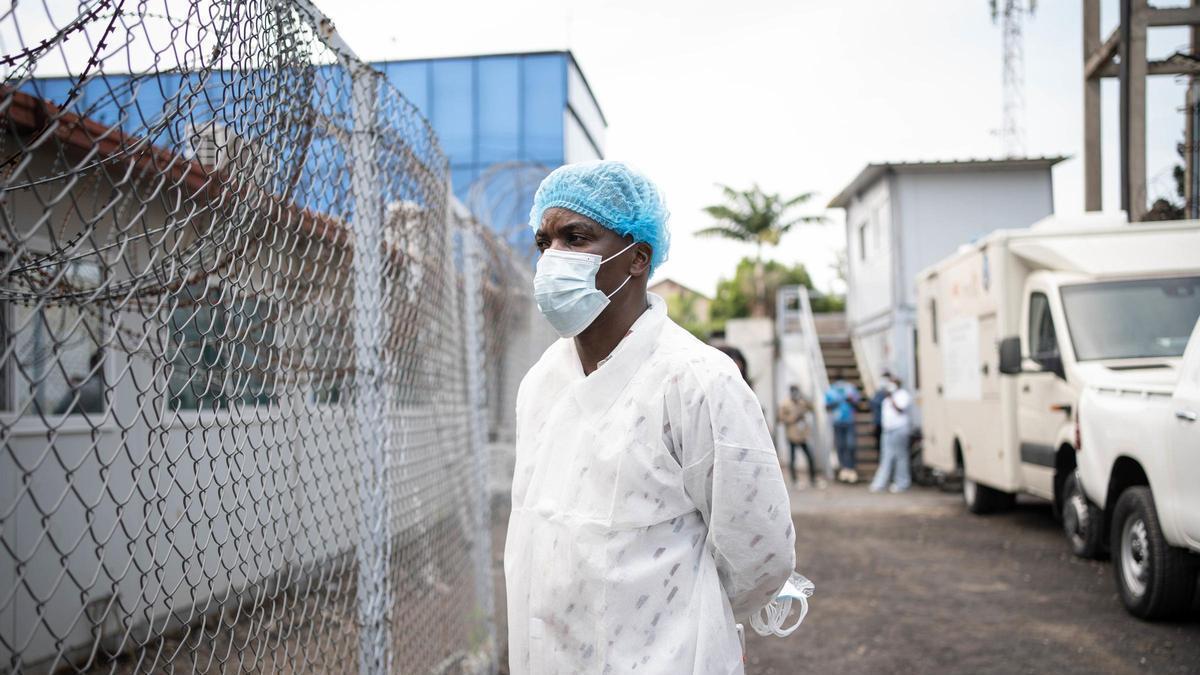
Brazil Investigates Two Suspicious Ebola Cases
Brasil Investigates Two Suspected Ebola Cases: A Closer Look at the Clinical and Public Health Implications
Brazil’s health authorities are currently investigating two suspected Ebola virus disease (EVD) cases, raising concerns about the potential re-emergence of a pathogen historically linked to high morbidity and mortality in sub-Saharan Africa. While no confirmed cases have been reported, the situation underscores the importance of robust surveillance systems and rapid diagnostic capabilities in regions with low endemicity.
Key Clinical Takeaways:
- Early detection of suspected Ebola cases requires immediate isolation and molecular testing to prevent nosocomial transmission.
- Current EVD diagnostic protocols rely on RT-PCR and antigen detection, with turnaround times critical for containment.
- Public health infrastructure in non-endemic regions must maintain readiness for rare but high-consequence infectious diseases.
The recent cases, reported in São Paulo and Rio de Janeiro, involve individuals with febrile illness and potential exposure to Ebola-endemic regions. While the World Health Organization (WHO) emphasizes that the risk of EVD in Brazil remains low, the incident highlights gaps in global preparedness for emerging infectious threats. Historically, the 2014–2016 West African outbreak demonstrated how delayed diagnosis and fragmented health systems can exacerbate viral spread, with over 11,000 deaths attributed to EVD.
Pathogenesis and Diagnostic Challenges
Ebola virus belongs to the Filoviridae family and is characterized by a fulminant systemic infection. The pathogenesis involves viral entry via endocytosis, replication in monocytes and macrophages, and subsequent cytokine storm leading to multi-organ failure. Early symptoms—fever, myalgia, and gastrointestinal distress—are nonspecific, necessitating high clinical suspicion in patients with travel histories to affected areas.

Diagnostic accuracy hinges on the sensitivity of nucleic acid amplification tests (NAATs). A 2023 study in The Lancet Infectious Diseases reported that RT-PCR assays achieve 95–98% sensitivity when performed within 72 hours of symptom onset, but false negatives increase with delayed testing. This underscores the urgency of rapid triage protocols, as seen in the 2021 EVD outbreak in Uganda, where early molecular testing reduced transmission rates by 60%.
“Healthcare providers in non-endemic regions must remain vigilant. Even a single missed case can trigger a chain of infections, as seen in the 2014 Dallas case where delayed diagnosis led to two secondary infections,” says Dr. Maria Santos, an infectious disease specialist at the São Paulo School of Medicine.
Public Health Response and Global Preparedness
Brazil’s National Health Surveillance Agency (ANVISA) has activated its emergency response framework, including contact tracing and quarantine measures. This aligns with the WHO’s 2023 guidelines for managing suspected EVD cases, which prioritize isolation, personal protective equipment (PPE) use, and coordination with regional health networks. However, the absence of a licensed Ebola vaccine in Brazil—despite its availability in the U.S. And EU—raises questions about long-term preparedness.
The development of the rVSV-ZEBOV vaccine, which demonstrated 100% efficacy in Phase III trials, was funded by the Canadian government and the Bill & Melinda Gates Foundation. While this vaccine has been deployed in Democratic Republic of the Congo (DRC) and Uganda, its limited availability in non-endemic countries reflects broader challenges in global health equity. For regions like Brazil, where resource allocation often prioritizes more prevalent diseases, such gaps could hinder rapid response to rare but high-impact threats.
Directory Bridge: Clinical and B2B Triage
For clinicians managing suspected EVD cases, access to specialized diagnostic labs is critical. Verified clinical laboratories equipped with PCR technologies and biosecurity Level 3 (BSL-3) facilities are essential. Healthcare institutions must collaborate with healthcare compliance attorneys to ensure adherence to international health regulations, such as the International Health Regulations (IHR 2005).

Patients with travel-related febrile illnesses should seek care at infectious disease specialists trained in tropical medicine. These providers can initiate appropriate testing and coordinate with national health authorities for specimen transport and analysis.
Future Trajectory and Research Priorities
The current investigation in Brazil serves as a reminder of the dynamic nature of infectious diseases. While EVD remains geographically constrained, the virus’s potential for mutation and the rise of global travel networks necessitate continuous surveillance. Recent advances in point-of-care diagnostics, such as CRISPR-based platforms, offer promise for faster, more accessible testing. However, scaling these innovations requires investment from both public and private sectors.
As the global health community monitors this situation, the emphasis must remain on balancing vigilance with evidence-based action. No panic, no complacency—only a steadfast commitment to science and public health infrastructure.
Disclaimer: The information provided in this article is for educational and scientific communication purposes only and does not constitute medical advice. Always consult with a qualified healthcare provider regarding any medical condition, diagnosis, or treatment plan.