
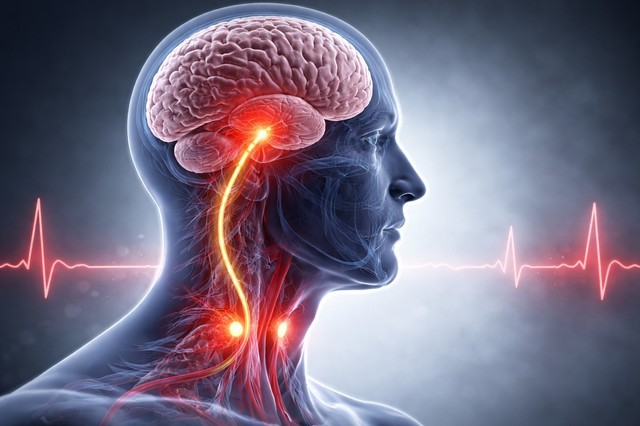
Brain Activity Linked to High Blood Pressure: New Treatment Insights
A newly published study from the University of Auckland suggests a hidden neurological source for hypertension, potentially reshaping treatment strategies for the condition. Researchers have identified a region in the brainstem, the lateral parafacial region, as playing a key role in regulating blood pressure.
The lateral parafacial region, part of the brain’s oldest structures, is responsible for automatic functions including breathing, digestion, and heart rate. The research, published in Circulation Research, reveals this area generates specific neuronal oscillations linked to sympathetic nervous system activity – a key driver of blood pressure. According to the study, abnormal activation of these oscillations directly contributes to sustained increases in blood pressure.
Scientists discovered the lateral parafacial region is connected to nerves that constrict blood vessels, leading to elevated blood pressure. Experimental inactivation of these neurons in animal models successfully normalized blood pressure levels, indicating a direct causal link. The region’s involvement in forceful exhalations – such as those occurring during laughter, exertion, or coughing – is also a key finding. These exhalations are driven by abdominal muscle contraction, differing from normal breathing which relies on lung elasticity.
The study suggests that alterations in breathing patterns, particularly those involving strong abdominal contractions, may trigger hypertension. Identifying specific abdominal breathing patterns in hypertensive patients could potentially pinpoint the cause and guide treatment, researchers say.
Directly targeting the brain with medication presents challenges due to the difficulty of achieving selective targeting. But, the research team identified that the lateral parafacial region is activated by signals originating outside the brain, specifically from the carotid bodies. These small structures, located in the neck near the carotid artery, detect oxygen levels in the blood.
Researchers are currently testing a repurposed medication designed to reduce the activity of the carotid bodies, with the aim of indirectly deactivating the brain region without directly acting on the brain itself. This approach offers a potentially safer and more targeted therapeutic avenue.
The discovery holds particular promise for individuals with sleep apnea, a condition where repeated pauses in breathing during sleep activate the carotid bodies. The findings suggest a potential treatment pathway for hypertension in these patients, addressing a root cause often overlooked in conventional therapies. Further research is underway to explore the full therapeutic potential of targeting the carotid bodies and the lateral parafacial region.