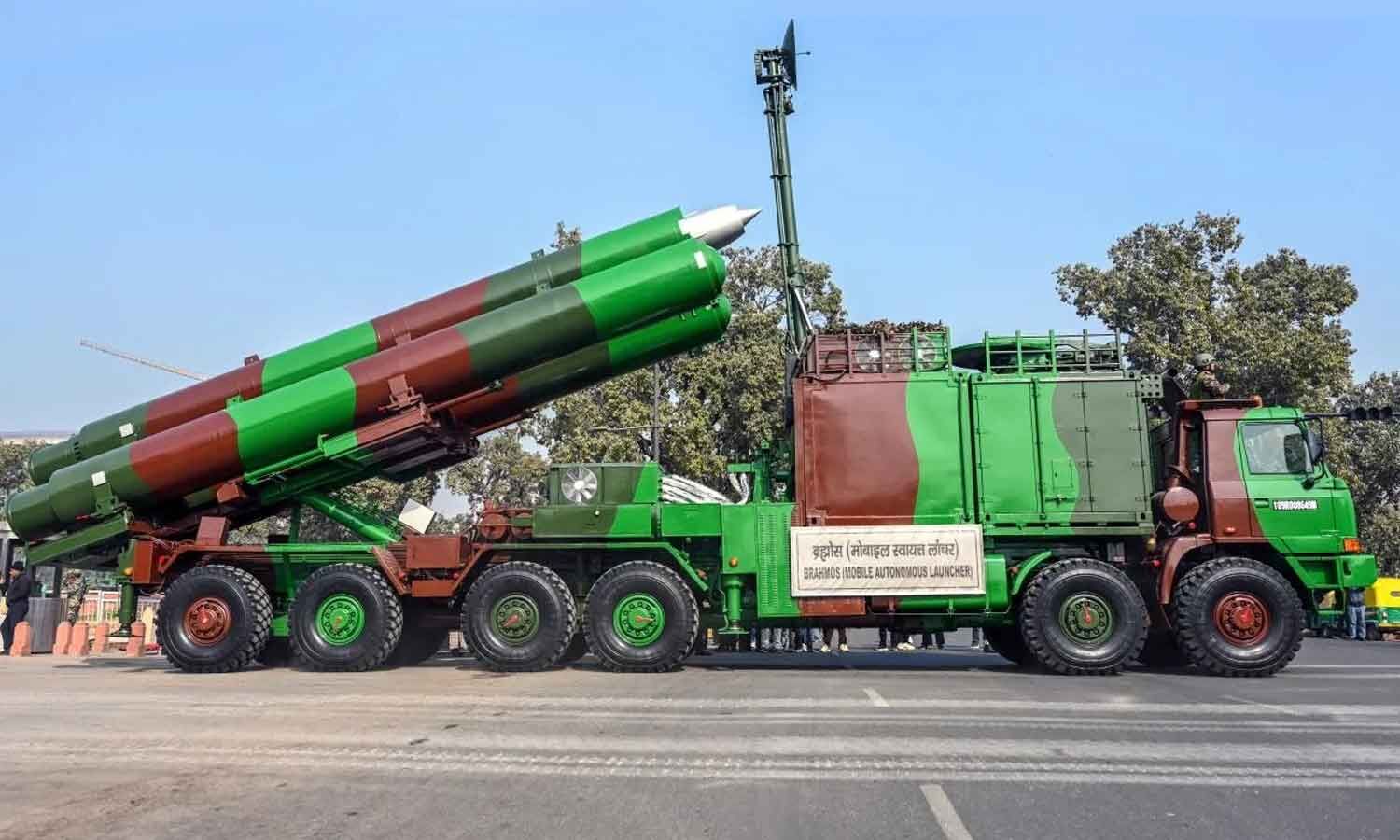
BrahMos Missile: India’s Rising Defence Export Star After Operation Sindoor
The BrahMos supersonic cruise missile has emerged as India’s flagship defence export star following its combat debut in May 2025 during Operation Sindoor, where its precision strikes against targets in Pakistan-occupied Kashmir prompted a rapid ceasefire, according to reports published by The Week and local media outlets.
Geopolitical tensions across South Asia shifted decisively when the Indian armed forces deployed at least 15 BrahMos missiles from fighter aircraft operating inside Indian airspace. According to reporting from outlets such as The Hans India and Mathrubhumi English, the weapons successfully evaded Chinese-origin air defence systems deployed by Pakistan, demonstrating an elite level of terrain-hugging tactical penetration that immediately captured global attention.
From Cold War Origins to Combat-Proven Reliability
The weapon’s journey traces back to 1997, when a team of 27 Indian representatives from the Defence Research and Development Organisation (DRDO), state-owned enterprises, and private firms traveled to Reutov, a township outside Moscow. Evaluators inspected an engine powering Russia’s Onyx supersonic cruise missile. This initial assessment led to a 1998 inter-governmental agreement establishing BrahMos Aerospace, a joint venture between the DRDO and Russia’s state-owned NPO Mashinostroyeniya, known internally within the DRDO as Project PJ-10.
For decades, the missile remained a strategic deterrent rather than an export commodity. That status changed permanently following Operation Sindoor. International buyers seeking reliable, high-speed tactical assets quickly accelerated ongoing procurement talks. The Philippines signed a $375-million agreement in January 2022 for three battery units, setting a vital commercial precedent for subsequent international agreements.
Expanding Global Portfolios and Export Valuation
Following the operational showcase in 2025, regional interest translated directly into signed contracts. Vietnam finalized a procurement deal estimated at $629 million, while Indonesia concluded an agreement valued between $200 million and $300 million, according to reports published by Mathrubhumi English and Zee Business. Meanwhile, the Indian Army is moving forward with domestic procurement plans, with sources indicating a potential Rs 10,000-crore defence deal to acquire approximately 150 extended-range BrahMos missiles.
Additional international interest continues to build across Southeast Asia. Thailand is actively evaluating the weapon system for its coastal defense architecture. Analysts note that the missile’s distinct market advantage lies in its supersonic speed—surpassing traditional subsonic rivals—combined with a lower price point compared to elite Western alternatives.
The Strategic Outlook for Indo-Pacific Security
The rapid transformation of BrahMos from a bilateral joint venture into a premier export asset highlights shifts in global arms markets. By proving its combat effectiveness against advanced air defense radar architectures, the system has altered defensive calculations from Manila to Hanoi. As manufacturing output scales up to meet domestic orders for the Indian armed forces and international delivery timelines, BrahMos Aerospace remains positioned at the center of India’s expanding defense manufacturing sector.