
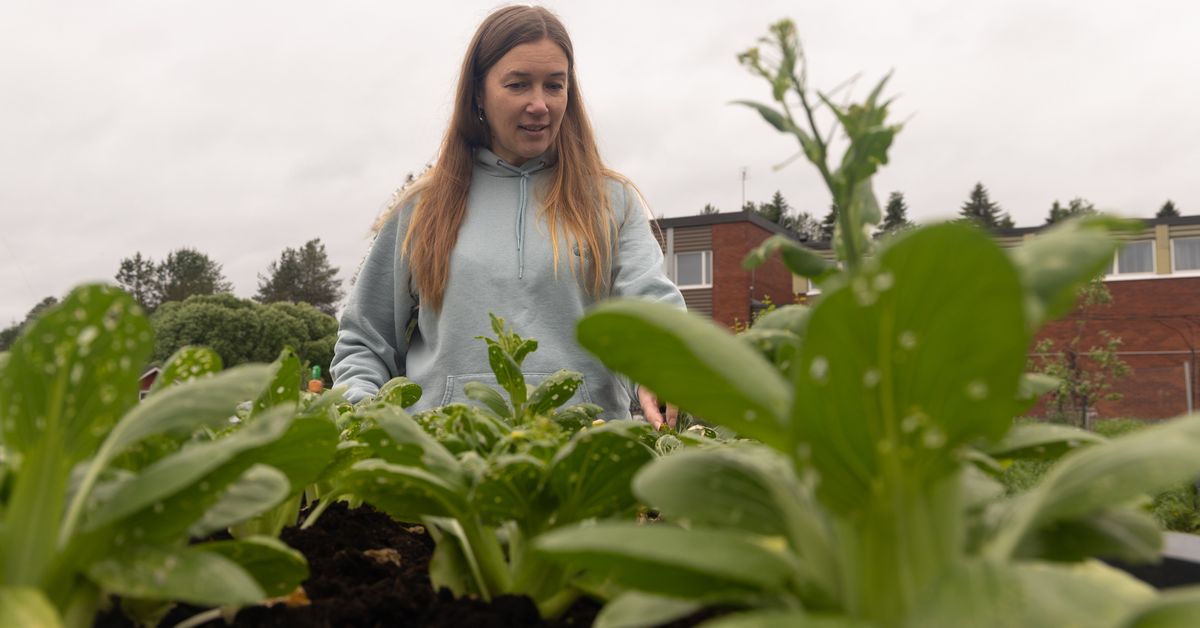
Boosting Food Cultivation in Lapland: The Role of Municipalities
Agricultural researchers in Lapland are advocating for a shift toward localized food production, arguing that the region currently produces insufficient quantities of crops intended for direct human consumption. By utilizing municipal infrastructure and container gardening, experts suggest that northern communities can significantly bolster food security and supply chain resilience.
The Case for Arctic Self-Sufficiency
The reliance on long-distance food supply chains poses a distinct risk to remote Arctic and sub-Arctic regions. According to recent agricultural assessments, the current volume of food crops grown in Lapland for local consumption remains minimal, leaving the region heavily dependent on southern logistics. This vulnerability is not merely a matter of convenience; it is a question of global food security standards applied at a micro-regional level.
Experts argue that the solution lies in a decentralized approach to cultivation. Even in climates with short growing seasons, the use of large containers and controlled-environment agriculture allows for high-yield production in limited spaces. This model shifts the burden from industrial-scale farming to community-led initiatives.
“We are looking at a fundamental shift in how we define regional stability. When we move toward hyper-local food production, we aren’t just growing vegetables; we are insulating our communities against the volatility of global transport networks.”
Municipal Infrastructure as a Catalyst
The primary barrier to entry for many aspiring urban farmers is access to land and initial capital. Municipalities and city governments possess the unique capacity to lower these entry barriers by designating public land for community gardens or subsidizing the cost of necessary agricultural equipment. By integrating these needs into urban planning, local leaders can foster an environment where food production becomes a standard component of civic life.
For individuals or small businesses looking to enter this space, the logistical complexity of soil management, water irrigation, and climate-controlled infrastructure often requires professional guidance. Those seeking to establish commercial or community-scale growing operations frequently consult agricultural development consultants to ensure regulatory compliance and operational efficiency.
Comparing Regional Production Models
The following table illustrates the shift from traditional supply chain reliance to localized, high-resilience models.
| Metric | Traditional Supply Chain | Localized Urban/Container Farming |
|---|---|---|
| Logistical Risk | High (Dependent on transport) | Low (Self-contained) |
| Land Requirement | Large-scale rural acreage | Minimal (Roof/Container/Pots) |
| Seasonal Impact | High (Supply disruption) | Low (Controlled environment) |
Bridging the Gap: Legal and Technical Barriers
Moving from a hobbyist approach to a resilient, community-wide food system involves navigating a complex web of land-use laws and environmental regulations. In many Nordic jurisdictions, zoning ordinances were not written with urban agriculture in mind. This creates a friction point between local innovation and existing bureaucracy.
Local leaders often work with land-use and municipal attorneys to reclassify urban spaces for agricultural use. Without this legal groundwork, even the most passionate community garden initiative can be stalled by outdated building codes or public health restrictions. According to the European Environment Agency, the integration of green infrastructure into municipal planning is increasingly viewed as a prerequisite for climate adaptation.
The Long-Term Economic Impact
Beyond immediate food security, the move toward localized cultivation creates a secondary economic benefit. By keeping capital within the region—rather than sending it out to purchase imported produce—municipalities can stimulate local small businesses. This includes everything from the manufacturing of specialized growing containers to the development of indigenous seed banks optimized for northern light conditions.
As of June 21, 2026, the intersection of technology and agriculture—often referred to as AgTech—is providing new tools for northern growers. From automated irrigation sensors to advanced thermal insulation for greenhouses, the barrier to entry is lower than at any point in the last decade. However, the success of these ventures still hinges on the ability of local entrepreneurs to access reliable financial planning and operational support services.
The path toward true food independence in the North is not paved with grand, centralized projects, but with the accumulation of thousands of individual, container-based efforts supported by forward-thinking municipal policy. As the global climate continues to shift, the regions that prioritize self-reliance today will be the ones most capable of weathering the uncertainties of tomorrow. For those looking to participate in this regional transformation, connecting with established civic infrastructure partners remains the most effective way to turn individual intent into durable, community-wide infrastructure.