Bolivia Crisis: Evo Morales Supporters Seize Airport to Prevent Arrest
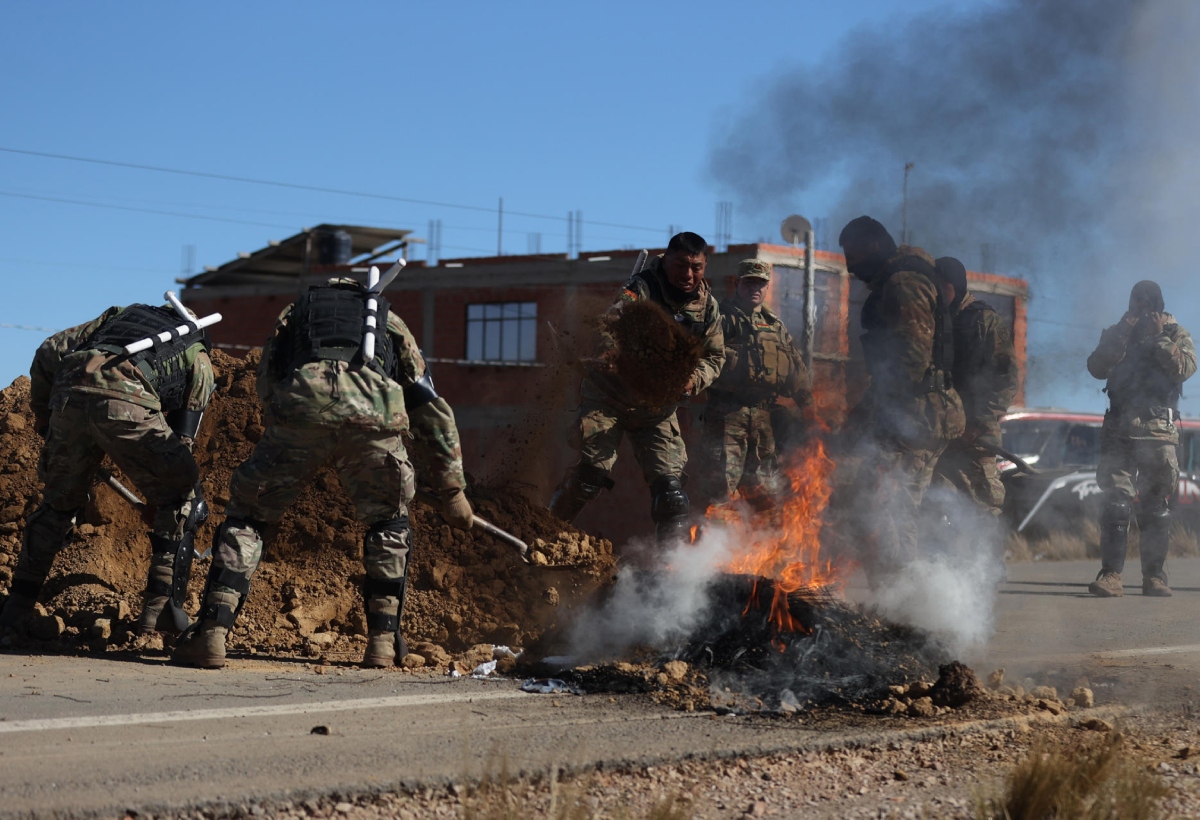
Supporters of former Bolivian President Evo Morales have seized the Chimoré airport in the Cochabamba department to block his imminent arrest. This escalation transforms a judicial dispute into a security crisis, pitting resource-nationalist factions against the state while Morales alleges a foreign-orchestrated plot to eliminate him.
The seizure of a strategic aviation hub is not merely a tactical maneuver to protect a political figure. it is a symptom of a deeper, systemic fracture within the Bolivian state. When political movements begin occupying critical infrastructure, the risk profile for foreign investment shifts from “volatile” to “high-risk” overnight. For the global community, the stakes extend far beyond the fate of one man. Bolivia sits atop some of the world’s largest lithium reserves, a cornerstone of the global energy transition. Any prolonged instability in the “Lithium Triangle” threatens the stability of battery supply chains and the strategic autonomy of Western automotive industries.
This is a clash of economic philosophies playing out in the streets and on the runways.
The Chimoré Standoff and State Authority
The illegal takeover of the Chimoré airport has prompted an immediate and sharp reaction from the Bolivian government. Minister Zamora has formally denounced the occupation, framing the act as a direct assault on the rule of law. The presence of organized supporters acting as a paramilitary shield around Morales suggests that the state’s monopoly on force is being challenged in the tropical lowlands.

For multinational corporations and diplomatic missions, such disruptions create immediate logistical bottlenecks. When airports are seized, evacuation protocols are triggered, and supply lines are severed. In these environments, firms often rely on specialized global risk consultants to navigate the gap between official government assurances and the reality on the ground.
The tension is not an isolated incident but a calculated display of power. By controlling the point of entry and exit, Morales’s base is signaling that the judiciary’s warrants are secondary to the movement’s will.
Resource Nationalism vs. The IMF
At the heart of this turmoil is a fundamental disagreement over how a nation should manage its wealth. Evo Morales has remained steadfast in his opposition to neoliberal economic frameworks, stating bluntly that “one does not govern by privatizing natural resources, nor by begging the IMF.”

This rhetoric is a direct challenge to the International Monetary Fund and the structural adjustment programs it typically mandates. Morales is positioning himself as the defender of “resource sovereignty,” a narrative that resonates deeply across the Global South. However, this ideological purity often clashes with the pragmatic need for foreign direct investment (FDI) to develop the technical infrastructure required for lithium extraction.
- State Control: The push to keep minerals under strict national ownership to prevent “economic colonialism.”
- External Pressure: The demand from international creditors for fiscal discipline and the opening of markets.
- Infrastructure Gap: The reality that without foreign capital, the transition from raw brine to battery-grade lithium remains sluggish.
As the legal battle intensifies, the ambiguity surrounding resource contracts creates a legal minefield. International mining conglomerates are increasingly forced to engage international trade lawyers to draft “stability agreements” that can survive sudden shifts in regime or the rise of insurgent political movements.
The “External Hand” and Geopolitical Paranoia
Adding a layer of complexity to the domestic crisis is Morales’s public accusation that the United States is orchestrating a plan for his assassination. By framing his legal troubles as a foreign conspiracy, Morales is not only rallying his base but also aligning himself with a broader anti-imperialist axis in Latin America.
Whether these claims are grounded in intelligence or are strategic theater, they serve to internationalize the conflict. When a former head of state claims a superpower is targeting them, it invites scrutiny from regional bodies and complicates the diplomatic positioning of neighboring allies. This narrative transforms a criminal warrant into a geopolitical event, potentially drawing in allies who view the U.S. Presence in South America with suspicion.
The volatility of the region is well-documented by the Council on Foreign Relations, which notes that the intersection of populist leadership and critical mineral wealth often leads to cyclical instability.
Macro-Economic Fallout and Supply Chain Fragility
The global market does not react to ideology; it reacts to risk. The current instability in Bolivia sends a chilling signal to investors in the green energy sector. If the state cannot guarantee the security of its own airports, it cannot guarantee the security of a multi-billion dollar mining operation.
We are seeing a shift in how capital flows into the region. Investors are moving away from “spot” investments and toward diversified portfolios that mitigate the risk of sudden nationalization or civil unrest. This trend is accelerating as companies realize that political instability in the Andes can disrupt the global flow of critical minerals just as effectively as a maritime blockade in the South China Sea.
To mitigate these shocks, logistics providers are diversifying their routes and onboarding specialized logistics firms capable of operating in high-friction geopolitical zones. The goal is no longer just efficiency, but resilience.
“The intersection of judicial volatility and critical mineral dependence makes Bolivia a primary case study in modern geopolitical risk. When the law becomes a tool for political purging, the economic cost is borne by the international partners who provide the capital.”
The situation remains fluid. The government’s next move—whether it is a negotiated settlement or a forceful reclamation of the Chimoré airport—will determine if Bolivia remains a viable partner in the global energy transition or becomes a cautionary tale of resource nationalism gone wrong.
The Bolivian crisis is a reminder that the global chessboard is never static. For those operating in the intersection of international trade and volatile governance, the only constant is the need for expert navigation. Whether it is securing a supply chain against civil unrest or restructuring a contract to survive a regime change, the ability to find vetted, world-class partners is the difference between a total loss and a managed risk. The World Today News Directory remains the essential gateway for identifying the legal, financial, and security consultants capable of stabilizing operations in an increasingly fractured world.