
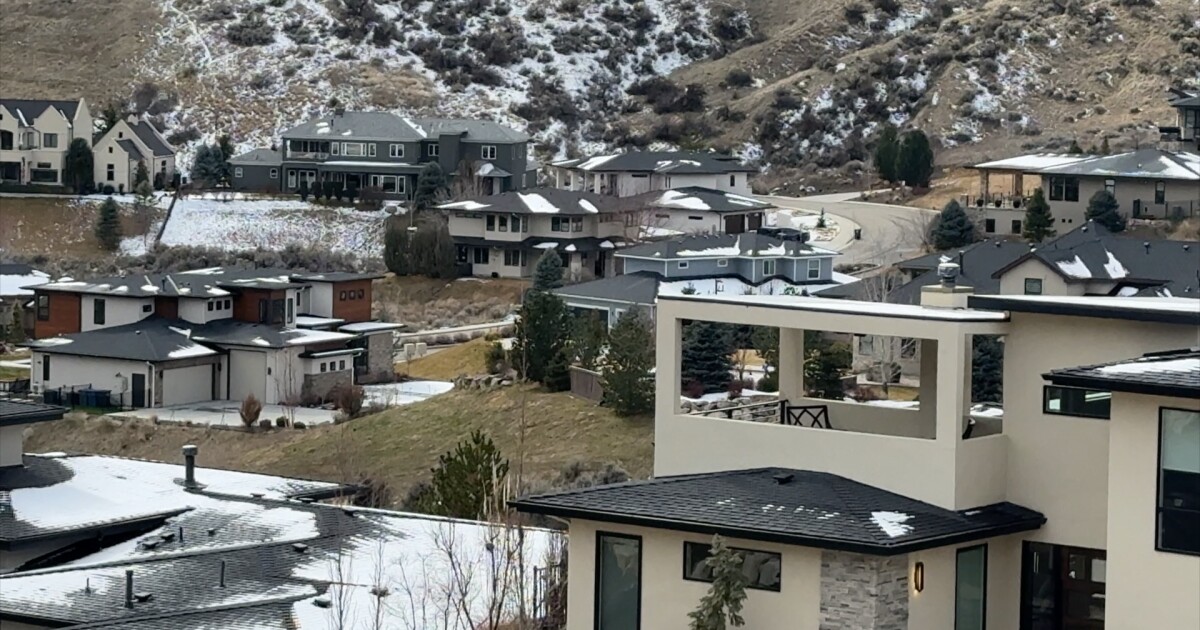
Boise’s growth into the foothills is facing new restrictions, following a recent City Council vote that limits development to areas already annexed into the city. The decision aims to mitigate wildfire risks, conserve open space and prevent strain on infrastructure, but is already sparking debate among residents and real estate professionals about its impact on housing availability.
The policy effectively draws a line above existing hillside developments, preventing further expansion into un-annexed areas. City leaders have cited concerns about extending roads, utilities, and emergency services to increasingly remote properties as key factors in the decision.
Elliot Hoyte, a Boise realtor, explained the potential consequences for the housing market. “Essentially, the city is putting a stop on future development into the foothills,” Hoyte said. “That means there’s going to be a lot less availability to build subdivisions.” He noted that the foothills represent a particularly tight market, with newer homes commanding high prices.
Hoyte too pointed to infrastructure challenges as a driver of the new policy. “When you start building hundreds and hundreds of homes further up a road that’s already bottlenecked, those are some of the issues,” he said. But, he also suggested the limits could benefit current homeowners, potentially increasing property values. “It’s great for homeowners because if you own something up here already, your value is more likely going to go up.”
Residents have expressed mixed reactions. John Eli, a Boise resident who works in public lands, voiced support for the restrictions, emphasizing the growing threat of wildfires. “I think that we can only expand so far into the foothills,” Eli said. “Fire seasons are getting longer. That does worry me a little.” He also highlighted the importance of preserving access to public lands and the unique character of Boise’s foothills.
The decision comes as Idaho continues to experience rapid population growth. A bill is currently advancing through the state legislature that would require ten additional Idaho cities to elect city council members by district, potentially impacting future development decisions across the state. The bill, which recently passed through a committee, covers cities from Caldwell to Coeur d’Alene, according to KTVB.
Hoyte cautioned that limiting housing supply in Boise could push demand – and prices – higher, potentially driving buyers to outlying areas. “If you can’t build more homes, you don’t get more inventory,” Hoyte said. “If you don’t get more inventory in an already high-demand area, pricing tends to go up.”
The City of Boise is scheduled to hold a City Council Meeting on an unspecified date, according to the city’s event listings, but details regarding the foothills development policy were not available at the time of publication.
