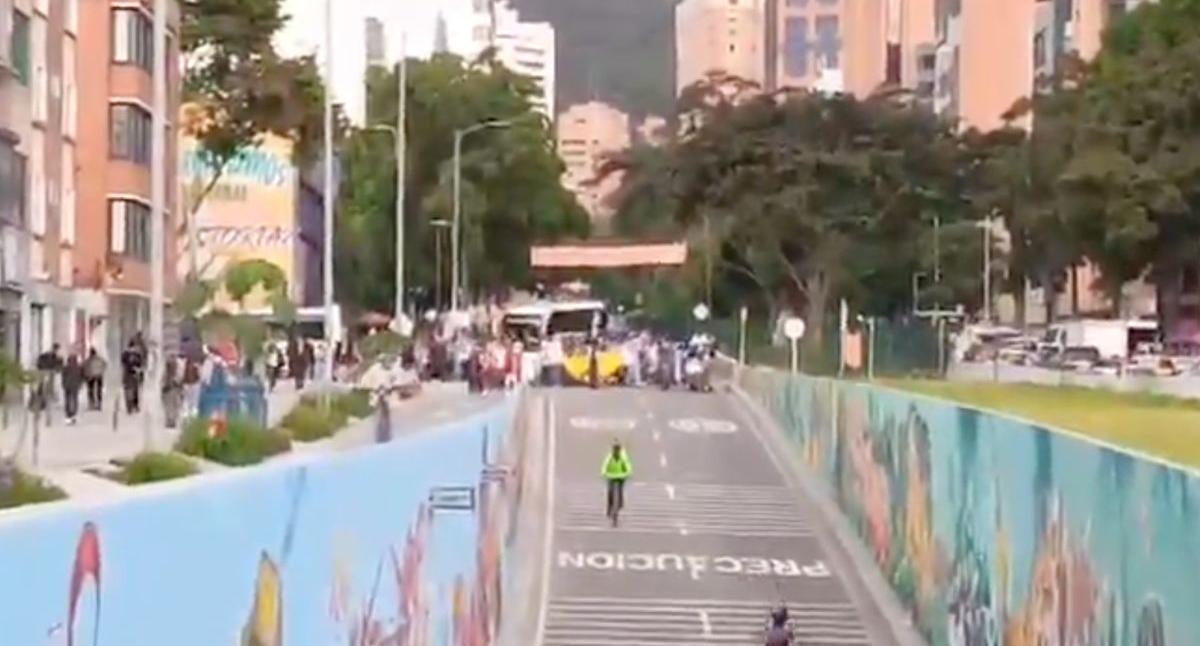
Bogotá Protests Cause Major TransMilenio Station Closures and Traffic Chaos
Protests in Bogotá paralyzed the TransMilenio bus system on May 4 and 5, 2026, forcing the closure of seven key stations on the Caracas trunk. The disruptions, hitting during peak rush hours in Usaquén, Chapinero and the city center, caused widespread mobility failures and forced thousands of commuters onto alternative routes across the Colombian capital.
This is more than a temporary traffic inconvenience. When the Caracas trunk—the operational spine of Bogotá’s transit network—is severed, the city’s economic rhythm stutters. The events of this week highlight a systemic vulnerability: a metropolis of millions relying on a high-capacity corridor that can be neutralized by a small number of strategic blockades.
For the thousands of professionals and workers caught in the gridlock, the immediate problem is logistical. However, the long-term problem is structural. The recurring nature of these shutdowns creates a climate of unpredictability for businesses and employees alike. As the city struggles to balance the democratic right to protest with the functional necessity of movement, the reliance on a single, centralized transit mode becomes a liability.
The Anatomy of a Transit Collapse
The crisis began in earnest on Monday, May 4, when protests targeted the Caracas trunk, the most critical artery of the TransMilenio system. The impact was immediate and severe. During the height of the morning rush hour, seven stations were shuttered entirely, creating a bottleneck that rippled through the rest of the city’s road network.
By Tuesday, May 5, the unrest had expanded. The disruptions were no longer confined to the Caracas corridor but spread into the high-density districts of Usaquén and Chapinero, as well as the city center. This geographic expansion shifted the crisis from a localized transit failure to a city-wide mobility event. Commuters who usually avoid the Caracas trunk found their alternative routes equally compromised.
The operational response involved the implementation of alternative routes to push passengers toward the north and south, attempting to bypass the blockades. While these measures kept the city from a total standstill, they significantly increased travel times and overcrowded the few remaining functional lines.
Eventually, the city saw a partial recovery. By Tuesday afternoon, officials confirmed the reopening of stations on the Caracas trunk between Calle 76 and Calle 26, allowing a semblance of normality to return to the central corridor.
The Economic Cost of Urban Fragility
The recurring paralysis of Bogotá’s transit system creates a ripple effect that extends far beyond the bus stations. For the corporate sector, these “mobility shocks” result in lost productivity and increased employee stress. When a significant portion of the workforce cannot reach their destination, the cost is measured in thousands of lost man-hours.
these events often trigger complex employment disputes. Many workers face disciplinary action or salary deductions for tardiness or absences caused by events beyond their control. This has led to an increased demand for employment law specialists who can help employees and employers navigate the legal definitions of “force majeure” in the context of urban unrest.
The vulnerability of a city’s economic productivity is directly tied to the resilience of its transit infrastructure. When a single corridor can dictate the movement of millions, the city is not operating a system; it is managing a bottleneck.
From a logistical standpoint, the chaos forces businesses to rethink their operational models. We are seeing a marked shift toward hybrid work and decentralized hubs to mitigate the risk of a “Caracas-style” shutdown. Companies are increasingly consulting with logistics and urban planning consultants to develop contingency transit plans that do not rely solely on the municipal BRT (Bus Rapid Transit) network.
Analyzing the “Right to the City” vs. Functional Mobility
The tension in Bogotá is a microcosm of a larger struggle seen in many Latin American capitals: the conflict between the “right to the city”—which includes the right to protest and occupy public space—and the right to mobility.
The Caracas trunk is not just a road; it is a political stage. Because it is the most visible and utilized piece of infrastructure in the city, it is the primary target for any group seeking maximum visibility for their grievances. The result is a cycle of disruption and reaction.
- Strategic Bottlenecks: The concentration of transit on the Caracas trunk makes it an effortless target for small groups to cause disproportionate disruption.
- Alternative Failure: When the primary system fails, the secondary road networks are not designed to handle the diverted volume, leading to total gridlock.
- Recovery Lag: Even after stations reopen, the “buffer” of delayed buses and passenger backlogs can take hours, or even days, to normalize.
To address this, urban experts suggest a diversification of transit modes. The dependence on the TransMilenio’s articulated buses creates a single point of failure. Integrating more robust rail options and enhancing the feeder networks could dilute the impact of any single blockade.
Navigating the Aftermath
As the stations between Calle 76 and Calle 26 return to service, the immediate crisis has abated, but the underlying instability remains. For the business community, the lesson of May 4 and 5 is clear: resilience requires redundancy.
Whether it is investing in private corporate shuttles or redefining labor contracts to account for civic unrest, the goal is to decouple economic productivity from the volatility of the street. Those who fail to plan for the next “mobility shock” will find themselves trapped in the next rush-hour standstill.
Navigating the legal and logistical fallout of these disruptions requires specialized expertise. From securing corporate legal counsel to manage labor disputes to finding reliable private transport alternatives, the ability to pivot quickly is the only real defense against urban instability. The World Today News Directory remains the primary resource for connecting affected parties with the verified professionals equipped to handle the complexities of a city in flux.
- Dodgers vs. Mets Live Stream, Predictions and Betting Odds: July 24
- Pogacar Conquers Alpe d’Huez in Record Climb to Win Stage 19 and Extend Tour de France Lead
- Indian Celebrities Face Backlash Over Silence on Student Protests (archyde.com)
- Indian Education Minister Resigns After Weeks of Cockroach Protests (newsy-today.com)