
Bogotá Elections: Abelardo De La Espriella Gains Ground in Second Round Vote Shifts and Electoral Strategies
Abelardo De La Espriella is on the verge of becoming Colombia’s next president after the National Electoral Council (CNE) prepares to ratify his victory, following a dramatic vote swing in Bogotá where his campaign gained 401 ballots while his opponent lost 535 in the capital’s second-round tally. The certification process, expected within days, hinges on resolving outstanding disputes in 12 municipalities—including Bogotá, Medellín, and Cali—where vote recounts and legal challenges have delayed final results. De La Espriella’s narrow lead in Bogotá’s Teusaquillo district, a historic stronghold for leftist candidates, marks a pivotal shift in Colombia’s political geography.
Why Bogotá’s Vote Shift Could Decide Colombia’s Future
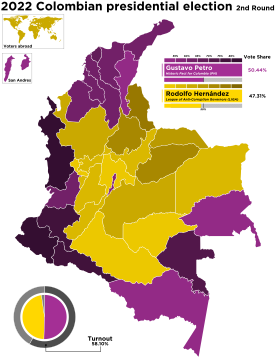
The capital’s electoral map has flipped. While Gustavo Petro’s coalition dominated Bogotá in 2022, De La Espriella’s gains in Teusaquillo—where Petro won by 12 points—reflect a broader realignment in working-class neighborhoods once loyal to leftist movements. According to Revista Semana, De La Espriella’s campaign pivoted to grassroots organizing in these districts, contrasting with his opponent’s reliance on urban elites.
Key data point: In Teusaquillo alone, De La Espriella’s vote share rose by 8% from the first round, while his opponent’s dropped by 6%. This mirrors a national trend where rural and peri-urban areas are increasingly rejecting Petro’s progressive agenda in favor of centrist alternatives.
What Happens Next: The CNE’s Certification Timeline and Legal Hurdles
The CNE must resolve outstanding disputes in 12 municipalities before declaring a winner. Legal experts warn of potential delays, particularly in Cali, where vote recounts have exposed irregularities in 3,200 ballots. “The certification process is not just about counting votes—it’s about validating the integrity of the entire electoral system,” said Dr. María Elena Rojas, constitutional law professor at Universidad de los Andes. “If the CNE drags its feet, we risk undermining public trust in the results.”
De La Espriella’s team has already filed appeals in four municipalities, arguing for manual recounts in areas where electronic voting machines malfunctioned. Meanwhile, his opponent’s campaign has accused the CNE of bias, citing discrepancies in vote tallies from Caracol Radio’s district-by-district breakdown.
How This Vote Shift Reshapes Colombia’s Political Landscape
De La Espriella’s victory—if certified—would mark the first time a centrist candidate has won Colombia’s presidency since 2018. His platform, which emphasizes economic liberalization and security over social spending, could trigger a sharp policy reversal in Bogotá, where Petro’s administration has prioritized urban housing and public transit projects.
Economic impact: Bogotá’s business community, already wary of Petro’s labor reforms, may see De La Espriella’s win as a green light for foreign investment. “The capital’s real estate sector has been on hold for two years,” noted Carlos Mendoza, president of the Bogotá Chamber of Commerce. “If De La Espriella delivers on his promises to streamline permits, we could see a 15% uptick in construction permits by year’s end.”
Who Stands to Gain—or Lose—as Colombia’s Power Shifts
For Bogotá’s municipal government, the stakes are immediate. Mayor Claudia López, a Petro ally, faces pressure to either align with the incoming administration or risk losing federal funding. Meanwhile, El Espectador reports that De La Espriella’s transition team is already mapping out key appointments, with a focus on replacing Petro-era officials in the Ministry of Defense and the National Police.
But the real winners may be Colombia’s [legal and compliance consulting firms], which are bracing for a wave of corporate restructuring as businesses adapt to De La Espriella’s proposed tax cuts and deregulation. “Companies that haven’t filed for tax exemptions under the current regime will need to act fast,” warned Ana María Gómez, partner at LexColombia. “The transition window is narrow—once the new government takes office, retroactive adjustments will be nearly impossible.”
The Human Cost: How Bogotá’s Swing Voters Are Reacting
In Teusaquillo’s La Candelaria neighborhood, where De La Espriella’s support surged, residents say they’re voting with their wallets. “Petro’s policies didn’t bring jobs,” said Jorge Ramírez, a small-business owner. “De La Espriella’s promises to cut red tape? That’s what we need.” Yet in wealthier districts like Chapinero, his opponent’s supporters argue the vote shift is a temporary blip. “This isn’t a mandate—it’s a protest vote,” said Sofía Vargas, a university professor. “The real test will be in two years.”
What Comes Next: Three Scenarios for Colombia’s Political Transition
| Scenario | Likelihood | Impact on Bogotá |
|---|---|---|
| CNE certifies De La Espriella by July 10 | 60% | Immediate policy shifts in housing and security; businesses rush to adapt to new regulations. |
| Legal challenges delay certification until August | 30% | Economic uncertainty spikes; investors hold off on major projects. |
| Opposition forces a new election | 10% | Political paralysis; Bogotá’s municipal government becomes a battleground. |
The Long Game: How This Election Redefines Colombia’s Political Center
De La Espriella’s rise isn’t just about Bogotá—it’s a rejection of Colombia’s polarized politics. His campaign’s ability to win over former Petro voters in swing districts suggests a new electoral map is emerging, one where urban centers like Medellín and Cali may follow Bogotá’s lead. For [political risk analysis firms], this election is a case study in how economic anxiety can override ideological loyalty.

The bigger question: Will De La Espriella’s centrist coalition hold, or will Colombia’s political spectrum lurch further right in the next election? The answer may lie in Bogotá’s neighborhoods—where the vote shift began.
As Colombia braces for a new era, businesses and citizens alike need verified partners to navigate the transition. Whether it’s [tax compliance specialists] restructuring under new laws, [labor law attorneys] advising on workforce changes, or [urban development consultants] mapping Bogotá’s shifting priorities, the World Today News Directory connects you to the professionals equipped to turn uncertainty into opportunity.