
Boeing 777X: How Its Folding Wings & Safety Systems Work
Boeing 777X’s Folding Wings: A New Era in Aviation Engineering
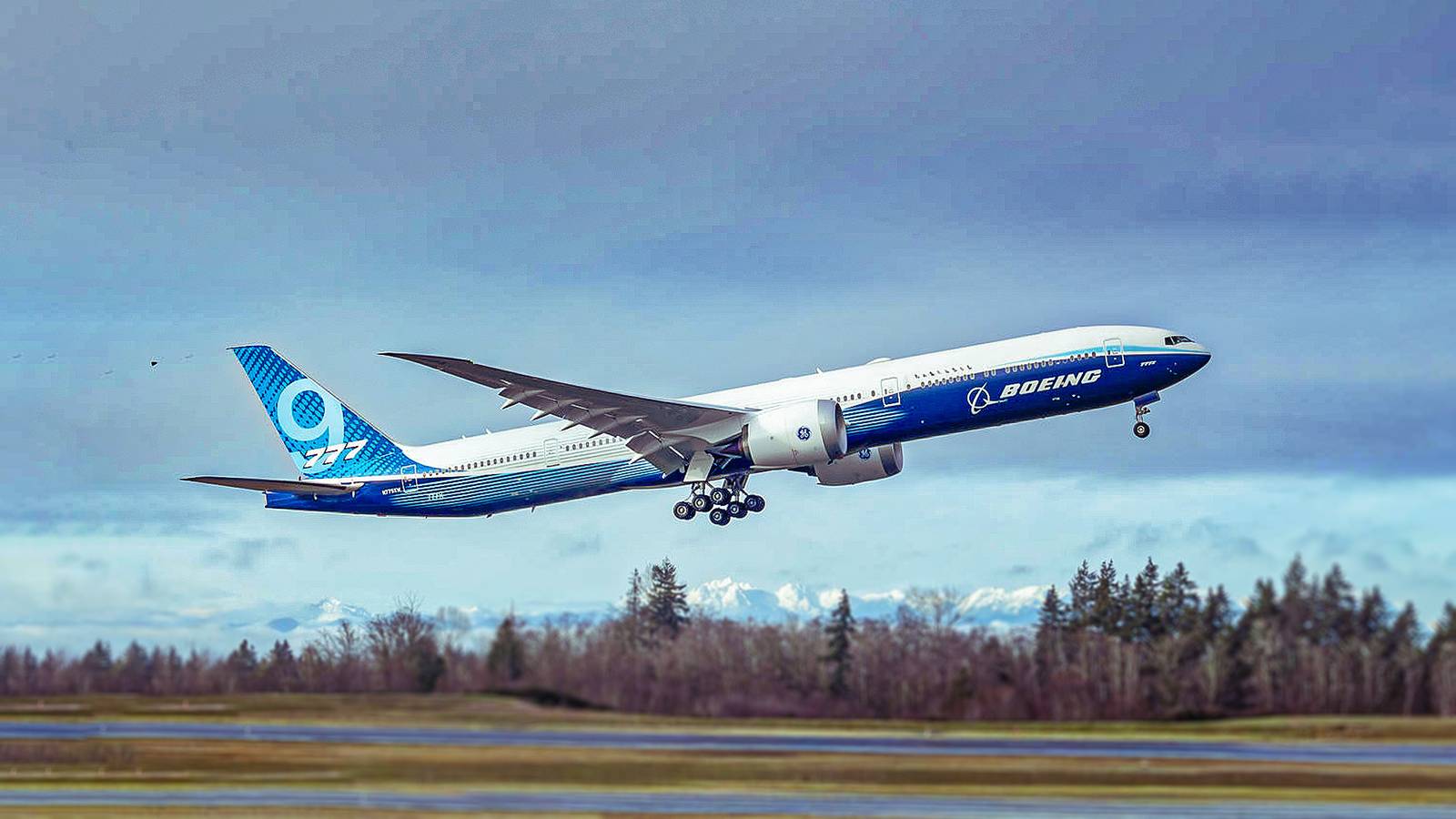
The Boeing 777X, poised to enter service after overcoming production challenges, represents a significant advancement in commercial aviation, largely due to its innovative folding wingtip design. This feature addresses a fundamental conflict between aerodynamic efficiency and airport infrastructure, allowing the aircraft to operate at major hubs without requiring costly gate modifications.
A longer wingspan enhances fuel efficiency, but poses logistical problems for existing airport gates. Boeing’s solution – a carbon-fiber wing boasting a record-breaking 235.5-foot (71.8 meters) span – delivers a 10% improvement in fuel burn compared to competitor aircraft. The outer 3.5 meters of each wing fold upwards during ground operations, reducing the wingspan to fit within the dimensions of a Code E gate, the same size used by the earlier Boeing 777-300ER.
This design avoids the fate of the Airbus A380, which faced operational difficulties due to its immense size and the need for specialized airport infrastructure. The 777X’s folding wingtips, standing over 11 feet (3.36 meters) tall when vertical, are engineered to withstand substantial environmental forces, including horizontal ground gusts up to 65 knots, and even higher in certain configurations. This structural integrity is achieved through a heavily reinforced hinge, one of the most robust components of the entire airframe.
The mechanical system enabling this wing-folding capability was developed by Liebherr-Aerospace. Unlike conventional flight control surfaces relying on linear hydraulic rams, the 777X utilizes a Power Drive Unit (PDU) and rotating actuators integrated into the wing’s narrow profile. This allows the massive wingtips to transition between vertical and horizontal positions in approximately 20 seconds. The PDU orchestrates this synchronized movement, ensuring consistent rates on both sides to maintain the aircraft’s center of gravity and aerodynamic balance during taxiing.
Pilots initiate the wingtip extension as the aircraft approaches the hold short line before takeoff. The system is designed to overcome significant wind resistance while operating smoothly, a critical factor to avoid delays at busy airports. The reliability of this actuation is paramount, as any interruption could lead to a missed takeoff slot.
A key safety feature of the 777X is its multi-layered alerting system, designed to prevent takeoff with improperly configured wingtips. Boeing has implemented an active takeoff inhibition system, going beyond simple warning horns. If the system detects that the wingtips are not fully secured as the aircraft approaches the runway, it provides escalating alerts and can automatically prevent the takeoff progression. The Engine-Indicating and Crew-Alerting System (EICAS) displays the wingtip status – folded, in transit, or locked – during taxi. Attempting to advance the thrust levers with unextended wingtips triggers a master warning, and the system is designed to actively inhibit takeoff.
These automated protections reduce pilot workload during a critical phase of flight. By cross-checking wingtip position against throttle settings and ground speed, the 777X creates a digital barrier against configuration errors. This level of automation ensures the wingspan is optimized for each phase of operation, even if a checklist item is overlooked.
Addressing a common question among aviation enthusiasts, Boeing has ensured that the wingtips cannot accidentally fold during flight. Once the aircraft is in its flight configuration, the wing-fold system is electronically and mechanically isolated, cutting off all power to the actuators. A massive mechanical locking bolt physically pins each 11-foot wingtip to the main wing structure, designed to withstand extreme aerodynamic loads and backed by a secondary latching system. FAA special conditions mandate that no single structural failure can allow the wingtips to unlock, ensuring a rigid lifting surface throughout the flight.
The system operates under a “dark cockpit” philosophy: the absence of amber or red lights on the overhead panel indicates a secure system. The locking mechanism is designed to be over-center, meaning lift generated during flight reinforces the latches’ hold.
As the 777X slows after touchdown, the wingtips automatically fold upwards when ground speed drops below 50 knots. This speed trigger ensures the aircraft’s wide wingspan doesn’t pose a hazard during taxiing. This automation removes a workload task from the pilots during the post-landing phase, allowing the 777X to integrate seamlessly into existing airport operations.
The introduction of the 777X’s folding wing design has prompted a re-evaluation of regulatory standards. The International Civil Aviation Organization (ICAO) has created a new sub-category of rules to accommodate aircraft with changing physical footprints, acknowledging the safe folding and locking capabilities demonstrated by Boeing. This innovation could pave the way for future aircraft designs that dynamically adjust their shape to optimize performance at different altitudes and speeds.