
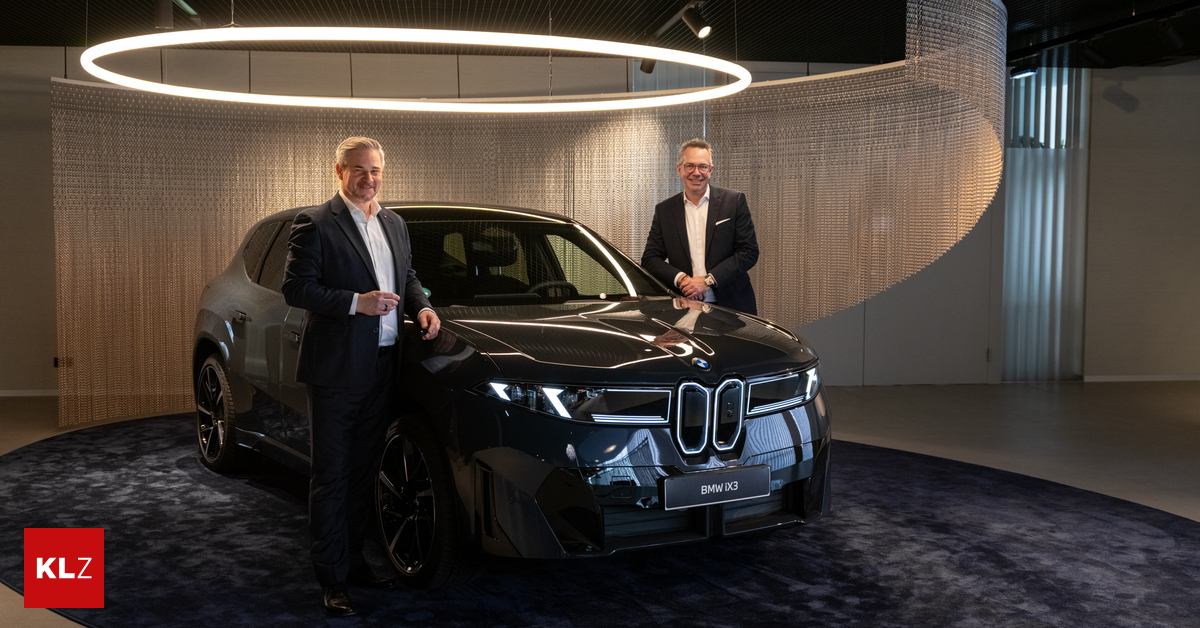
BMW Group Austria 2025 Record Revenue Despite Challenges
BMW Austria recorded a record €9.67 billion revenue in 2025, driven by a 5% sales surge and Steyr plant expansion. However, executive leadership warns that Austrian operational costs have now exceeded German benchmarks, creating a critical investment gap. This fiscal disparity threatens European manufacturing competitiveness against Asian rivals, necessitating immediate strategic recalibration in labor and supply chain management.
The headline numbers from BMW Group’s Austrian subsidiary gaze pristine on the surface. Revenue hit a record €9.67 billion, a jump of nearly €500 million over the previous high. Production at the Steyr engine plant ticked up by 2%, and capital expenditure crossed the €450 million threshold. But strip away the top-line vanity metrics, and the underlying unit economics reveal a structural rot that is plaguing the broader DACH region. Harald Gottsche, Managing Director of BMW Motoren GmbH, delivered the blunt assessment that keeps CFOs awake at night: “Austria is now more expensive than Germany.”
This isn’t just a localized wage dispute; it is a signal of capital flight. When a premium manufacturing hub like Steyr faces a 30% cost disadvantage against Chinese competitors for electric motor production, the market reacts. The “Investment Gap” in Europe is widening, not because of a lack of innovation, but because of fiscal inefficiency. As multinational corporations reassess their footprint, the demand for specialized corporate tax advisory firms capable of navigating cross-border labor arbitrage has never been higher. Companies are no longer just looking for growth; they are hunting for margin preservation.
Operational Snapshot: The Efficiency Paradox
Despite the revenue growth, the ratio of investment to output suggests a tightening grip on liquidity. The Steyr plant remains a flexible asset, pivoting between combustion and electric lines, but the cost of that flexibility is rising. Below is a breakdown of the key operational metrics driving the 2025 fiscal year performance.
| Metric | 2025 Performance | Strategic Implication |
|---|---|---|
| Total Revenue | €9.67 Billion | Record high, driven by Central & Southeast Europe exports. |
| Steyr Production | +2% YoY | 1.2M combustion units stable; E-motor output scaling to 100k+. |
| Capital Investment | €450 Million+ | Heavy CAPEX required to maintain competitiveness against Asian imports. |
| Labor Cost Delta | Austria > Germany | 30% wage increases absorbed; creates immediate margin compression. |
| EV Market Share | >35% (New Reg) | Only EU manufacturer to hit CO2 fleet targets without pooling. |
The data indicates a company fighting on two fronts: scaling electric volume while defending the cash cow of internal combustion. Gottsche noted that while combustion engines remain stable, the transition to electric requires massive efficiency gains to offset the 30% cost advantage held by Chinese manufacturers. Here’s where the rubber meets the road for supply chain optimization consultancies. The ability to localize value chains without blowing out the P&L is the defining challenge of the next fiscal quarter.
The Regulatory Drag on European Capital
The friction isn’t purely domestic; it is exacerbated by Brussels. Gottsche was scathing regarding the EU’s Industrial Accelerator Act, labeling it a “protectionist course” that ignores practical supply chain realities. The expectation that protectionism creates jobs is, in his view, unrealistic. Instead, it isolates European manufacturers from the global value chains necessary for battery technology scaling.
The regulatory environment is treating symptoms rather than causes. By focusing on isolated product calculations rather than total corporate value creation, the EU Commission is inadvertently penalizing companies with deep R&D roots in Europe. According to the BMW Group Investor Relations portal, the company achieved CO2 fleet targets independently, a rare feat that should be rewarded, not taxed into obsolescence. Yet, the policy landscape remains fragmented.
“We demand a corporate and fleet perspective instead of an isolated single-product calculation. What matters is the entire European value chain—from R&D to production. The current approach disadvantages European companies with global supply chains.”
This regulatory misalignment forces executives to look elsewhere for yield. When domestic policy fails to support industrial density, capital seeks jurisdictions with clearer incentives. This dynamic is fueling a surge in inquiries for international business law firms specializing in relocation and entity restructuring. The “Investment Gap” is essentially a arbitrage opportunity for jurisdictions that offer stability over bureaucracy.
Hydrogen Bets and the Diesel Lifeline
While the market obsesses over batteries, BMW is hedging its board with hydrogen. Despite the closure of hydrogen refueling stations in Austria, Gottsche insists on the strategic necessity of fuel cell systems for the global market. It is a classic portfolio diversification play—refusing to put all equity into a single technological outcome.
Simultaneously, the combustion engine is refusing to die. With 650 developers in Steyr alone, the portfolio is expanding, particularly regarding HVO (Hydrotreated Vegetable Oil) fuels. The argument is pragmatic: HVO offers immediate CO2 reduction in the existing fleet without waiting for a total infrastructure overhaul. Ignoring this low-hanging fruit in favor of distant electrification goals is, as Bamberger noted, a regulatory error that slows actual progress.
The Magna Void and Future Capital Allocation
Rumors of a collaboration with Magna International—a potential project that was far along in development—have been quashed. “Currently there is no project,” the leadership stated, though they left the door ajar for future partnership. This silence speaks volumes about the current caution in capital allocation. When even established partnerships stall, it signals a freeze in risk appetite.
The charging infrastructure remains another bottleneck. While Austria performs better than some neighbors, urban centers like Vienna lag significantly. The “last mile” of charging accessibility is a public-private failure that stifles EV adoption rates. Until cities resolve this, the theoretical demand for EVs will not convert to realized revenue at the pace analysts project.
The trajectory is clear: European manufacturing is at an inflection point. The era of competing solely on brand heritage is over; the next decade will be won on operational efficiency and fiscal agility. For businesses navigating this volatility, the difference between survival and obsolescence lies in the quality of their advisory partners. As the BMW Austria case demonstrates, understanding the nuance of cross-border cost structures is no longer optional—it is existential. Explore our directory for vetted partners who can turn these macro-headwinds into strategic advantages.