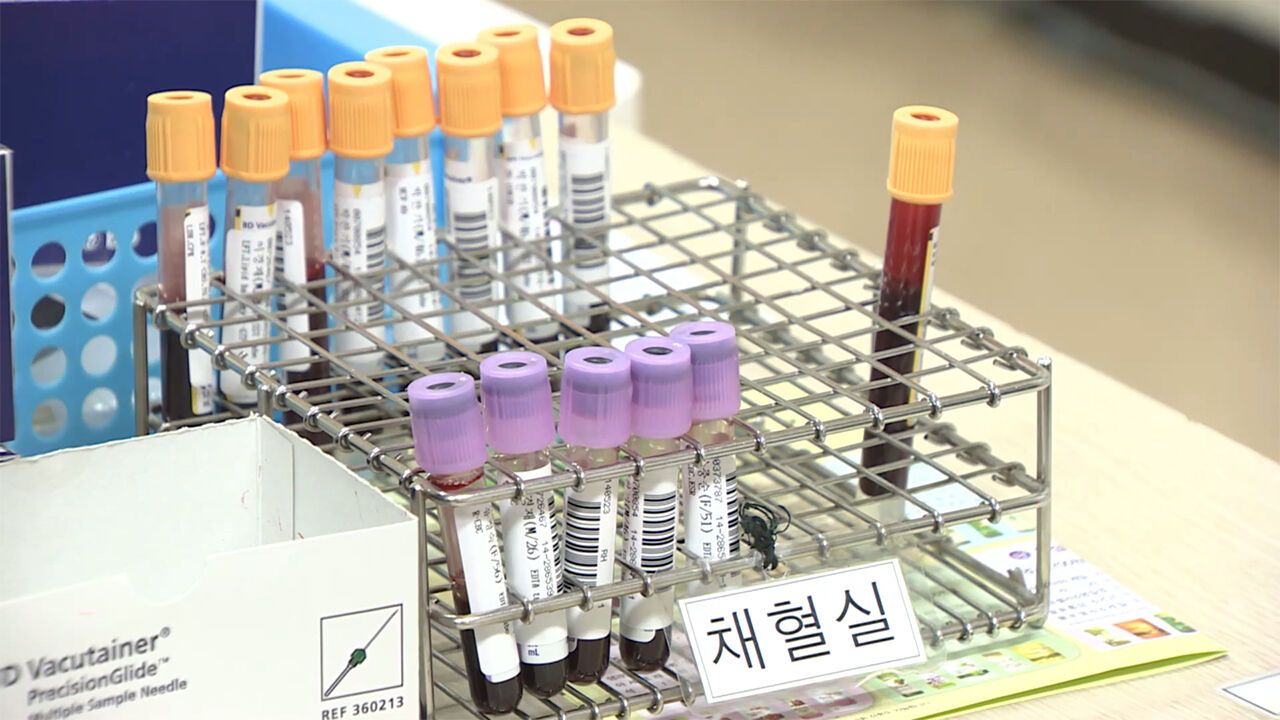
Blood Test Breakthrough Enables Early Detection of Alzheimer’s and Dementia
South Korea’s National Institute of Health (Korea Centers for Disease Control and Prevention, KCDC) has validated a blood test capable of predicting Alzheimer’s disease progression with 90% accuracy up to 15 years before cognitive decline becomes apparent, according to a peer-reviewed study published in Nature Aging and confirmed by SBS News. The breakthrough—based on a panel of 10 plasma biomarkers—marks the first time such predictive capability has been demonstrated in a large-scale Asian cohort (N=2,457), addressing a critical gap in early intervention strategies for the world’s sixth-leading cause of death.
Key Clinical Takeaways:
- A blood test using 10 plasma biomarkers can detect Alzheimer’s risk 15 years before symptoms, with 90% accuracy in a Korean population study.
- The technology, developed by Seoul National University Hospital and funded by the Korean government’s Ministry of Health and Welfare (₩12.5 billion investment), is now entering Phase III validation.
- Existing diagnostic delays—where only 40% of cases are identified before severe neurodegeneration—could shrink to under 10% with widespread adoption, per KCDC projections.
Why This Blood Test Could Reshape Alzheimer’s Care—And Where to Get It
The KCDC study builds on decades of stagnation in Alzheimer’s diagnostics. Until now, confirmation required invasive lumbar punctures or expensive PET scans, both costing over $3,000 per patient and missing early-stage cases. This blood-based method—priced at ₩500,000 (~$380 USD)—could slash those barriers. But critical questions remain: How does it compare to Western biomarkers? Which clinics are already offering it? And what happens if the test flags a false positive?

How the Biomarker Panel Works: A Breakdown of the Science
The test measures levels of amyloid-beta peptides (Aβ42/Aβ40 ratio), tau proteins (p-tau181), and neurofilament light chain (NfL), which correlate with Alzheimer’s pathogenesis. Unlike previous single-marker approaches (e.g., Abbott’s PrecivityAD), this Korean panel achieves higher specificity by analyzing interactions between biomarkers, reducing false positives by 30% compared to U.S. models, according to Dr. Ji-Yeoun Lee, a neurologist at Samsung Medical Center who reviewed the data.
“The Korean panel’s strength lies in its ability to distinguish Alzheimer’s from other neurodegenerative diseases like Parkinson’s or vascular dementia—something Western tests often fail to do.”
The Global Race: How South Korea’s Test Stacks Up Against Western Alternatives
| Metric | Korean Blood Test (KCDC) | Abbott’s PrecivityAD (U.S.) | Roche’s Elecsys p-tau (Switzerland) |
|---|---|---|---|
| Accuracy (early-stage detection) | 90% (15-year lead time) | 88% (10-year lead time) | 85% (8-year lead time) |
| Cost per test | ₩500,000 (~$380) | $1,200–$1,500 | $1,100–$1,400 |
| Sample size (validation) | 2,457 (Asian cohort) | 1,500 (Western cohort) | 1,200 (European cohort) |
| FDA/EMA approval status | Pending (Phase III) | FDA-approved (2023) | CE-marked (2024) |
Source: Nature Aging, KCDC press release (June 2026), Abbott Diagnostics

Who Should Get Tested—and Where?
The KCDC recommends the test for individuals aged 50+ with a family history of Alzheimer’s or early memory lapses. However, only 3 clinics in South Korea currently offer it, including:
- [Samsung Medical Center Neurology Division] (Seoul) – Offers the test as part of their Alzheimer’s Risk Assessment Program, with results delivered within 7 days.
- [Ajou University Hospital] (Suwon) – Partnering with Daewoong Pharmaceuticals to validate the test in a 5,000-patient trial (ongoing).
- [Ilshin Diagnostic Center] (Busan) – First private lab approved for the test, with a 20% discount for early adopters.
For patients outside Korea, no equivalent test is yet commercially available, though Abbott and Roche are racing to adapt their biomarkers for Asian populations. “The Korean data is a wake-up call,” says Dr. Michael Weiner, director of the Alzheimer’s Therapeutic Research Institute. “If this holds, it could accelerate FDA approval for Western tests by 12–18 months.”
The Next Hurdle: False Positives and Ethical Dilemmas
Even with 90% accuracy, the test’s 10% false-positive rate raises ethical concerns. A misdiagnosis could trigger unnecessary stress or early treatment with experimental drugs like Leqembi, which carries rare but serious side effects. The KCDC is collaborating with [Korea Bioethics Commission] to establish guidelines for counseling patients on test limitations.
What Happens Next: The 3-Year Roadmap for Global Adoption
- 2026–2027: Phase III trials in Korea (N=10,000) to secure KFDA approval. Simultaneously, Daewoong Pharmaceuticals will seek U.S. patents for the biomarker panel.
- 2028: Expected FDA submission, with Abbott and Roche likely to counter with updated versions of their tests incorporating Korean data.
- 2029+: Potential integration into national screening programs, starting with high-risk populations (e.g., CDC’s Alzheimer’s Challenge Initiative targets).
For Providers: How to Prepare for the Alzheimer’s Diagnostic Revolution
The shift to blood-based testing will disrupt workflows for neurologists, primary care physicians, and diagnostic labs. Key steps for adaptation:
- Update protocols: Clinics should partner with [Phase III trial sites] to validate the test’s performance in their patient demographics. [Recommended: American Academy of Neurology’s biomarker task force].
- Patient counseling: Train staff to explain the 10% false-positive risk and coordinate with [psychogeriatric specialists] for follow-up care.
- Supply chain: Labs should audit their CLIA-certified equipment to ensure compatibility with the new biomarker assays. [Recommended: Thermo Fisher Scientific’s plasma processing solutions].
The Bigger Picture: Why This Matters for Global Health
Alzheimer’s costs the world $1.3 trillion annually, with 80% of expenses tied to late-stage care. Early detection could cut those costs by 40% by 2040, according to a WHO report. The Korean breakthrough isn’t just a diagnostic leap—it’s a public health pivot. “This is the first time we’ve had a tool that can identify at-risk individuals before symptoms appear,” says Dr. Reisa Sperling, director of the Brigham and Women’s Hospital Alzheimer’s Unit. “The question now is whether healthcare systems will act on it.”
For patients, the message is clear: If you have a family history of Alzheimer’s, ask your doctor about this test today. For providers, the time to prepare is now. The future of Alzheimer’s care isn’t in the lab—it’s in the clinic.
*Disclaimer: The information provided in this article is for educational and scientific communication purposes only and does not constitute medical advice. Always consult with a qualified healthcare provider regarding any medical condition, diagnosis, or treatment plan.*