
BlackRock CEO: Skilled Trades Undervalued, AI Needs Energy Boost
BlackRock’s Physical Pivot: Why AI’s Biggest Bottleneck Isn’t Silicon, It’s Sweat
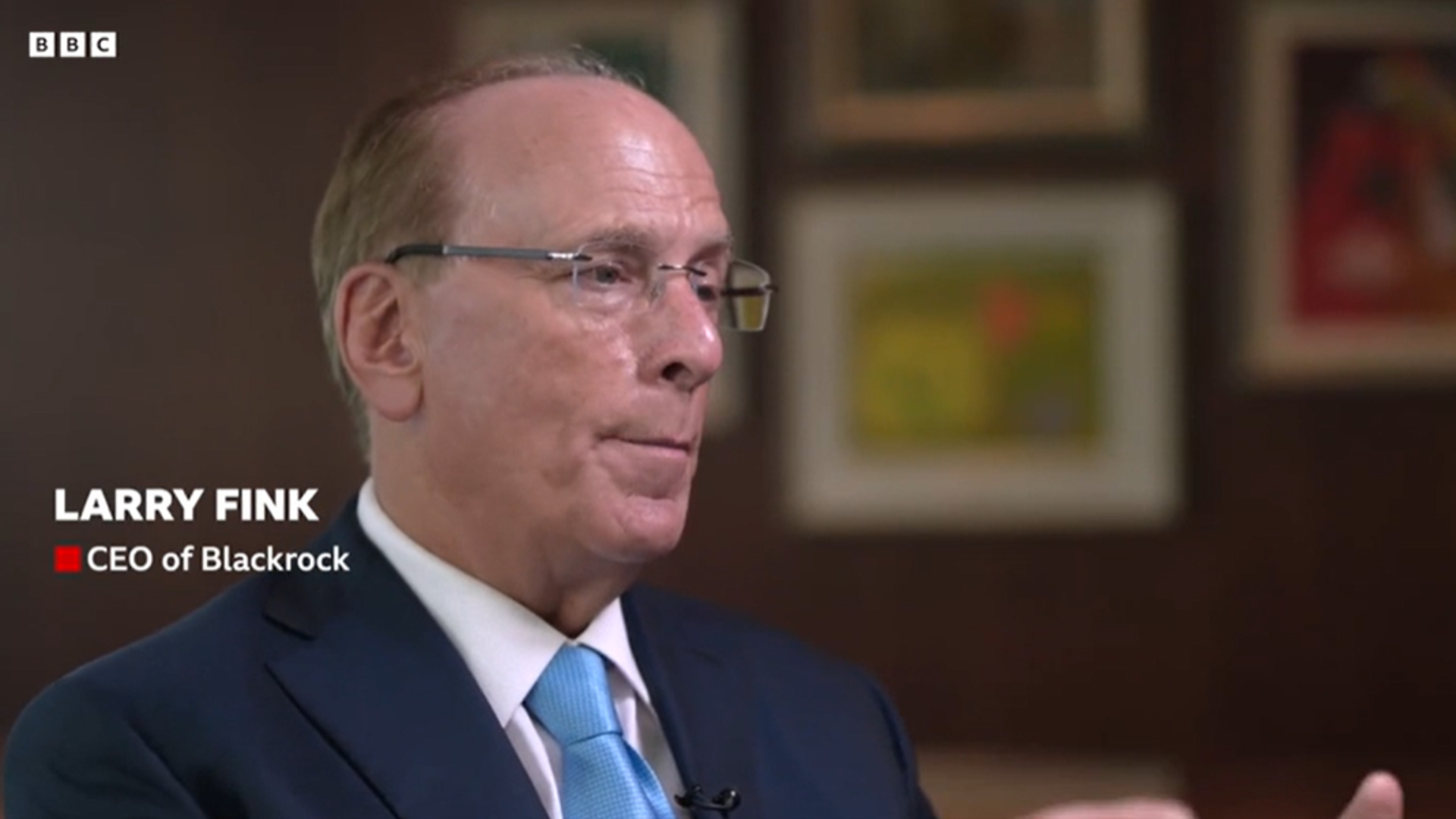
Larry Fink isn’t selling a vision; he’s reading a thermal map. The BlackRock CEO’s recent assertion that electricians and plumbers are the unsung heroes of the AI era isn’t social commentary—it’s infrastructure arithmetic. While the media fixates on transformer models and token counts, the actual constraint scaling generative AI in 2026 is physical: power delivery, cooling efficiency, and the human labor required to maintain the rack density necessary for exaflop computing. We are moving from a software-defined world to a physics-defined one.
- The Tech TL;DR:
- AI cluster energy density now exceeds 100kW per rack, requiring industrial-grade electrical overhaul rather than standard IT provisioning.
- Physical access to data centers represents a critical, often unaudited, security vulnerability vector alongside digital endpoints.
- Labor markets are shifting toward skilled trades for infrastructure maintenance, while white-collar roles face automation-driven consolidation.
The narrative that AI eliminates jobs ignores the substrate it runs on. Modern GPU clusters, specifically the NVIDIA B200 series and equivalent 2026 silicon, demand liquid cooling loops and high-voltage direct current (HVDC) distribution that standard office electricians cannot certify. This creates a specific labor arbitrage. The demand isn’t just for “workers with hands”; it’s for technicians capable of integrating physical infrastructure with digital monitoring systems. When Fink notes that energy costs are the biggest obstacle, he is highlighting a risk surface that most CTOs fail to audit.
The Physical Layer is the New Attack Surface
Security teams obsess over SQL injection and zero-day exploits, yet the physical integrity of the data center remains a blind spot. If a contractor can bypass badge access to adjust a cooling valve, they can induce thermal throttling or hardware failure without touching a keyboard. This aligns with the hiring trends we spot from major players. Microsoft AI is actively recruiting for a Director of Security specifically focused on AI infrastructure in Redmond, signaling that physical and digital security convergence is a priority. Similarly, Visa is seeking a Sr. Director, AI Security, indicating that financial sectors recognize the risk of infrastructure compromise.
Enterprise IT cannot treat facility management as separate from cybersecurity. A breach in the cooling system is a denial-of-service attack. Organizations scaling AI workloads must engage cybersecurity auditors who understand both SOC 2 compliance and physical access logs. The blast radius of a physical compromise exceeds digital intrusion because it affects hardware longevity and power stability.
| Infrastructure Metric | Standard IT Rack (2020) | AI Compute Cluster (2026) | Risk Implication |
|---|---|---|---|
| Power Density | 5-10 kW | 80-120 kW | High fire risk; requires specialized electrical certification |
| Cooling Method | Air Convection | Direct-to-Chip Liquid | Leak detection sensors required; physical maintenance critical |
| PUE Target | 1.5 – 1.8 | 1.1 – 1.2 | Efficiency gains rely on precise physical tuning by tradespeople |
According to the Uptime Institute 2025 Data Center Survey, over 40% of outages are now related to power or cooling infrastructure failures rather than software bugs. This data underscores the necessity of rigorous risk assessment and management services that cover physical operations. Ignoring the trade labor component is akin to deploying code without unit testing.
Infrastructure-as-Code Meets Copper Wiring
The integration of physical trades with digital oversight requires new tooling. We are seeing a shift where facility management systems (BMS) are exposed via API to orchestration layers like Kubernetes. This allows automated scaling to trigger physical cooling adjustments, but it introduces latency and security dependencies. Developers demand to monitor power draw as closely as memory usage. Below is a sample Python script using the ipmitool library to monitor sensor data, a practice that should be standard in AI ops pipelines.
import subprocess import json def get_power_metrics(host, user, password): """ Fetches power sensor data via IPMI for real-time infrastructure monitoring. Requires ipmitool installed and network access to BMC. """ cmd = [ "ipmitool", "-I", "lanplus", "-H", host, "-U", user, "-P", password, "sensor", "list", "|", "grep", "Pwr" ] try: result = subprocess.run(cmd, capture_output=True, text=True, shell=True) if result.returncode == 0: return json.dumps({"status": "ok", "data": result.stdout}) else: return json.dumps({"status": "error", "msg": "BMC unreachable"}) except Exception as e: return json.dumps({"status": "critical", "msg": str(e)}) # Example usage in CI/CD pipeline for infrastructure health check print(get_power_metrics("192.168.1.10", "admin", "secure_pass")) This level of visibility is non-negotiable. When energy costs spike, as Fink warned regarding oil prices impacting global economics, inefficient clusters develop into liabilities. The ability to programmatically shut down non-essential nodes based on power telemetry requires a fusion of electrical knowledge and software engineering. This represents where cybersecurity consulting firms must evolve their service offerings to include infrastructure resilience testing.
The Security Labor Gap
The shortage of skilled tradespeople parallels the shortage of AI security engineers. We see job postings like the Microsoft AI Director role emphasizing the need for leaders who can bridge these gaps. The market is correcting itself. White-collar roles focused on routine analysis are being automated by the very models they helped build, while roles requiring physical intervention remain resilient. However, this resilience depends on upskilling. An electrician in 2026 needs to understand networked sensors and encryption keys for smart grid interfaces.

For CTOs, the directive is clear. Do not treat facilities as a cost center managed by external vendors without oversight. Integrate physical security into your cybersecurity audit services scope. Verify that your providers adhere to standards that cover both digital access controls and physical perimeter security. The convergence of IT and OT (Operational Technology) means a vulnerability in a HVAC controller is now a vulnerability in your AI model’s availability.
“The industry focus on model weights ignores the thermal envelope. You cannot scale intelligence if you cannot dissipate heat. The next generation of security professionals must be fluent in thermodynamics as well as cryptography.” — Dr. Aris Thorne, Lead Infrastructure Researcher, IEEE Spectrum 2025
Fink’s commentary on the US-Israel conflict and oil prices further complicates the energy landscape. If oil approaches $150 per barrel, the operational expenditure for diesel-backed data centers skyrockets. This economic pressure will force a consolidation of compute resources into regions with stable, cheap renewable energy. Companies failing to audit their energy supply chain risks will face margin compression that no amount of algorithmic optimization can fix.
The trajectory is set. AI is not a cloud abstraction; We see a physical industrial load. The heroes of this era are not just the architects designing the models, but the technicians ensuring the power stays on and the pipes don’t burst. Enterprise leaders must update their risk registers to reflect this reality, engaging specialized partners who understand that bits depend on atoms.
Disclaimer: The technical analyses and security protocols detailed in this article are for informational purposes only. Always consult with certified IT and cybersecurity professionals before altering enterprise networks or handling sensitive data.