
Bitcoin Price Prediction as Miners Spend $80,000 to Produce One Bitcoin
Bitcoin miners face a critical profitability crisis in Q1 2026, with production costs hitting $80,000 against a $67,000 market price. Driven by the 2024 halving and geopolitical energy shocks, major operators are pivoting to AI infrastructure and liquidating treasuries. This structural shift signals near-term selling pressure but long-term network consolidation.
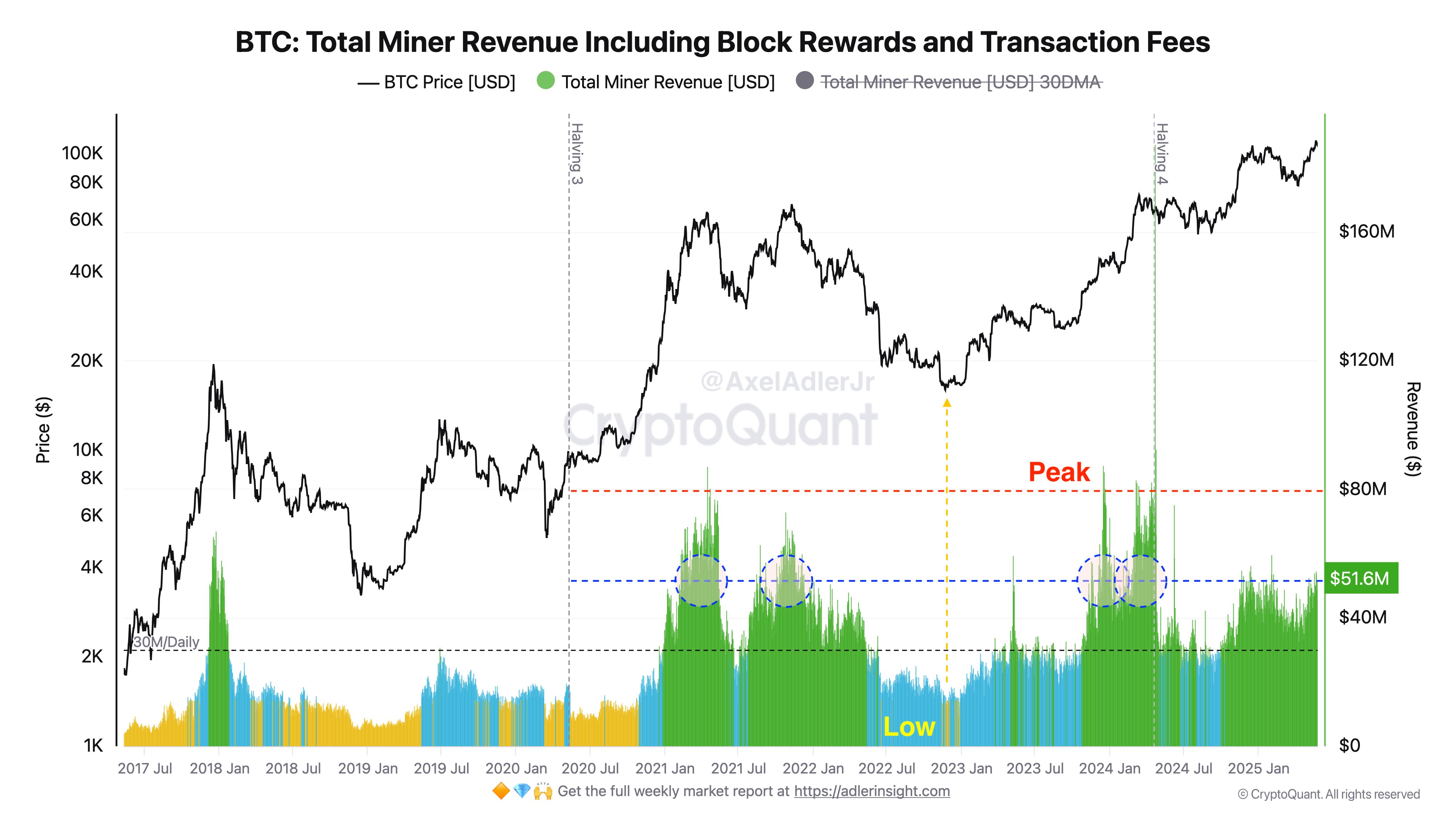
The arithmetic governing the Bitcoin network has broken. For the first time in the asset’s history, the marginal cost of production has decisively outpaced the spot price for a sustained quarter. Publicly listed miners are burning cash to secure blocks, spending an average of $80,000 to generate a single coin whereas the asset trades near $67,000. This negative spread is not a temporary anomaly; It’s a structural deficit fueled by the April 2024 halving and exacerbated by a volatile macro environment.
Energy markets are the primary culprit. The conflict in Iran has disrupted the Strait of Hormuz, pushing crude oil prices above $100 per barrel for the first time since 2022. Since electricity constitutes roughly 85% of a miner’s operating expenditure, this geopolitical friction has destroyed margins overnight. Operators who hedged their power contracts are seeing those protections expire, leaving them exposed to spot market rates that craft mining economically unviable. Companies facing this exposure are increasingly turning to Energy Risk Management Firms to restructure their power purchase agreements and hedge against further volatility in the global supply chain.
The network is reacting violently to this profitability crunch. Hashrate has contracted from a peak of 1,160 EH/s to roughly 920 EH/s as unprofitable rigs go offline. We are witnessing three consecutive negative difficulty adjustments, a pattern last seen during the bear market capitulation of July 2022. Average block times have stretched beyond 12 minutes, indicating a severe shortage of computational power securing the chain. When the difficulty drops, it confirms that more miners are exiting the ecosystem than entering it.
Survival now depends on diversification. The narrative of the “pure-play Bitcoin miner” is dead. To offset crypto losses, the industry is aggressively pivoting toward high-performance computing (HPC) for artificial intelligence. Core Scientific locked in a $10.2 billion deal with CoreWeave, while Hut 8 signed a $7 billion lease for AI data centers. This transition requires massive capital expenditure and physical retrofitting of facilities. Mining firms are engaging Data Center Infrastructure Consultants to manage the complex migration from crypto-specific ASICs to general-purpose GPU clusters.
Wall Street rewards this pivot. Miners with secured AI contracts now trade at 12.3x forward sales, more than double the 5.9x multiple for those remaining purely in crypto. The market is signaling that the physical infrastructure—the megawatts and the cooling systems—is worth more than the Bitcoin itself.
Comparative Miner Metrics: Q1 2026 Performance
The divergence between traditional miners and those successfully pivoting to AI is stark. The following table breaks down the financial health of key industry players based on recent SEC filings and earnings transcripts.
| Metric | Pure-Play Miners | AI-Pivot Miners | Industry Average |
|---|---|---|---|
| Cost to Produce 1 BTC | $82,500 | $74,000 (subsidized by AI revenue) | $80,000 |
| Revenue Mix (AI vs. Crypto) | 5% / 95% | 65% / 35% | 30% / 70% |
| Treasury Change (Q1) | -12% | -45% (Active liquidation for CapEx) | -22% |
| Forward Sales Multiple | 5.9x | 12.3x | 8.1x |
Liquidity is the immediate constraint. To fund these AI transitions and cover operating losses, miners are liquidating their balance sheets. Publicly listed entities have sold over 15,000 BTC from peak treasury holdings in the last quarter alone. Bitdeer reduced its treasury to zero, and Riot Platforms offloaded $162 million worth of Bitcoin in December. Even Marathon, historically the most stubborn holder, authorized selling from its entire reserve in March.
This creates a feedback loop of selling pressure. Miners are dumping freshly mined coins at a loss while simultaneously offloading long-term reserves. This supply shock hits a market where demand is already thinning due to macro uncertainty. If Bitcoin fails to hold the $66,000 support level, we could see a cascade of margin calls and further forced liquidations.
However, the legal and corporate structures required to execute this pivot are complex. Shifting from a commodity production model to a service-based AI infrastructure model involves significant regulatory and contractual overhaul. Many boards are currently consulting with Corporate Restructuring Law Firms to navigate the liability shifts and shareholder agreements required for such a fundamental change in business model.
“The market is mispricing the risk. We aren’t just seeing a crypto winter; we are seeing an industrial revolution where energy infrastructure becomes the primary asset class. The miners who survive will look nothing like the miners of 2024.”
Historically, miner capitulation marks the bottom. When the weakest operators flush out, the difficulty adjusts downward, lowering the breakeven cost for survivors. The three consecutive difficulty drops suggest we are nearing the end of this cycle. Once the selling pressure from treasury liquidations subsides, the reduced supply issuance combined with a stabilized hashrate could set the stage for a price recovery.
Investors must distinguish between the companies that are dying and those that are evolving. The firms treating their power contracts as flexible commodities and their hardware as adaptable infrastructure will capture the next cycle’s value. For the rest, the $80,000 production cost is a tombstone.
Navigate this volatility with precision. Whether you require energy hedging strategies, infrastructure retrofitting, or legal restructuring, the World Today News Directory connects you with the vetted B2B partners essential for surviving the 2026 market correction.