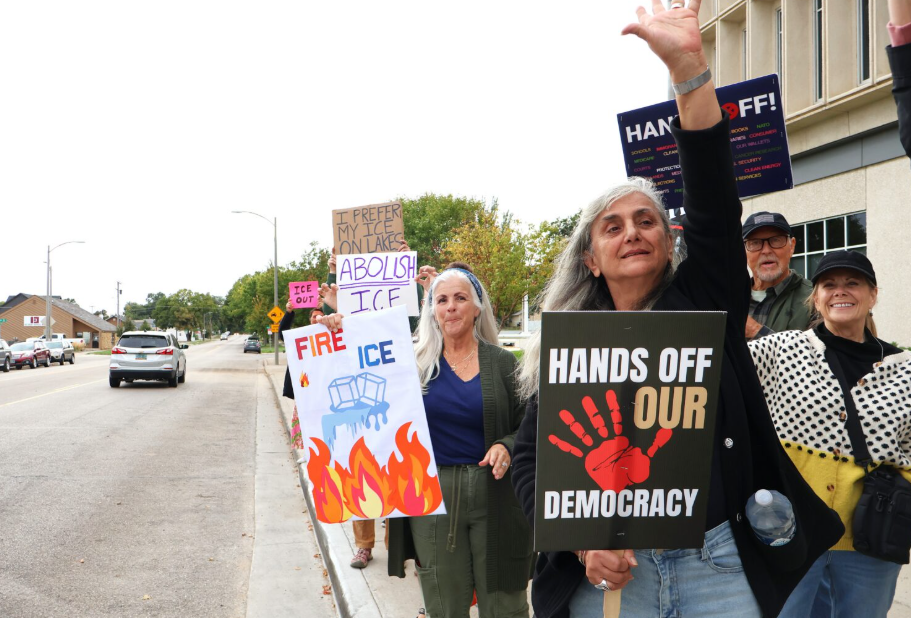
Bismarck protesters demonstrate against ICE operations following arrests
About 75 people gathered in front of the William L. Guy Federal Building in Bismarck on Sept. 25, 2026, to protest immigration enforcement operations in the area. The demonstration followed the targeted detainment of local workers, including two employees of a popular Mexican restaurant who claimed to have documentation authorizing them to work in the United States, prompting community backlash and renewed debate over immigration enforcement priorities.
Bismarck Protest Erupts Following Targeted ICE Arrests
The friction on the ground stems from a visible surge in regional ICE activity throughout the week. Jail records reviewed by the North Dakota Monitor on Friday afternoon showed 19 individuals in custody at the Burleigh-Morton Detention Center following arrests made by federal immigration authorities that week. Meanwhile, tracking by the Bismarck Tribune indicated more than two dozen detainees held in the facility over the same period.
For local enterprises, the enforcement sweep created immediate operational and human disruptions. The owner of Charras and Tequila announced on Facebook Wednesday that two of his staff members had been taken into custody by ICE agents. The business owner stated that both detained employees possessed proper documentation authorizing them to work in the United States.
“We work hard to run our business the right way, follow the rules, and provide jobs to our community,” the owner wrote in the social media post, adding that the detained individuals have families and responsibilities locally. Because remaining staff members expressed fear about reporting to work despite holding legal status, the restaurant temporarily closed its doors for several days and stayed closed through Friday.
Official Responses and Detention Status
Federal and local authorities offered distinct perspectives on the nature of the operations. An ICE spokesperson stated on Friday that the two detained restaurant employees entered the United States illegally and maintain no legal standing to remain in the country, confirming they will stay in custody pending formal immigration proceedings.
“To be clear: work authorization or a pending application does NOT confer legal status in the United States,” the ICE spokesperson stated via email.
Burleigh County Sheriff Kelly Leben explained that his office received advance notification regarding the scheduled operations. According to Sheriff Leben, the agency understood the deployments to be targeted and intelligence-driven, classifying the actions as routine enforcement while noting that deputies monitored the situation solely due to widespread national tensions surrounding immigration enforcement.
“We played a very limited role in the operation,” Sheriff Leben said.
On the federal prosecution side, U.S. Attorney for North Dakota Nick Chase reported that his office had not filed any criminal charges stemming from the ICE arrests in Bismarck. Chase noted that only a minor percentage of overall ICE detainments transition into criminal court cases.
Legal representation for the affected restaurant workers, St. Paul attorney Nico Ratkowski, declined to comment on the matter when contacted on Friday, while the restaurant owner also declined interview requests.
Community Concerns Over Due Process and Reform
Demonstrators utilized the Friday rally to question the constitutionality of the tactics deployed and to advocate for systemic legislative changes. Protest attendee Rachel Patrie emphasized the vital nature of due process protections for individuals targeted by immigration officers across North Dakota and the nation.

“It is unconstitutional, and I think we have to stand up when things are going wrong in our country,” Patrie said during the demonstration, adding her belief that individuals attempting to follow legal channels should find viable pathways if they put forth the effort.
Another participant, Fran Joersz, connected the local arrests to broader nationwide concerns involving officer-involved immigration incidents reported in states such as Texas, Maine, and Minnesota. Expressing pride in community members willing to speak out, Joersz called for structural reforms, stating that the current framework lacks a reasonable path to citizenship.
As local businesses evaluate operational continuity and legal representation counsels detained workers through ongoing federal proceedings, the demonstration highlights the friction points between localized economic stability and federal immigration enforcement policies in North Dakota.