
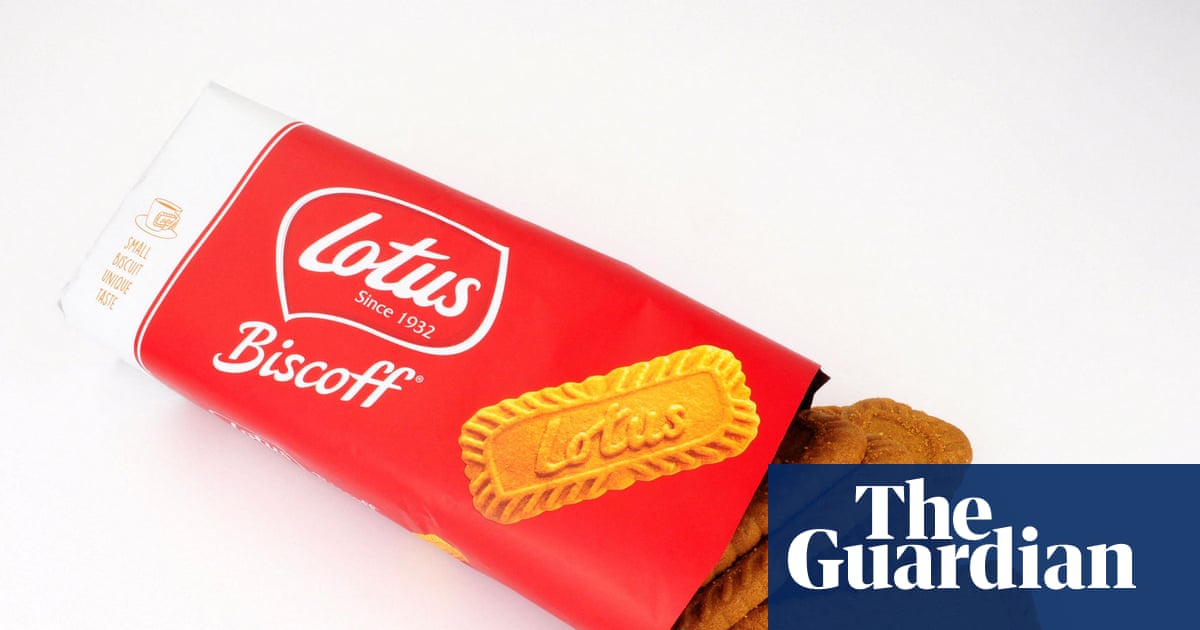
Biscoff: The Viral Biscuit Taking Over Food & Social Media
A seemingly simple spiced biscuit, the Biscoff, has become a viral sensation, driving a surge in sales and inspiring a wave of recipes ranging from cheesecakes to prawn dishes. What began fifteen years ago as a rare treat discovered by Ashley Markle through her aunt’s exclusive access to airline supplies, is now a mainstream obsession, particularly among younger consumers.
Markle recalls her first encounter with the biscuit. “I’d never seen them before,” she said, describing the flavour as “a warm flavour that I’d never really had in a cookie. I’m like, what is this?” Her aunt had secured a supply of the Belgian-made Lotus Biscoff biscuits by directly contacting the manufacturer to have them shipped to the US, a feat that, at the time, made her one of the few Americans with access to the treat.
Last year, Biscoff was the fastest-growing biscuit brand in the US, according to industry reports. Created in 1932, the biscuit has experienced several peaks in popularity over the last decade. In 2014, the spreadable version was dubbed “crack in a jar,” and by 2016, it was being incorporated into the “freakshake” trend. The Covid-19 lockdowns of 2021 further fueled its rise, as home baking surged and the biscuit gained traction on social media platforms.
Social media creator Ashley Markle, who shares snack recipes on TikTok and Instagram, has witnessed the biscuit’s popularity firsthand. Her TikTok video demonstrating a Biscoff cheesecake recipe garnered over 4 million views in January, while a two-ingredient Biscoff cookie recipe from last summer has amassed 5.6 million views. “I think it’s kind of like a cult following at this point,” Markle said.
The biscuit’s appeal extends beyond online trends. Raj, a teacher who first tasted Biscoff around 2014, described a near-obsessive experience after trying it. He recounts buying multiple boxes online to replace a packet he’d consumed from a colleague’s desk, stating, “I’d smoke Biscoff if I could.” A colleague at his school even uses a packet of Biscoff biscuits as a reward for students attending after-hours tutoring sessions.
According to Lisa Harris, co-founder of the food and drink consultancy Harris and Hayes, Biscoff’s success is not a single trend, but rather a convergence of several factors. “It’s quite an ancient-fashioned flavour,” Harris explained. “It’s got nostalgic relevance.” The biscuit evokes memories of airline travel and earlier decades, offering a sense of familiarity and comfort. Harris also highlighted the appeal of “accessible indulgence,” noting that Biscoff provides a relatively affordable treat during times of economic uncertainty.
Biscoff’s versatility is another key to its success, lending itself to a wide range of applications, from beverages and ice cream to desserts and baked goods. The brand has also actively pursued partnerships with other companies, resulting in Biscoff-flavored products from brands like Cadbury. Harris described this as an example of “modern collab culture,” where established brands leverage the popularity of ingredients like Biscoff to create new products.
Niamh Leonard-Bedwell, fast-moving consumer goods editor for the trade publication The Grocer, noted that Lotus, the manufacturer of Biscoff, has been responsive to social media trends, sharing customer and influencer content on their own channels. The company is also in the process of updating its branding, replacing the Lotus embossing on the biscuits with the Biscoff name, likely in response to the brand’s increased recognition online. Leonard-Bedwell reported that Biscoff volume sales increased by 30% in the week of January 17th, coinciding with the viral “Japanese cheesecake” trend.
Lotus Bakeries reported a 10% revenue increase in its 2025 annual results, with over half of that revenue attributed to the Biscoff brand. The company has expanded its production capacity with new factories in Thailand and the US, and remains under the ownership of the founding Boone family. Founder Jan Boone, the grandson of the original founder, has stated the company’s ambition to “conquer the world.”
While Biscoff has largely focused on sweet treats, the company has experimented with savory applications, including recipes for prawns in Biscoff sauce and a Biscoff-glazed duck breast. However, chef Jon Watts, who demonstrated three Biscoff recipes on television, expressed skepticism about the savory direction, stating, “I can’t really see this taking off.”
Kiti Soininen, category director for food and drink research at Mintel, believes Biscoff’s broad appeal and relatively universal likability contribute to its continued success. She also suggests that the biscuit’s traditional feel may help insulate it from concerns about ultra-processed foods. “There’s a disconnect between what a product actually would be classified as and the intuition, where the [intuition says], ‘Well, if my grandmother can have bought this then it can’t be truly ultra-processed.’”
Retailers are increasingly inspired by Biscoff, developing their own Biscoff-flavored products, including porridge, tea, popcorn, and breakfast cereal. Markle anticipates continued popularity, stating, “I don’t see anybody deciding that they don’t like Biscoff any more.”