
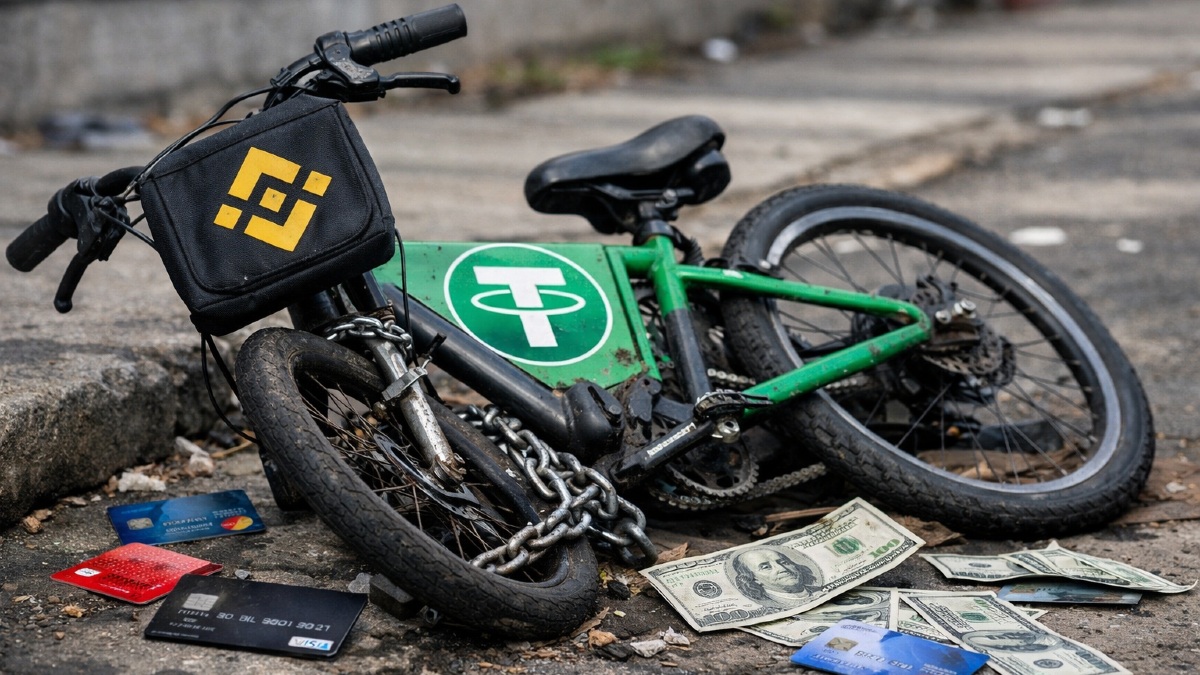
Binance BPay Global Now Allows Direct USDT Purchases in Venezuela
Binance’s BPay Disrupts Venezuelan Arbitrage: A Liquidity Analysis
Binance’s BPay Global launch in Venezuela is compressing the arbitrage spread on the “bicicleta cambiaria,” reducing P2P premiums by an estimated 10-15%. While this formalizes capital flows, strict KYC and banking caps create new liquidity bottlenecks, forcing market participants to seek professional regulatory compliance and forex risk management solutions.
The mechanics of Venezuela’s currency arbitrage, colloquially known as the “bicicleta,” have long relied on friction. For years, the spread between the official banking rate and the informal market provided a risk-free yield for those capable of navigating the complex web of virtual wallets and peer-to-peer (P2P) exchanges. That era of easy alpha is ending.
Binance’s integration of BPay Global, a fiat on-ramp regulated in Bahrain, effectively bypasses the intermediaries that previously inflated transaction costs. By allowing direct purchases of USDT and Bitcoin without third-party wallets like Zinli, the exchange is slashing the operational overhead that fueled the arbitrage engine.
Market data suggests the P2P premium, which recently spiked over 10% due to liquidity scarcity, faces immediate downward pressure. This compression is not merely a technological upgrade. it is a structural shift in capital efficiency.
However, efficiency often comes at the cost of accessibility. The new gateway demands rigorous verification, including tax identification (RIF) and proof of income sources. This shifts the burden from technical execution to regulatory compliance.
For institutional players and high-net-worth individuals, this transition creates a distinct fiscal problem: how to maintain liquidity while adhering to heightened surveillance. The informal market offered anonymity; BPay offers transparency. This dichotomy forces businesses to engage with specialized compliance and KYC advisory firms to navigate the new verification landscape without triggering banking freezes.
The Three Pillars of Market Disruption
The introduction of a regulated fiat gateway does not simply lower fees; it fundamentally alters the risk profile of holding digital assets in a hyperinflationary economy. We are observing a tripartite shift in market dynamics that will define the fiscal quarters ahead.
- Spread Compression and Margin Erosion: The direct fiat-to-crypto route eliminates the “middleman tax” of the P2P ecosystem. Where arbitrageurs previously captured a 30% differential between the official rate and the crypto-converted rate, that margin is shrinking. This forces a pivot from pure arbitrage to yield-generating strategies, requiring consultation with forex and treasury management experts to hedge against residual volatility.
- Regulatory Segmentation: Access is no longer universal. The strict documentation requirements create a two-tier market: the verified, banked elite and the unbanked majority who remain dependent on the informal P2P sector. This segmentation risks creating a liquidity trap where capital cannot flow freely between the two tiers, increasing the cost of capital for smaller enterprises.
- Banking Dependency Risks: Paradoxically, moving crypto on-ramps into the banking sphere increases exposure to traditional financial bottlenecks. Daily transaction limits—capped at roughly $1,000 for individuals—act as a hard ceiling on volume. This artificial scarcity could trigger a “rebound effect,” where P2P premiums spike again due to supply constraints on the regulated channel.
Daniel Andrés Peláez, a specialist in P2P trading and university professor, notes that while the tool increases efficiency, it does not solve the macroeconomic distortion. “It reduces the friction, but the structural problem remains,” Peláez argues. He warns that the reliance on traditional banking infrastructure reintroduces the very bottlenecks crypto was meant to solve.
The friction is palpable. Users now face a choice between the speed of the informal market and the safety of the regulated channel. This is where corporate legal strategy becomes critical.
Entities operating in this space must ensure their capital flows do not violate emerging anti-money laundering (AML) statutes. A misstep here doesn’t just mean a frozen account; it意味着 existential risk for the business. We are seeing a surge in demand for corporate law and regulatory counsel capable of interpreting the intersection of Venezuelan banking law and international crypto regulations.
The “Remedy” Paradox
Economist Daniel Arráez offers a sobering perspective on the rollout, suggesting the cure might be worse than the disease for certain market segments. “This regulated gateway, highly supervised, will simply drag in more restrictions,” Arráez states. He points out that the rigorous identification requirements effectively exclude a significant portion of the population, creating a privileged class of users with access to lower spreads.
Arráez’s analysis highlights a critical vulnerability: the system is only as strong as its weakest link, which in this case, is the Venezuelan banking sector’s capacity to process volume. If BPay Global saturates, the liquidity will simply flood back into the P2P market, potentially inflating prices further due to the perceived scarcity of the “legal” route.
From a balance sheet perspective, this volatility is unacceptable for serious operators. The unpredictability of access creates a planning horizon that is too short for sustainable growth.
Smart money is already moving to mitigate this. Instead of relying solely on retail banking channels, sophisticated actors are diversifying their entry points. They are looking at over-the-counter (OTC) desks and institutional-grade custody solutions that offer higher limits and dedicated support, bypassing the retail bottlenecks entirely.
The “bicicleta” isn’t dead; it has just evolved into a more complex instrument. The days of easy, frictionless arbitrage are over, replaced by a landscape where regulatory navigation is the primary skill set. For businesses looking to capitalize on Venezuela’s digital economy, the focus must shift from finding the best exchange rate to securing the most robust operational infrastructure.
As the market matures, the winners will not be those who can move money the fastest, but those who can move it the cleanest. The directory of vetted B2B partners provided by World Today News remains the essential resource for identifying the legal and financial partners capable of executing this transition.