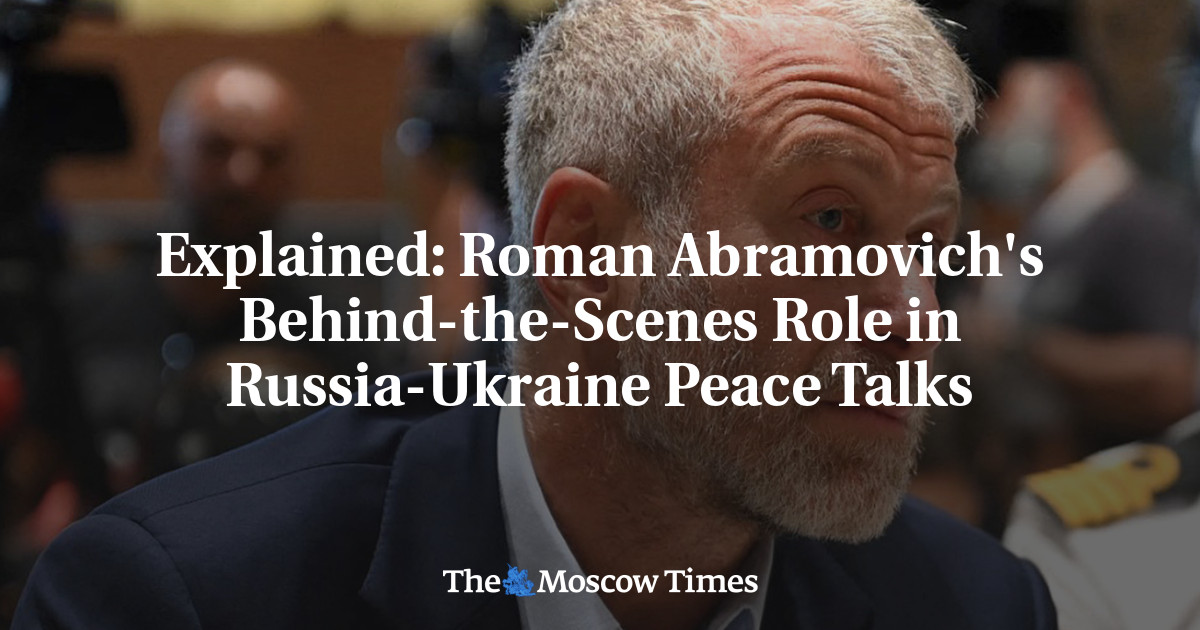
Billionaire Mediates Peace Efforts Between Moscow and Kyiv
Roman Abramovich’s Mediation Role in Russia-Ukraine Talks Sparks Geopolitical Scrutiny
Billionaire Roman Abramovich has resurfaced in Russia-Ukraine peace negotiations, reportedly delivering messages between Moscow and Kyiv. This follows his prior involvement in conflict mediation, raising questions about his influence and the war’s trajectory. The move occurs amid heightened tensions in Eastern Europe, with implications for regional stability and international diplomacy.
Why This Matters: A Mediator’s Shadow in a War-Torn Region
Abramovich’s involvement underscores the complexity of peace efforts in a conflict that has reshaped global geopolitics. His background as a Russian-Israeli oligarch with deep ties to both Moscow and Western institutions positions him as a unique intermediary. However, his actions risk complicating diplomatic channels, particularly as Kyiv and Moscow remain deadlocked over territorial claims and sanctions. The Donetsk and Luhansk regions, central to the fighting, face prolonged instability, with local populations bearing the brunt of the crisis.
The Historical Context: Abramovich’s Past Mediation Efforts
This is not Abramovich’s first foray into conflict resolution. In 2022, he facilitated talks between Ukrainian and Russian officials, though those efforts yielded limited progress. His current role emerges as the war enters its fifth year, with both sides entrenched in their positions. Analysts note that private mediators like Abramovich often operate outside formal diplomatic frameworks, which can create ambiguity in their impact.
“The involvement of non-state actors in such negotiations is a double-edged sword,” said Dr. Elena Volkova, a Moscow-based geopolitical analyst. “It can accelerate dialogue but also bypass established channels, risking further fragmentation.”
Regional Implications: Economic and Political Fallout
The conflict’s ongoing nature has strained Eastern European economies, particularly in Ukraine’s eastern regions. Infrastructure damage in cities like Kharkiv and Mariupol has disrupted trade routes, while sanctions on Russian energy exports have ripple effects across the EU. Abramovich’s mediation could influence the flow of humanitarian aid, though his ties to Russian interests may limit his credibility with Kyiv. Local officials in Ukraine’s Donbas region have called for transparent, inclusive talks, emphasizing the need for international oversight.
Legal and Diplomatic Challenges: Navigating Sanctions and Accountability
Abramovich’s activities intersect with complex legal frameworks. Following Russia’s 2022 invasion, the UK and EU imposed sanctions on his assets, citing his alleged ties to the Kremlin. His mediation efforts risk drawing scrutiny from regulatory bodies, which could complicate his ability to operate freely. UK Government Sanctions List and EU Sanctions Database highlight the precariousness of his position. Meanwhile, Ukrainian officials stress that any peace process must address war crimes and accountability, a demand unlikely to align with Moscow’s priorities.

The Path Forward: Who Can Address the Crisis?
The crisis demands collaboration between international organizations, legal experts, and local stakeholders. Commercial real estate attorneys and international law firms are increasingly advising clients on navigating sanctions and conflict-related liabilities. Meanwhile, humanitarian NGOs are scaling up aid efforts in eastern Ukraine, where infrastructure remains in disrepair. As Abramovich’s role evolves, the need for structured, transparent dialogue becomes more urgent, with regional governments and global institutions tasked with ensuring equitable solutions.
Kicker: A Fragile Balance in a Fractured Landscape
Abramovich’s mediation efforts reflect the tangled web of interests shaping the Ukraine conflict. Yet, as the war drags on, the question remains: Can private intermediaries bridge divides where governments falter? The answer may determine the fate of millions in a region still reeling from years of violence. For those seeking clarity, verified conflict resolution agencies offer a