
Bilbao Demonstrates: Thousands demand an End to ‘Exceptional’ Treatment of ETA Prisoners
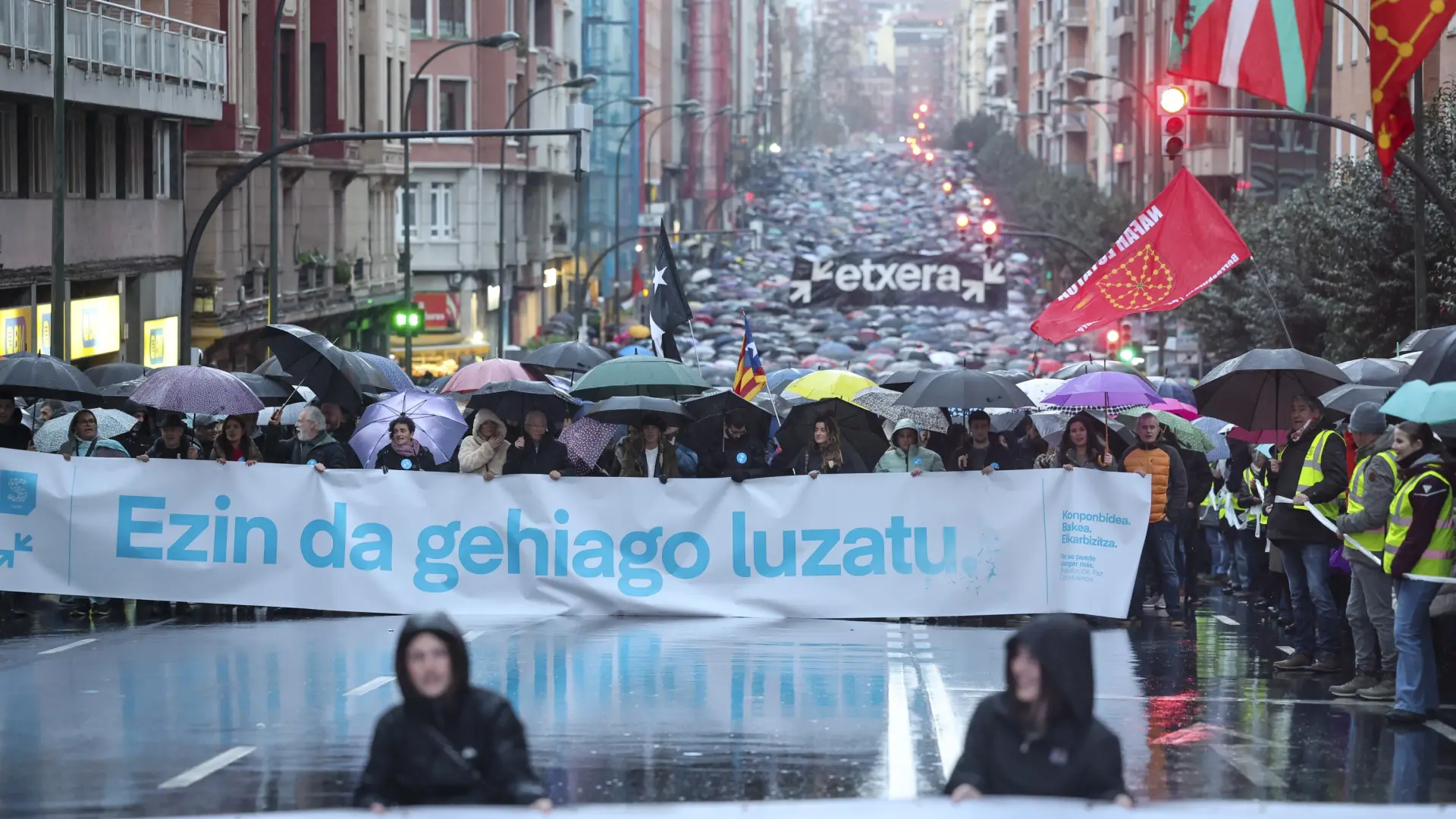
Bilbao, Spain – On Saturday, January 11, 2026, an estimated 30,000 people took to the streets of Bilbao, demanding an end to what protestors describe as the continued “exceptional” treatment of former ETA (Euskadi Ta Askatasuna) prisoners. The demonstration, organized by the prisoner support network Sare, marked the fifteenth anniversary of ETA’s definitive cessation of armed activity, yet highlighted the ongoing struggle for full prisoner rights and reintegration into society. The march,proceeding under the banner “Ezin da gehiago luzatu” (it cannot be prolonged any further),underscored the deep-seated frustration and persistent calls for normalization within Basque nationalist circles.
A Fifteen-Year Wait for Full Normalization
despite ETA’s declaration of a permanent ceasefire in 2011, the issue of its former members – particularly those still incarcerated – remains a contentious point in Spanish politics. Protestors argue that these individuals continue to face discriminatory practices within the prison system,including restrictions on parole,transfers to prisons far from their families,and limitations on social reintegration programs. These practices,they contend,violate essential human rights and hinder the complete resolution of the conflict.[1]
joseba Azkarraga, a representative of Sare, emphasized the continued need for advocacy, stating that the consistent mobilization of tens of thousands of citizens demonstrates an ongoing violation of prisoners’ rights. Currently, approximately 120 former ETA members remain imprisoned in the Basque Country and Navarre. Azkarraga highlighted that 40 of these individuals have been incarcerated for over 20 years, with more than 21 having served over 25 years of their sentences. [2] He argued that many could be eligible for release under standard parole or open-regime conditions were it not for the application of “exceptional measures.”
Broad Political Support and Diverse Participation
The Bilbao demonstration drew a diverse crowd, reflecting a broad coalition of support for prisoner rights. representatives from EH Bildu, Podemos euskadi, Junts, ERC, CUP, BNG, Més Per Mallorca, and Catalunya en Comú participated, demonstrating cross-party support within the Basque and Catalan nationalist movements. Nationalist trade unions ELA and LAB were also prominently represented, alongside organizations like etxerat (an association of families of ETA prisoners), ANC, and Òmnium Cultural. [3]
The march itself was a powerful visual statement, led by a banner carried by figures deeply affected by the conflict, including Rosa Rodero, the widow of Ertzaintza sergeant Joseba Goikoetxea, who was murdered by ETA in 1993. The inclusion of Rodero,alongside Doctor Deseo singer Francis Diez and activists representing the Palestinian and Sahrawi causes,underscored the intersectional nature of the protest and the broader call for justice and self-determination.
Key Political Figures Join the Call for Change
Prominent Basque political figures were present at the demonstration, including Arnaldo Otegi, the Secretary-General of EH Bildu. Xabier iraola, recently nominated to lead Sortu, also participated, signaling a continued commitment to the issue from the broader Basque independence movement. The presence of Gerardo Pisarello, a leading figure in the Spanish Congress representing Comuns, highlighted the issue’s resonance beyond the Basque Country.
Addressing the Victims
Organizers were careful to emphasize that advocating for prisoner rights does not diminish the importance of acknowledging and supporting the victims of ETA’s violence. The call for a “respectful treatment” of all victims was a central tenet of the demonstration,reflecting a desire for a comprehensive resolution to the conflict that addresses the needs of all those affected. This nuanced approach aims to bridge the divide between those seeking justice for victims and those advocating for the rights of former combatants.
The Path Forward: Resolution and Reconciliation
The demonstration in Bilbao represents a notable moment in the ongoing debate surrounding the legacy of ETA and the path towards lasting peace in the Basque Country. While the association has disarmed and ceased its armed campaign, the issue of prisoner rights remains a major obstacle to full normalization. The calls for an end to “exceptional measures” and the application of ordinary penitentiary law are seen as crucial steps towards achieving a just and lasting resolution.
The continued pressure from Sare, supported by a broad coalition of political and social actors, is likely to keep this issue at the forefront of the political agenda in Spain. The challenge lies in finding a solution that balances the legitimate demands for justice and accountability with the need for reconciliation and the full reintegration of former ETA members into society.The events in Bilbao serve as a powerful reminder that the wounds of the past are still raw and that a comprehensive and inclusive approach is essential for building a peaceful future.
Key Takeaways:
- Approximately 30,000 people marched in Bilbao demanding an end to the “exceptional” treatment of ETA prisoners.
- The protest marked 15 years since ETA’s ceasefire, but highlighted the ongoing struggle for full prisoner rights.
- A broad coalition of political parties and organizations participated, demonstrating widespread support for the cause.
- Organizers emphasized the importance of a respectful approach to all victims of the conflict.
- The demonstration underscores the need for a comprehensive resolution that addresses the needs of all those affected by the conflict.
