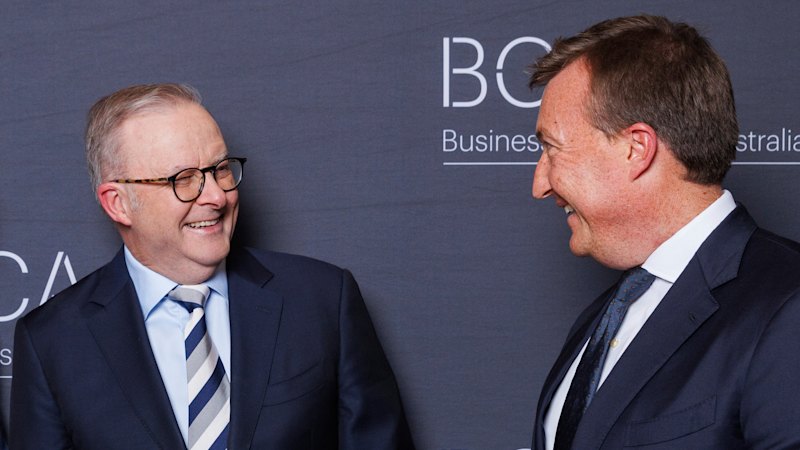
Big Business Gears Up for Tax Fight with Prime Minister Albanese Over Labor Budget Changes
As Australia faces a mounting productivity debate, the Business Council of Australia (BCA) has joined forces with 30 peak industry bodies to make a louder argument for economic reforms that lead to better living standards, setting up a high-stakes showdown with Prime Minister Anthony Albanese at the organization’s annual political and business elite gathering on August 24, 2026.
Corporate Pushback Following Labor’s Ambitious Budget Overhaul
The corporate sector’s friction with Canberra intensified three months following the delivery of Labor’s reform budget, which scrapped negative gearing and overhauled capital gains taxation. According to reporting from the Sydney Morning Herald, these sweeping adjustments have sparked one of the most incendiary fights between Labor and the corporate sector since Albanese came to power in 2022. Property markets face predictions of a downturn hitting up to 15 per cent, while business leaders warn that the tax changes might sap investment in high-growth firms at a time of weak investment.
Business Council of Australia chief executive Bran Black addressed the brewing tensions directly in speech notes prepared for Tuesday night’s gathering. “Where we believe policies are taking our nation in the wrong direction, the BCA will say so,” Black stated, as reported by the Sydney Morning Herald. He added the sharp critique that “Australia cannot tax, regulate or redistribute its way to higher living standards.”
The Battle for Public Opinion and “Betty from Blacktown”
In a strategic pivot, the newly formed Alliance of Industry Associations—incorporating pharmacists, farmers, builders, and accountants alongside the BCA—is plotting a union-style campaign. Sources familiar with the planning indicate that the online mobilization effort could begin next year and run up to the 2028 election. The initiative is partly driven by corporate anxiety over left-wing populist influencers generating social media support for heavier regulations and higher taxes, which is feeding through to policymaking.
Black emphasized that the core challenge lies in translating abstract economic indicators into relatable kitchen-table issues for everyday voters. He noted that the average voter cares about the cost of living, yet terms like productivity often feel disconnected. “Too often, we collectively fail to explain why it matters, and critically, why its absence or reduction affects people’s lives day to day,” Black said.
Prime Minister Albanese’s Counter-Narrative on Artificial Intelligence
While Prime Minister Anthony Albanese is set to address the dinner, Opposition Leader Angus Taylor will be absent, cycling through Queensland on the Pollie Pedal charity event to recruit big business to his fight against Labor’s budget measures. Advance speech excerpts show the prime minister steering clear of the heavily debated tax changes in his remarks, choosing instead to focus on areas of strategic agreement with the corporate world, particularly artificial intelligence.
Building on a headline speech on AI that was warmly welcomed by corporations last month, Albanese intends to seek support for his rules on data centres’ use of energy and water during a national cabinet meeting on Wednesday. “Our national economic success and strongly performing national institutions will help us see off the populist challenge now on the march across the globe,” Albanese is expected to argue, alluding to One Nation while portraying Australia’s economic and democratic foundations as robust.
On the corporate side, leaders continue to urge caution. Black plans to advocate for “balance” between safety and innovation in the government’s approach to AI.
Independent Voices and the Road Ahead
The pushback is not limited to traditional corporate lobbies. Independent MP Allegra Spender, who co-founded the party Community Strong Australia in June, publicly urged Labor to rethink its CGT changes. Yet, as the political class and corporate leaders break bread, the fundamental divide over how Australia funds its future remains entirely unresolved.
As corporate Australia prepares for a protracted multi-year campaign leading toward the ballot box, navigating the complex intersection of federal tax policy and commercial strategy demands rigorous planning.
Keep reading