BHS Students Say SLC Caps Limit AP Access Compared to Academic Choice
“APs are available (to AHA students) at the expense of language credits,” Ash Ray said.
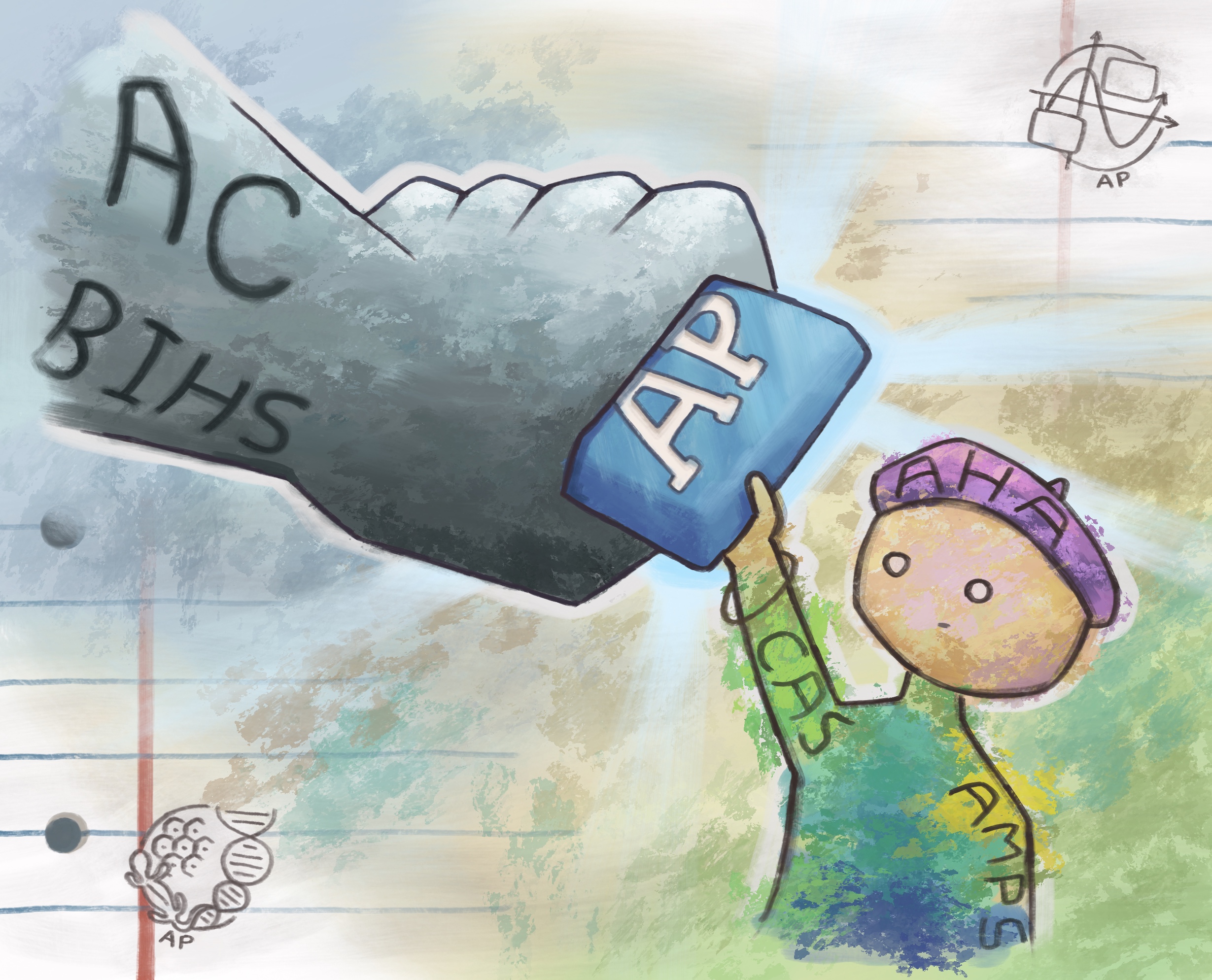
Berkeley High School students enrolled in smaller learning communities face caps on Advanced Placement courses that Academic Choice students do not, according to reporting by The Berkeley High Jacket.
Established in 2005, BHS’ small learning communities each have specialized curricula and required courses that limit elective options. AMPS and CAS students are limited to a maximum of two AP classes, whereas AHA students may take up to five. In comparison, Academic Choice students can take up to eight AP classes. These totals do not include the possibility of taking up to two additional AP language courses.
Ray, a BHS senior in AHA, said she feels confined by the lack of AP classes available during her high school career. She said she was unable to enroll in AP Art History as a junior because her sole open elective slot had to be used for a course satisfying her language credit.
Willa Bender, another senior in AHA, agreed. “Having a lack of AP classes available to take as a small school student is expected when you join the small school, but it still feels restrictive,” Bender said.
Khephiri Watson-Martin, who switched from AHA to Academic Choice for her junior year, said the lack of elective opportunities influenced her decision. “I didn’t like that I couldn’t take a lot of APs,” Watson-Martin said. “I felt like my classes were not difficult enough, and I wanted to be challenged more.”
Watson-Martin said she feels challenged this year in Academic Choice, but believes her earlier lack of APs left her unprepared for other courses. “Taking AP Chemistry in sophomore year definitely would have prepared me more for taking AP Biology now,” Watson-Martin said.
Founded in 1880, Berkeley High School is the city’s only public high school and served 3,118 students in the 2017–2018 school year. It pioneered the “school within a school” model in 1970 and, in 1969, became the first public high school in the United States to establish an African American Studies department. Eight campus buildings have composed a National Register of Historic Places district since 2008.
While the smaller learning communities offer unique opportunities such as internship programs, the extra time needed for various requirements means sacrificing other academic opportunities. Some may argue the limited number of AP classes offered to small-school students is neither surprising nor a disadvantage, as these schools were designed to provide specialized education pathways.
Ultimately, the reporting finds that small learning communities’ offerings should not have to come at the expense of academic opportunities, and BHS should make an effort to give all students the flexibility to pursue the AP classes they are interested in.