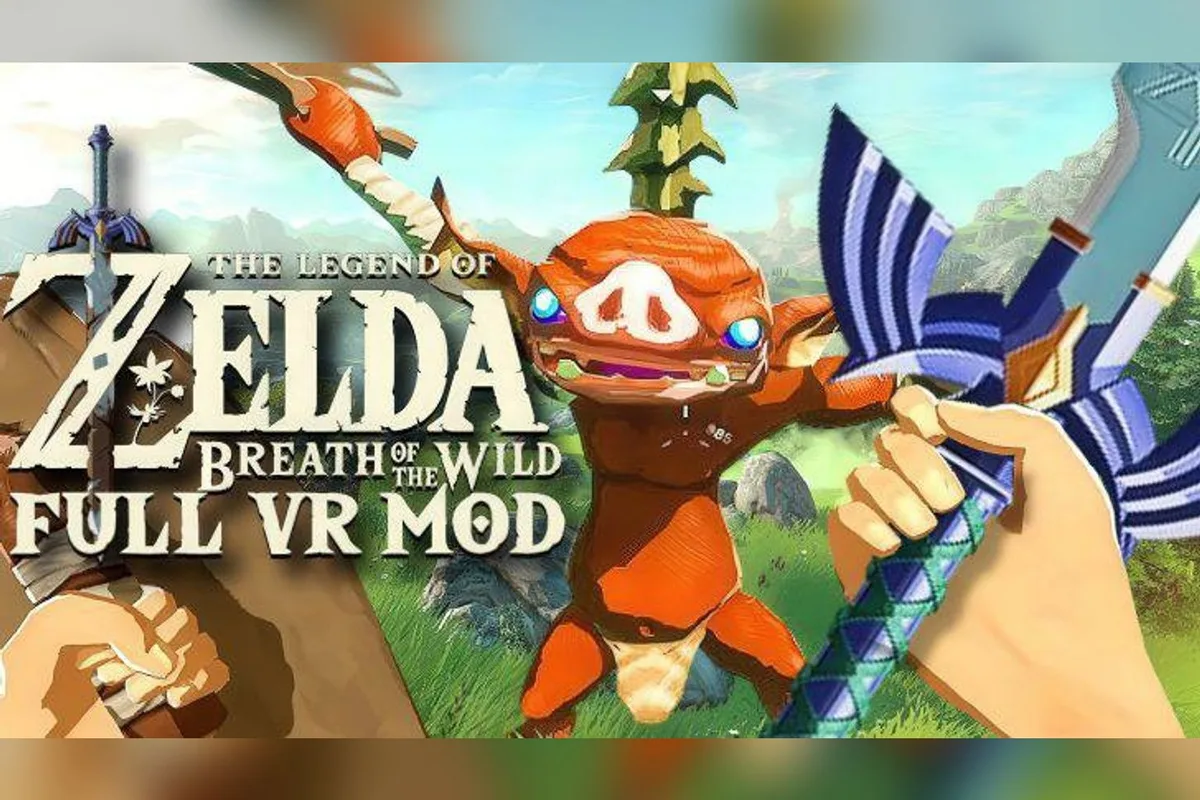
BetterVR Mod Brings Zelda: Breath of the Wild to Full VR via Cemu
BetterVR Mod Brings The Legend of Zelda: Breath of the Wild to Virtual Reality
The BetterVR mod has transformed The Legend of Zelda: Breath of the Wild into a fully playable virtual reality experience, featuring six degrees of freedom (6DOF), roomscale support, and motion control interactions. According to reporting from Wccftech and El Chapuzas Informático, developer Crementif has pushed roughly 20 updates to the software over the past seven months, refining the stereoscopic pipeline and reversing parts of the Wii U game engine to achieve native-feeling VR rendering.
The Tech TL;DR:
Architecture & Emulation: Built for the Cemu Wii U emulator, the mod injects a Vulkan rendering layer to intercept the final image and redirect it through an OpenXR pipeline.
Hardware Compatibility: Works across major headsets like Meta Quest and Valve Index, though controller bindings currently target Oculus Touch hardware natively.
Development Effort: Driven by thousands of hours of reverse-engineering on the custom, undocumented engine powering the 2017 title.
Engineering the VR Pipeline in Cemu
To achieve a stereoscopic 3D projection without flat-screen distortion, the modder had to bypass standard emulator output limitations. According to Wccftech, BetterVR utilizes a Vulkan layer that positions itself between the Cemu emulator and the GPU. This layer captures the final rendered frame before it hits the monitor, piping the data through a Direct3D 12 (D3D12) rendering wrapper so that OpenXR-compatible headsets can parse the stream.
Because simply intercepting a 2D frame only produces a flat projection floating in space, deep code modification was required. Crementif rewrote routines handling camera angles, hand placements, and separate eye-rendering frames within the Wii U’s PowerPC architecture. The complexity of this reverse-engineering task underscores the challenge of forcing an undocumented game engine to render independent viewpoints per frame.
Implementation Specs and Code Interception
Unlike traditional desktop mods that replace texture packs or model assets, BetterVR operates purely at the execution layer. El Chapuzas Informático notes that the mod modifies game code directly without altering core game data files, ensuring broad compatibility with existing game enhancements and multiplayer builds.

Below is a conceptual representation of how graphics hooks intercept pipeline frames via rendering layers:
// Conceptual Vulkan Layer Interception Loop
void InterceptAndRedirectFrame(VkCommandBuffer cmdBuffer, VRSwapchain targetChain) {
    // Capture pre-presentation framebuffer
    VkImage renderedFrame = GetActiveFramebuffer();

    // Convert Vulkan context to D3D12 compatible OpenXR surface
    BridgeToOpenXR(renderedFrame, targetChain);

    // Submit stereo eye updates (Left/Right view matrices)
    RenderStereoPair(cmdBuffer);
}
Performance Realities and Headset Configurations
While the mod supports any headset utilizing OpenXR—including the HTC Vive, Valve Index, and Windows Mixed Reality devices—controller mappings remain optimized explicitly for Oculus Touch hardware, according to technical notes covered by Wccftech. Users operating Meta Quest headsets are advised by the developer to bypass native Meta Link due to frame interpolation overhead, utilizing ALVR, Virtual Desktop, or Steam Link instead to maintain fluid head-tracking.
The project roadmap includes upcoming updates aimed at implementing full Linux support, dual-wielding mechanics, and synchronized multiplayer compatibility via recent iterations of the Cemu emulator. As these features roll out into production builds, developers and enthusiasts can track ongoing changes directly through the open-source repository on GitHub.