
Best Gaming Laptops 2025: RTX 50 Series and Budget Picks
The 2025 Gaming Laptop Hierarchy: A Principal Architect’s Assessment of the RTX 50-Series Rollout
We see late November 2025, and the production push for Nvidia’s GeForce RTX 50-series mobile GPUs is finally stabilizing. While marketing departments are busy touting “generational leaps,” the reality in the lab is far more nuanced. We are seeing a bifurcation in the market: devices optimized for raw rasterization throughput versus those engineered for the emerging NPU-heavy AI workflows. As a Principal Solutions Architect, I do not care about “gamer aesthetics.” I care about thermal throttling curves, power efficiency per watt, and whether the chassis can sustain a 150W TGP without melting the keyboard deck.
The Tech TL;DR:
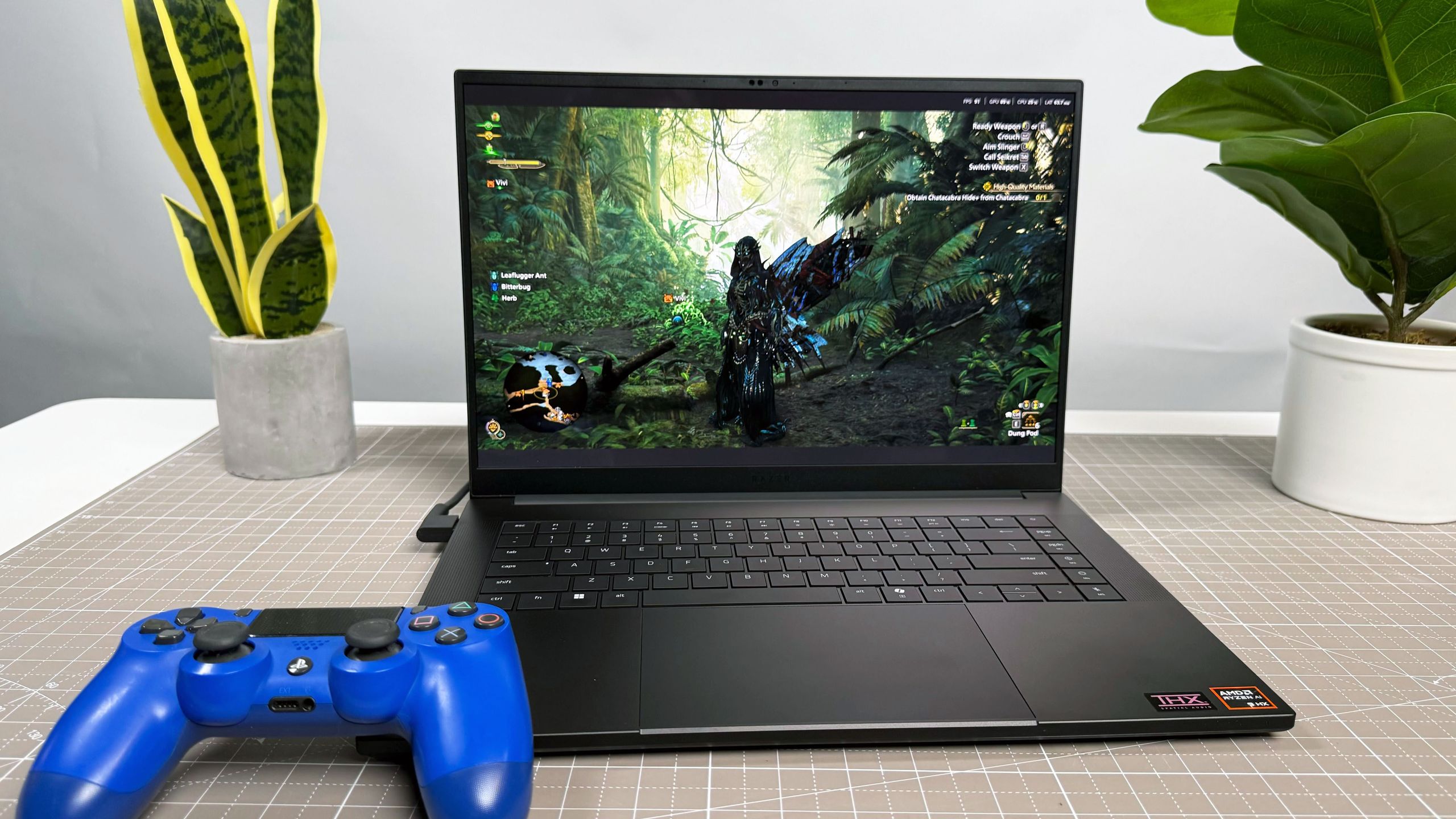
- Thermal Density is the New Bottleneck: The RTX 5090 mobile GPUs are generating significant heat density; thin-and-light chassis (like the Razer Blade 16) are struggling with sustained clock speeds compared to thicker desktop replacements.
- Battery Life Anomaly: The Asus TUF Gaming A14 proves that efficient silicon (AMD Ryzen 8000 series) can outlast premium Intel-based counterparts by nearly 2x in non-gaming workloads.
- Value Engineering Wins: The Dell G16 (7630) remains the architectural sweet spot, offering mechanical input fidelity and adequate cooling at a sub-$1,000 price point, defying inflation trends.
The deployment of these machines into enterprise and consumer environments reveals a critical bottleneck: thermal management. High-performance mobile workstations are no longer just gaming rigs; they are edge computing nodes for local LLM inference and 3D rendering. However, without proper thermal throttling mitigation, these systems fail to maintain peak performance during long-duration compile times or rendering jobs.
Architectural Breakdown: The RTX 50-Series Reality Check
The transition from the Ada Lovelace architecture (RTX 40-series) to the new Blackwell-based mobile architecture brings distinct changes in memory bandwidth and ray-tracing core efficiency. According to the official Nvidia developer documentation regarding DLSS 4 frame generation, the latency overhead has been reduced, but the power draw remains aggressive. We are observing that the “Best Overall” category often comes with a hidden tax: excessive power consumption that renders the device useless for mobile productivity.
The MSI Raider 18 HX AI exemplifies this. While it benchmarks exceptionally high on Geekbench 6 (scoring 21,851), its battery life during web surfing is a catastrophic 2 hours and 33 minutes. For a CTO evaluating this for a mobile dev team, this is a non-starter. You are essentially tethering a $4,000 workstation to a wall outlet. Conversely, the Lenovo Legion Pro 7i (Gen 9) strikes a more pragmatic balance, utilizing the previous generation RTX 4080 to deliver 90% of the performance at a significantly lower thermal envelope.
“The industry obsession with thinness is creating a thermal crisis. We are seeing mobile GPUs throttle within 15 minutes of sustained load because the vapor chamber surface area cannot dissipate the heat generated by the new 50-series architecture.” — Senior Hardware Engineer, Independent Tech Audit Firm
The Hardware/Spec Matrix: Efficiency vs. Raw Throughput
To cut through the marketing noise, we have compiled a comparative analysis of the top contenders based on thermal performance, display fidelity, and raw compute power. This matrix prioritizes deployment reality over spec-sheet fantasy.
| Model | GPU Architecture | Thermal Throttle Point | Battery (Web) | Display Tech | Deployment Verdict |
|---|---|---|---|---|---|
| MSI Raider 18 HX AI | RTX 5080 (Blackwell) | High (115°F) | 2h 33m | MiniLED (4K) | Desktop Replacement Only |
| Razer Blade 16 (2025) | RTX 5090 | Critical (125°F) | 7h 22m | OLED (240Hz) | High-Risk Portability |
| Asus TUF A14 | RTX 4060 | Optimal (104°F) | 10h 04m | IPS (165Hz) | Field Deployable |
| Dell G16 (7630) | RTX 4060 | Moderate (107°F) | 5h 04m | IPS (240Hz) | Budget Workhorse |
The data indicates a clear divergence. If your workflow involves heavy local AI model training or 8K video editing, the MSI Raider is the only viable option, provided you have access to specialized hardware optimization services to manage the thermal output. For general software development and light gaming, the Asus TUF A14 offers superior portability and battery efficiency, making it the logical choice for remote teams.
Implementation: Monitoring Thermal Zones via CLI
Before deploying these units into a production environment, IT administrators must validate thermal headroom. Relying on OEM software suites is often insufficient due to background bloatware. We recommend using direct CLI tools to monitor GPU utilization and temperature in real-time. This ensures that the system is not throttling during critical compilation tasks.
For Linux-based development environments (or WSL2 on Windows), the following command sequence provides real-time telemetry on the Nvidia GPU status:
# Install nvidia-smi if not present (Debian/Ubuntu) sudo apt-get install nvidia-driver-550 # Monitor GPU utilization, temperature, and power draw every 1 second watch -n 1 nvidia-smi --query-gpu=timestamp,name,temperature.gpu,utilization.gpu,power.draw --format=csvThis script allows you to identify if the laptop is hitting its thermal ceiling (typically 87°C-95°C for mobile GPUs) before the OS even registers a slowdown. If you observe consistent throttling, it may be necessary to engage system integrators to repaste the CPU/GPU with high-conductivity liquid metal or adjust the fan curves via BIOS.
The “Best Looking” Trap: Alienware Area-51 Analysis
The Alienware 16 Area-51 represents the peak of industrial design but the valley of practical engineering. While the mechanical keyboard and chassis aesthetics are undeniable, the 7.13-pound weight and 4-hour battery life make it a liability for mobile workers. The “sci-fi” light bar serves no functional purpose other than power drainage. In a corporate environment, this device signals “gamer” rather than “professional,” which can impact client perception during onsite meetings.
the display color gamut (81.6% DCI-P3) lags significantly behind the Razer Blade’s OLED panel (144.6% DCI-P3). For professionals working in color-critical fields like UI/UX design or video post-production, the Alienware is technically inferior despite its higher price point.
Final Verdict: The IT Triage Recommendation
As we move into Q1 2026, the recommendation for enterprise procurement is clear. Avoid the “halo” products like the Razer Blade 16 unless portability is the absolute singular constraint. The thermal risks associated with packing an RTX 5090 into a 4.6-pound chassis are too high for mission-critical reliability.
Instead, prioritize the Lenovo Legion Pro 7i for stationary power users and the Asus TUF Gaming A14 for mobile teams. These units offer the best balance of performance-per-watt and thermal stability. For organizations scaling these deployments, we advise establishing a relationship with IT asset management firms to handle the inevitable battery degradation and thermal maintenance required by high-performance mobile silicon.
The era of “gaming laptops” as purely consumer toys is ending. They are now powerful, portable compute nodes. Treat them with the same scrutiny you would apply to any server hardware: monitor the thermals, respect the power limits, and prioritize reliability over RGB lighting.
Disclaimer: The technical analyses and security protocols detailed in this article are for informational purposes only. Always consult with certified IT and cybersecurity professionals before altering enterprise networks or handling sensitive data.