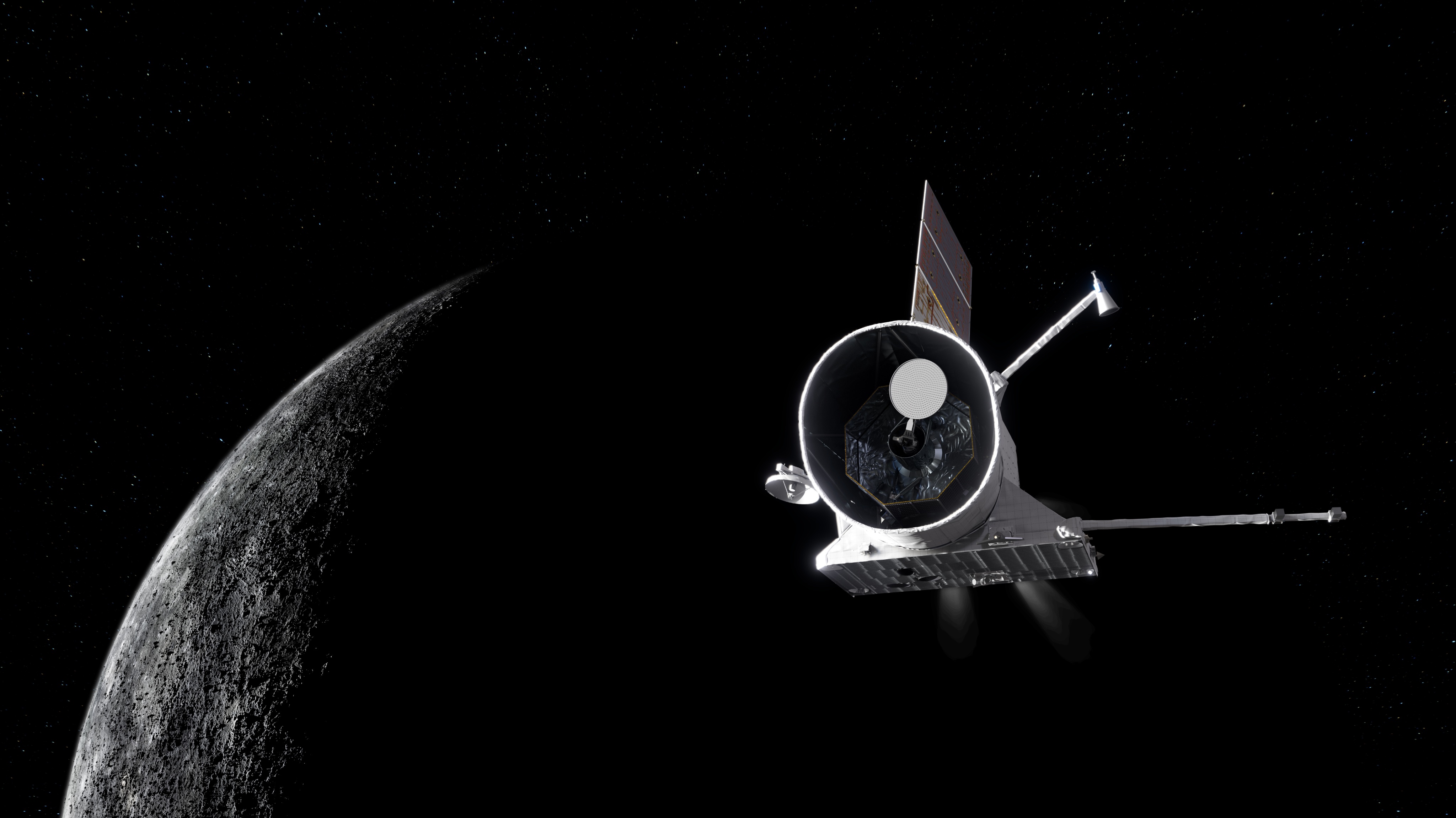
BepiColombo Reaches Mercury Orbit After Eight-Year Flight, ESA and JAXA Confirm
Mercurio orbit probe enters destination after eight-year flight.
The joint BepiColombo mission reached the orbit of Mercury on November 21, 2026, after traversing 9.9 billion kilometres across the inner solar system, according to the European Space Agency and the Japan Aerospace Exploration Agency. Propulsors on the spacecraft ignited for 37 minutes at 18:24 UTC, placing the stack into an initial elliptical orbit of 674 by 174,000 kilometres, as detailed by Naukas and Microsiervos.
Mission controllers experienced several hours of suspense before receiving confirmation of the orbital insertion because contact took longer than anticipated, Microsiervos reported. The arrival was originally slated for November 2025, but engineers had to modify the trajectory due to a drop in electrical production from the spacecraft solar panels, according to Microsiervos.
The spacecraft relies on a complex design carrying two scientific orbiters: the Mercury Planetary Orbiter from the ESA and the Mercury Magnetospheric Orbiter from JAXA, housed together during transit with a sunshield and a propulsion module, BBC News Mundo reported, according to El Espectador.
The propulsion module used ion thrusters to brake against the intense gravitational pull of the Sun before separating in September, as noted by Naukas and BBC News Mundo.

Spacecraft Propulsion and Hardware Design
For propulsion, BepiColombo carried a third module entirely dedicated to propulsion using ion engines, known as the MTM, which was manufactured principally in the United Kingdom, Naukas reported. The mission required approximately 7 kilometres per second of delta-V to position itself around Mercury, with the MTM contributing 4.2 kilometres per second using its four QinetiQ T6 ion engines, according to Eureka.
Because the Mio orbiter cannot rotate while coupled to the Mercury Planetary Orbiter, it traveled protected by the Magnetospheric Orbiter Sunshield and Interface Structure, a 1.8 by 3 meter structure weighing approximately 125 kilograms built by the ESA, Naukas reported. Naukas said that the hardware also includes a 20-kilogram mechanism responsible for rotating Mio and ejecting it.
🛰️👀 Next up – New @BepiColombo milestone! After 8 years and multiple flybys around #Mercury, the @esa / @JAXA_en mission is finally inserting into Mercury orbit on 21 November. Stay tuned here for live updates on the day of Mercury orbit insertion!@esascience @ISAS_JAXA_EN pic.twitter.com/sOef2F48YX
Releasing Sunshield After Separation
Following the separation of the Mio orbiter in December 2026, the stack will discard the MOSIF sunshield on December 16, as noted by Microsiervos.
The mission has a planned duration of one year with a possible extension of another year, according to Microsiervos. Santa Martínez, the ESA BepiColombo mission director, declared earlier that the project is very ambitious and will provide humanity with unprecedented views of Mercury, opening a new chapter in our understanding of the solar system, as reported by BBC News Mundo.

Future Observations and Previous Missions
El Espectador said that by orbiting closer to Mercury than its predecessor, the ESA orbiter will capture higher resolution images and achieve much more complete coverage of the southern hemisphere. Doris Breuer, head of planetary physics at the German Aerospace Center, explained to BBC News Mundo that the general public and policymakers tend to feel more fascinated by planets like Mars where life might have existed.
Mireia Leon Dasi, an ESA scientific operations researcher for the mission, told BBC News Mundo that scientists used to think Mercury would be like a small floating rock near the Sun, practically dead in geological terms, but every mission has changed our understanding of the entire solar system.
Orbital Separation and Scientific Goals
Both orbiters remain coupled in orbit for now, but scheduled maneuvers will circularize their paths ahead of a decisive split, according to Autonoción. Autonoción reported that the JAXA orbiter, known as Mio, will separate from the ESA orbiter between December 9 and 10, 2026, marking the first time two distinct spacecraft will orbit Mercury simultaneously.
Following the split, Mio will operate in a higher orbit to monitor the magnetic field and charged particles, while the ESA orbiter will fly closer to map surface minerals and examine the core, BBC News Mundo reported. Full scientific data collection is scheduled to begin in April 2027, once both probes reach their final operational orbits, according to El Espectador and Microsiervos.

Researchers hope the mission will clarify why the small planet appears to be shrinking as it cools, and whether ice remains hidden inside shadowed polar craters despite daytime surface temperatures reaching 430°C, BBC News Mundo reported.
Previous spacecraft visits were limited, with NASA’s Mariner 10 flying past in the 1970s and the Messenger probe orbiting from 2011 to 2015, leaving the southern hemisphere largely unexplored by orbiters until now, according to BBC News Mundo and NASA records cited by the outlets.