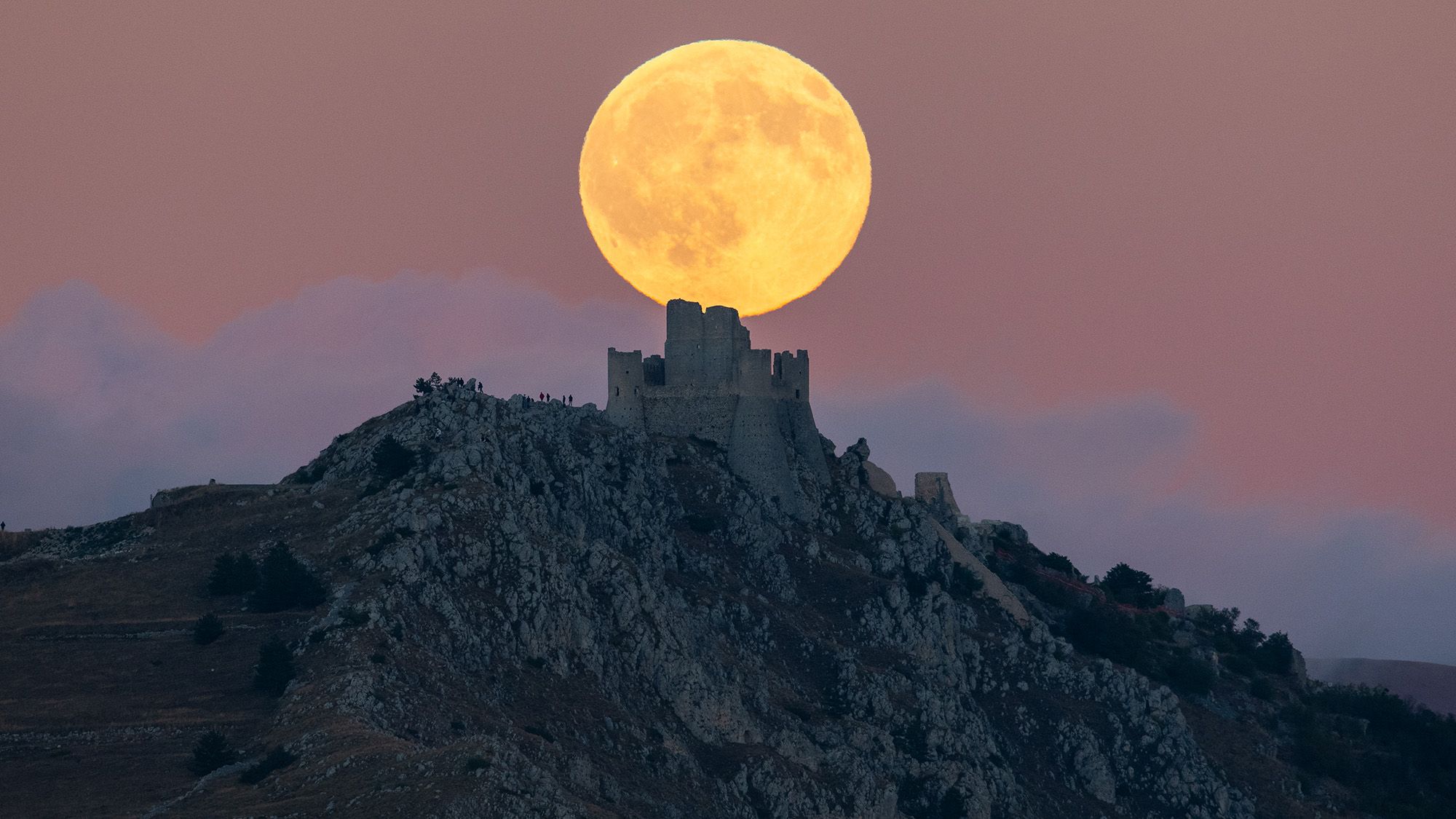
Beaver Moon Starts Three Supermoons Nov. 24, Includes Christmas Eve
The first of three consecutive supermoons will rise at dusk this Tuesday, November 24, as the moon reaches its full phase at 9:53 a.m. ET.
Known as the Beaver Moon, the event marks the start of a series of unusually close full moons that includes December’s spectacular Christmas supermoon. While the moon technically reaches its full phase while below the horizon in North America, the best viewing opportunity occurs during Tuesday’s moonrise. As the moon ascends in the east near sunset, the “moon illusion”—a visual effect that makes objects near the horizon appear larger—will likely enhance its appearance, according to USA Today.
The Beaver Moon, sometimes called the Frost Moon or the Freezing Moon by the Anishinaabeg people, arrives as the moon enters a point in its elliptical orbit closer to Earth than average, which is 238,900 miles, LiveScience reported. This proximity makes a supermoon appear up to 14% larger and 30% brighter than a full moon at its farthest point, according to USA Today.
The upcoming sequence of supermoons includes the Cold Moon on December 24, 2026, the Wolf Moon on January 22, 2027. The December event will be particularly notable, as the moon will come closer to Earth than at any time since January 2, 2018, according to the late astrophysicist Fred Espenak, as cited by LiveScience.
| Full Moon | Date | Distance |
|---|---|---|
| Beaver Moon | Nov. 24, 2026 | 224,170 miles |
| Cold Moon | Dec. 24, 2026 | 221,667 miles |
| Wolf Moon | Jan. 22, 2027 | 222,229 miles |
Anishinaabeg Name and Additional Nicknames Revealed
Other traditional nicknames include the Frost Moon and Snow Moon, LiveScience reported.
Four Supermoons Confirmed Through February 2027
The Beaver Moon on Nov. 24 is the first, followed by the Cold Moon on Dec. 24, the Wolf Moon on Jan. 22, 2027.
The Cold Moon will reach peak illumination at 8:28 p.m. EST. The Wolf Moon reaches full phase at 7:17 a.m. EST on Jan. 22, and the Snow Moon at 6:23 p.m. EST on Feb. 20, according to NASA as cited by USA Today.
November’s Beaver Supermoon is the smallest of the three consecutive supermoons identified by EarthSky, LiveScience reported.
Related reading
- Author Publishes 370 Books in 20 Months Using Multi-Model AI Workflow
- Researchers Say Wernicke Neurons Plan Speech, Resolving Paradox
- American Heart Association Finds Christmas Day Is Peak for Cardiac Deaths (time.news)
- Ukraine Strikes Kerch Bridge Over Three Nights; Road Span Gone, Rail Link Cut (newsy-today.com)