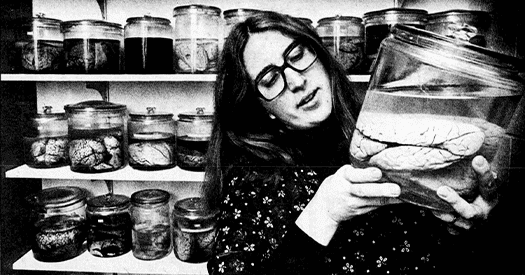
Barbara Finlay shaped neuroscience by linking brain structures
Barbara Finlay spent decades reshaping neuroscience by linking developmental parameters directly to adult brain structures, departing from standard assumptions in the field. The article traced a scientific career that began after she watched television experiments on cat neurons and decided to become a neuroscientist.
The Tech TL;DR:
- Barbara Finlay earned her B.A. in psychobiology from Oberlin College in 1972 and her Ph.D. from the Massachusetts Institute of Technology in 1976 before joining Cornell University.
- Her 1995 Science paper connected developmental milestones with adult brain structures across species, accumulating more than 1,100 citations.
- She developed a comparative table in 2001 to translate equivalent developmental ages across mammalian species, a project later expanded by Christine Charvet.
From Oberlin College to Cornell University Laboratories
Finlay’s academic trajectory started with her undergraduate studies at Oberlin College, culminating in a 1972 degree in psychobiology. She advanced immediately to the Massachusetts Institute of Technology, completing her Ph.D. in brain and cognitive sciences in 1976. That same year, she secured a position as an assistant professor in the psychology department at Cornell University. Her early laboratory investigations examined visual system development, analyzing how thalamic projections located their targets and observing specific patterns of cell death.
The 1995 Science Paper That Changed Comparative Neurobiology
A turning point in her research arrived with a 1995 publication in Science that linked developmental parameters with adult neuroanatomy. Tying those developmental parameters with the adult structure was really innovative,
said Christine Charvet, assistant professor of neurosciences at Auburn University and a former postdoctoral researcher in Finlay’s lab. The study became her most cited work, surpassing 1,100 citations. Alexander Ophir noted that Finlay operated as a maverick who pushed peers to rethink foundational assumptions in their studies.

Expanding the Interspecies Developmental Table
Building on her 1995 findings, Finlay expanded her predictive models to cover additional developmental events across a wider range of mammalian species. In 2001, she published a reference table designed to help researchers translate time and identify equivalent developmental ages across different animals. By 2013, the model had expanded to incorporate 271 events across 18 mammalian species, spanning the first three years of human development. Charvet assumed leadership of the project upon opening her own lab in 2018, expanding the dataset to 1,000 events while working toward coverage of the complete human lifespan.
Finlay Synthesized Disparate Fields Through Extensive Reading
Colleagues noted Finlay’s extensive reading habits and her capacity to synthesize disparate fields rapidly. Jeri Janowsky, a former graduate student in her lab, recalled finding stacks of books by Finlay’s bedside that she would finish in a single evening. Malcolm MacIver, professor of biomedical and mechanical engineering at Northwestern University, observed that conversations with Finlay could transition swiftly from brain evolution to metabolism, robotics, and the evolution of vision. MacIver remarked that she possessed a mind of a different kind, though her conversational style could be elliptical and difficult to follow immediately. Her son, Will Vineyard, and daughter, Laura Vineyard, remembered her dry, sarcastic humor and her tendency to introduce playful fabrications into household discussions.