Bangladesh measles outbreak death toll reaches 1,196
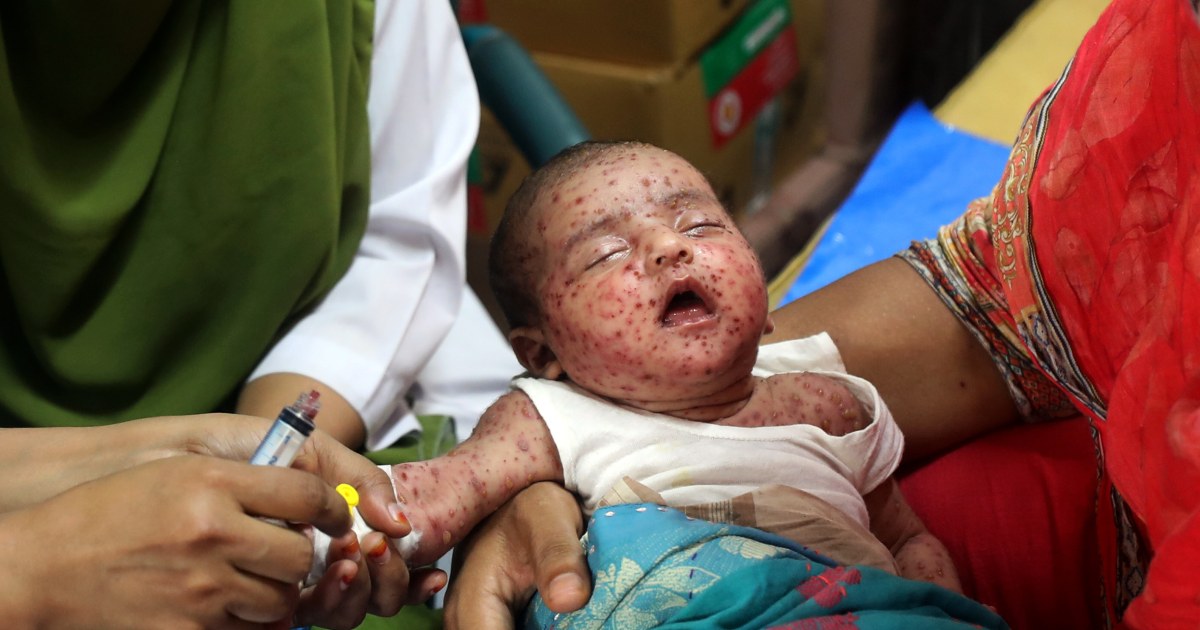
As Bangladesh battles a severe nationwide measles surge, health authorities and international agencies report that the combined death toll from confirmed measles and measles-like symptoms has reached 1,196 this year, with thousands of new cases overwhelming hospital wards.
-
Key Clinical Takeaways:
- Official health bulletins from the Directorate General of Health Services (DGHS) show national hospital admissions for suspected measles have surpassed 189,484 since March 15.
- WHO and UNICEF data indicate that routine vaccination coverage fell to 90% for the first dose and 86% for the second dose, falling short of the 95% threshold required for herd immunity.
- Accelerated emergency vaccination campaigns launched in April faced planning shortcuts, leaving vulnerable populations exposed.
The Directorate General of Health Services (DGHS) announced that the country’s combined tally of confirmed and suspected measles fatalities reached 1,196, as reported by Bd24live and The Daily Star. Of this total, the DGHS classified 1,092 deaths as stemming from measles-like symptoms, while confirmed laboratory-tested measles deaths stand at 104.
Hospital admissions remain high across multiple regions. The DGHS reported that nationwide admissions for suspected measles reached 189,484 patients since March 15, with 181,756 individuals treated and discharged. In a single 24-hour reporting window, hospitals admitted 1 thousand 21 new patients while discharging 1 thousand 26 others. Division-wise data from the DGHS highlighted heavy caseloads in the Dhaka, Chattogram, Barishal, and Sylhet divisions.
Political Disruption Derails Routine Immunization Schedules
The outbreak follows a period of intense political disruption. Protests erupted that ended 15 years of rule by Prime Minister Sheikh Hasina, precipitating health worker strikes, delayed vaccine orders, and derailed routine immunization schedules. In July, a joint WHO and UNICEF report estimated that first-dose coverage dropped to 90% and second-dose coverage fell to 86%, below the 95% mark needed for herd immunity.
Although the government launched an emergency vaccination program in April and May that reportedly reached nearly 20 million children, subsequent health interventions revealed systemic counting gaps. A subsequent routine health campaign in June identified four million more children in the same age demographic than the measles rollout had targeted. Prime ministerial adviser Hyder told Reuters that vaccine hesitancy and child illnesses contributed to the missed populations.
Internal documents from meetings between the government and the WHO, reviewed by Reuters, revealed that time constraints led officials to conduct only a single round of readiness checks before launching the emergency drive, bypassing the standard four rounds. Professor Mahmudur Rahman, an epidemiologist and chair of Bangladesh’s National Verification Committee for Measles and Rubella Elimination, told NBC News that inadequate preparedness checks disproportionately affect the poorest and hardest-to-reach children.
Vaccination Gaps Persist Despite Government Follow-Up Campaigns
August meeting minutes noted that the proportion of children with confirmed measles who remained unvaccinated was virtually unchanged between the pre-campaign phase at 82% and the post-campaign phase at 85%. In Sylhet, where official records note 180 child fatalities, families interviewed by Reuters in September stated that health workers failed to visit their communities until after a child had died from the disease.

At the end of September, the government initiated a follow-up campaign aimed at reaching 3.4 million children who were missed in earlier efforts. Reaching these populations remains difficult; UNICEF and the Bangladesh Bureau of Statistics estimate that up to 40% of children go unregistered, and approximately one-third of health worker positions remain vacant. Concurrently, medical facilities face compounding pressure as clinicians treat patients amid an ongoing dengue epidemic, leaving hospitals such as Sylhet’s 100-bed Shahid Shamsuddin Ahmed Hospital operating significantly over capacity.
Disclaimer: The information provided in this article is for educational and scientific communication purposes only and does not constitute medical advice. Always consult with a qualified healthcare provider regarding any medical condition, diagnosis, or treatment plan.