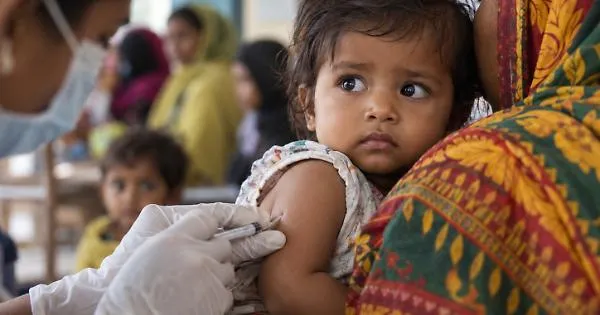
Bangladesh Launches Measles Vaccination Campaign After 1,000 Deaths
Bangladesh has launched an emergency vaccination campaign targeting millions of children aged 6 to 59 months to combat a severe measles outbreak that has surpassed 1,000 deaths. Driven by routine immunization gaps, the outbreak has generated nearly 187,000 suspected cases and over 165,000 hospitalizations since the crisis began, according to data from public health authorities.
- Bangladesh initiated a targeted immunization campaign for millions of unvaccinated children aged 6 to 59 months following an outbreak that caused 1,087 confirmed or suspected deaths.
- The World Health Organization notes that measles requires at least a 95% two-dose population coverage to prevent transmission due to the virus’s high contagiousness.
- Italy reports similar vulnerabilities, with 609 measles cases recorded in the first five months of 2026 and pediatric second-dose coverage lagging behind the 95% target.
Epidemiological Impact and Case Demographics in Bangladesh
The scale of the crisis in Bangladesh reflects intense viral transmission across the country. Authorities have documented 187,000 suspected cases and 165,000 hospitalizations, alongside 1,087 total deaths classified as confirmed or suspected measles cases. Laboratory testing has verified 21,099 of the total cases and confirmed 101 specific fatalities.
Vulnerability remains concentrated among the very young. World Health Organization reports from April indicated that 79 percent of registered cases involved children under five years old, while 66 percent affected children under two. Unvaccinated infants under two years old account for the vast majority of severe outcomes and suspected fatalities.
Viral Transmission Dynamics and the 95 Percent Threshold
Measles persists as a major public health challenge because of its extreme transmissibility. According to World Health Organization parameters, a single infected person can transmit the virus to up to 18 non-immune individuals. Interrupting this transmission cycle requires a sustained community coverage rate of at least 95 percent with two doses of the measles vaccine.
When coverage drops below this threshold, the virus rapidly exploits accumulated pockets of susceptible individuals. High national averages can obscure localized vulnerabilities, such as specific districts or neighborhoods with depressed immunization rates. In Bangladesh, wide dissemination occurred across 58 of 64 administrative districts, demonstrating how localized immunity gaps fuel nationwide epidemics.
Global Immunity Deficits and Historical Context
The challenges observed in South Asia reflect broader international trends in routine immunization coverage. Global estimates for 2025 indicate that millions of children worldwide lacked sufficient protection against measles. While 84 percent received their first dose within their first year of life, only 77 percent completed the necessary two-dose series.
These gaps translate directly into disease resurgence. Global monitoring estimated millions of infections and numerous deaths in 2024, predominantly among children under five years of age. During that same year, numerous countries experienced large or disruptive measles outbreaks. These figures contrast with the historical success of immunization programs; since 2000, measles vaccination has prevented an estimated millions of deaths worldwide, proving that sustained, high-coverage delivery remains the primary defense against viral resurgence.
Immunization Gaps and Surveillance Data in Italy
Similar vulnerabilities affect European nations where coverage rates hover near, but fall short of, the 95 percent benchmark. Official Italian health data from 2024 show that measles immunization for children born in 2022 reached 94,77 percent with a single dose, while coverage for children aged 5 to 6 and 8 years lagged between 84 and 86 percent for the second dose. Among 16-year-olds, coverage reached 90.85 percent.
Active viral circulation accompanies these immunity gaps. Surveillance reports from the Istituto Superiore di Sanità recorded 609 measles cases—comprising possible, probable, and confirmed classifications—during the first five months of 2026. Laboratory testing confirmed 472 of these cases. In January 2026 alone, the agency processed 84 notifications, of which 73 were laboratory-confirmed. Among patients with a documented vaccination history, 90.9 percent were unvaccinated at the time of exposure, and more than one-third experienced clinical complications requiring specialized pediatric care.
Disclaimer: The information provided in this article is for educational and scientific communication purposes only and does not constitute medical advice. Always consult with a qualified healthcare provider regarding any medical condition, diagnosis, or treatment plan.