Balearic Islands Director Pablo Gárriz Monitors Environmental Consequences of Tanker Capsizing Near Ibiza
A diesel tanker carrying 8.2 million liters of fuel capsized northwest of Ibiza on Thursday leaving one crew member dead.
The vessel, which was carrying a total of 8,200 tons of fuel, capsized during the night between Wednesday and Thursday.
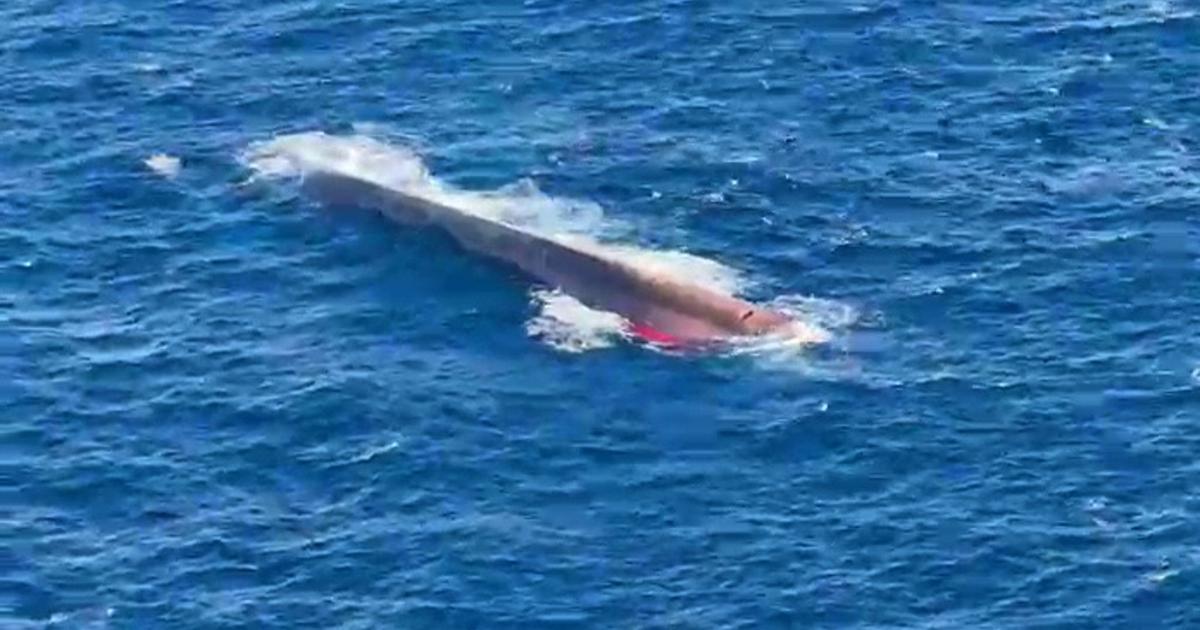
The 120-meter-long vessel “Med Emre” came to rest upside down and partially submerged about 50 kilometers from the Spanish holiday island, according to ORF.at. Operating under the Maltese flag, the ship was en route from Algeciras to Barcelona when it encountered severe weather, as reported by the Tages-Anzeiger.
The regional emergency service reported that 17 crew members were pulled from the water, though one later died in an Ibiza hospital and six others suffered mild injuries like hypothermia, according to SRF. The remaining 16 survivors are citizens of Turkey and India.
Spanish authorities activated a level 2 national emergency plan for marine pollution, deploying aircraft and maritime rescue vessels to scan the area, SRF reported.
Officials initially discovered a 4.8-kilometer oil film on the water’s surface, which Euronews noted likely originated from onboard machinery residues rather than the cargo itself. The Balearic Islands emergency director, Pablo Gárriz, told BILD that “we are monitoring what consequences this accident may have for the environment.”

Authorities assess environmental impacts and risks
While the emergency director for the Balearic Islands, Pablo Gárriz, confirmed that officials are actively monitoring the situation for environmental consequences, marine biologist Manu San Félix described the situation to the newspaper El Diario de Ibiza as “bad news, but not the worst-case scenario.”
She explained that if small organisms at the base of the food chain are affected, the consequences could ripple throughout the entire marine food web.
Engineers plan complex fuel recovery operations
Although the 2019-built double-hulled vessel was recently inspected in Italy without defects, port captain Elena Delgado characterized its rapid capsizing in moderate sea conditions as both “surprising and perplexing.” Because the ship remains afloat and upside down, salvage teams have the advantage of working at the surface rather than at a depth of 1,000 meters, according to ORF.
Spanish authorities are currently evaluating a salvage proposal submitted by the Turkish shipowner to manage the diesel cargo.

Environmental and Safety Concerns
Greenpeace spokeswoman Nina Noelle said a larger diesel spill off Ibiza would threaten the Balearic Islands' sensitive marine ecosystems; biologist Manu San Félix noted the incident is bad but not the worst outcome.
The tanker, built in 2019, is a double-hulled vessel that had recently passed an inspection in Italy without defects. Despite this, port captain Elena Delgado described the capsizing in stormy weather—with wave heights exceeding two meters—as “surprising and perplexing.”
The Balearic Islands, an autonomous community and province of Spain, comprise an archipelago in the western Mediterranean Sea. With an area of 4,991.70 square kilometres, the region functions under a Statute of Autonomy established in 1983.
This administrative framework empowers local authorities to manage environmental oversight within their territorial waters, a capacity currently exercised by the Balearic Islands emergency director. Following the recent maritime incident, regional officials have actively monitored potential ecological impacts, while environmental advocates have highlighted that the surrounding waters host sensitive marine ecosystems requiring vigilance against pollution threats.
Because the double-hulled vessel continues to float upside down rather than resting on the seabed 1,000 meters below, authorities said that recovery teams can work directly at the surface. Maritime specialists are currently reviewing a salvage proposal submitted by the Turkish shipowner to tow the tanker and pump out the remaining fuel.
Jesús Alarcón, chairman of the Association of Naval Engineers in the Canary Islands, explained that experts intend to use a “hot-tapping” process to attach special valves to the hull, allowing the diesel to be pumped out tank by tank. On Thursday, the rescue vessel “Clara Campoamor” secured the tanker with a line to prevent it from drifting further.