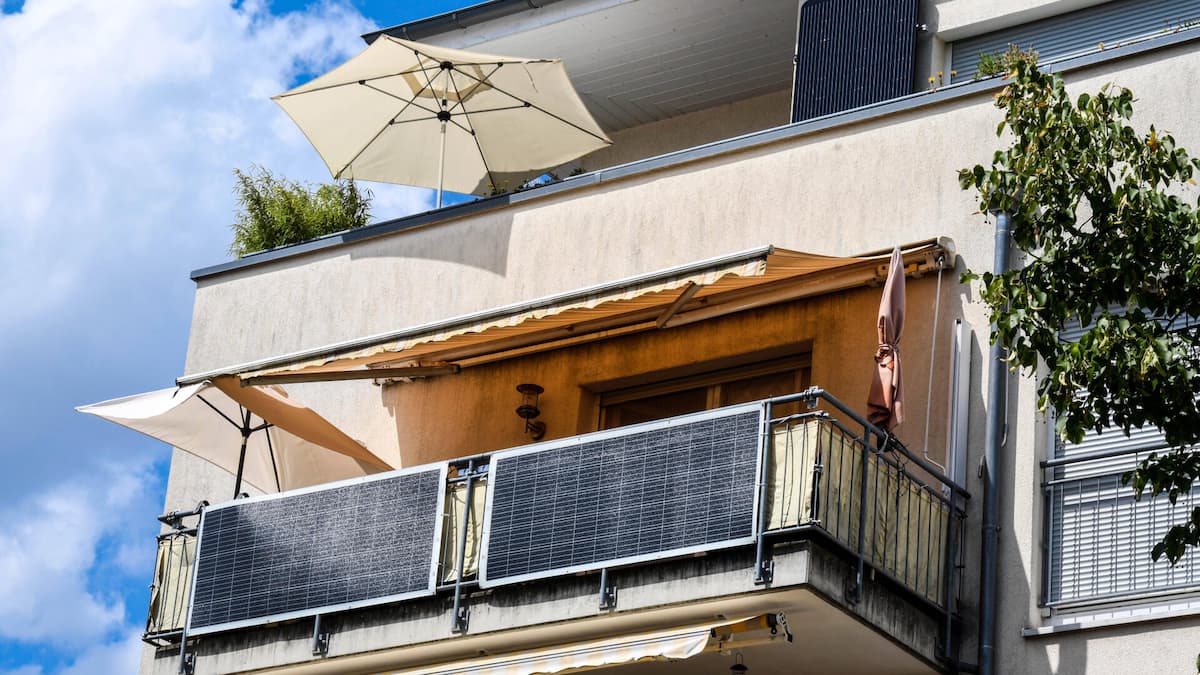
Balcony Solar Power in Switzerland: Plug-and-Play Systems Cover Up to 10% of Household Electricity – But Permits Are Required
On April 22, 2026, Swiss residents increasingly adopt plug-and-play balcony solar systems to cover up to 10% of household electricity demand, yet face inconsistent municipal permitting rules that create legal uncertainty and hinder broader renewable energy integration across cantons.
The problem is clear: while decentralized solar empowers households to cut energy costs and reduce grid strain, fragmented local regulations turn a simple sustainability step into a bureaucratic obstacle course—particularly in densely populated urban areas like Zurich, Geneva, and Basel where housing density and rental agreements complicate installation.
This isn’t just about panels on balconies—it’s about whether Switzerland can scale its Energiewende at the household level without undermining tenant rights or overburdening municipal building departments. The solution lies in connecting residents with the right local expertise: certified solar installers who understand cantonal codes, housing lawyers who navigate leasehold restrictions, and municipal planners advocating for standardized permitting.
The Quiet Revolution on Swiss Balconies
What began as a niche trend among eco-conscious tenants in Bern and Lausanne has accelerated into a measurable shift in residential energy consumption. According to the Swiss Federal Office of Energy (SFOE), balcony photovoltaic (PV) systems contributed an estimated 180 GWh to national electricity generation in 2025—enough to power roughly 50,000 average Swiss households for a year. Yet adoption remains uneven: while 12% of owner-occupied homes in Zurich Canton now report balcony solar, the figure drops to under 3% in Geneva’s rental-heavy districts.
This disparity isn’t accidental. In cantons like Vaud and Ticino, streamlined online permitting allows residents to register plug-and-play systems under 600 watts within 48 hours. But in Zurich and Aargau, applicants must submit structural load calculations, façade alteration requests, and sometimes even neighbor consent forms—processes that can take weeks and cost upwards of CHF 300 in administrative fees.
“We’re seeing tenants invest their own money in climate action, only to be stalled by outdated rules that treat a 400-watt solar kit like a construction project,” said Lukas Meier, a housing policy analyst at the Zurich Tenants’ Association. “The technology is plug-and-play; the bureaucracy is not.”
Where Local Rules Create Real Barriers
The core tension stems from Switzerland’s federalist structure: energy policy is set nationally, but building codes and rental law are enforced at the municipal level. This creates a patchwork where identical systems face wildly different requirements depending on postal code.

In Winterthur, for example, residents must notify the Stadtwerke (municipal utility) before installation—a step absent in nearby Schaffhausen. Meanwhile, in Lugano, historic preservation ordinances ban visible solar fixtures on protected buildings, effectively excluding entire neighborhoods from participation.
These inconsistencies don’t just frustrate individuals—they undermine national goals. Switzerland aims to increase renewable electricity production to 75% of total consumption by 2035. Distributed generation like balcony solar is expected to contribute 8–10% of that target—but only if permitting becomes predictable and accessible.
The Human Cost of Regulatory Friction
Beyond kilowatt-hours, the human impact is tangible. In a 2025 survey by the Swiss Tenants’ Federation (Mieterverband), 68% of renters interested in balcony solar cited fear of landlord retaliation or lease non-renewal as their primary deterrent—even in cantons where tenant protection laws theoretically prohibit such actions.
Legal ambiguity fuels this fear. While the Swiss Code of Obligations allows tenants to build “reasonable alterations” for energy efficiency, what constitutes “reasonable” remains untested in court for plug-and-play PV. Some landlords argue that even non-penetrating, weighted systems constitute façade modification requiring consent—a interpretation challenged by advocacy groups but not yet overturned.
“We’ve advised clients to document everything: take photos of the installation, keep communication with landlords, and consult a housing law specialist before drilling a single hole,” said Nadja Keller, a Bern-based attorney specializing in tenant-landlord disputes. “It’s not about blocking green energy—it’s about ensuring tenants aren’t left exposed when rules collide.”
Who Solves This? The Directory Bridge
For residents navigating this landscape, the solution isn’t DIY optimism—it’s informed action. A certified solar installer familiar with cantonal grid interconnection rules can ensure systems are safely sized and registered. Meanwhile, a tenant rights attorney can clarify lease obligations and draft landlord notifications that comply with both federal encouragement and local statutes.

Equally vital are urban sustainability advisors who work with city councils to draft model ordinances—like those piloted in St. Gallen and Fribourg—that exempt low-voltage balcony systems from lengthy approvals while preserving safety standards. These professionals don’t just install panels; they support align individual action with community-scale resilience.
The long-term vision? A Switzerland where a tenant in Biel can install solar with the same ease as ordering groceries online—where the barrier isn’t paperwork, but access to quality equipment and trustworthy guidance.
As energy prices remain volatile and climate targets tighten, the balcony solar movement reveals a deeper truth: the transition to renewables won’t be won in parliament alone. It will be won—or lost—on the balconies of Zurich, the courtyards of Geneva, and the attics of Basel, one plug at a time. For those seeking to act wisely, the World Today News Directory connects you with the verified local experts who turn intent into impact—safely, legally, and sustainably.