AWS MCP Server: Secure, Authenticated AWS Access for AI Agents
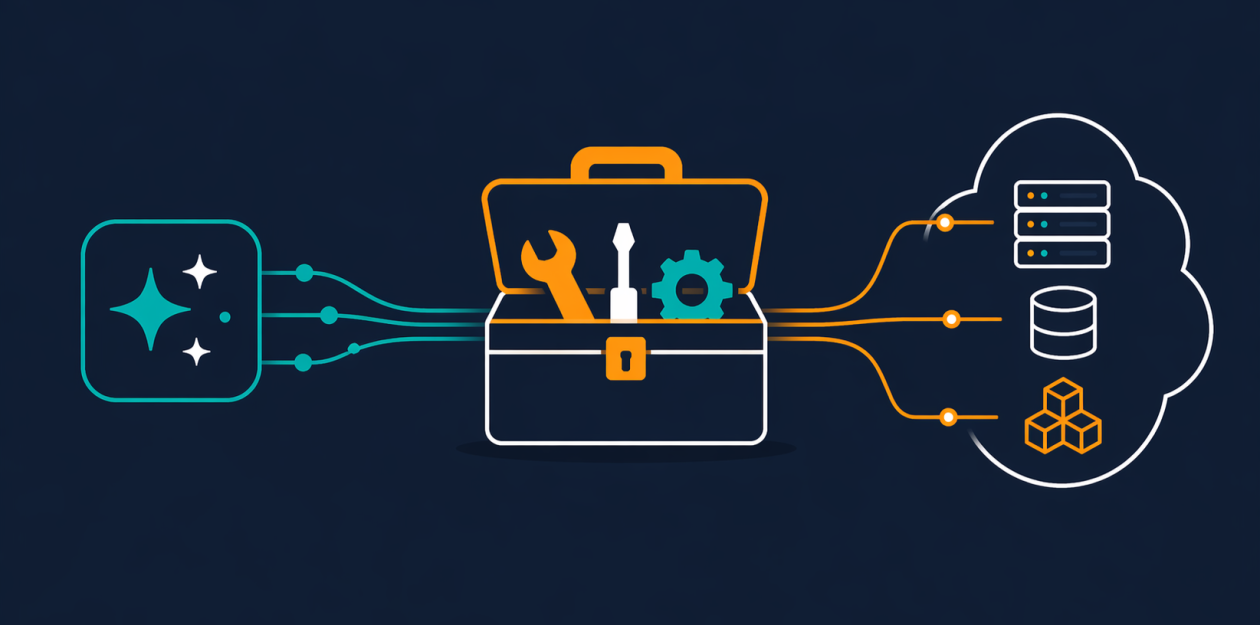
Giving an AI agent access to your cloud environment is usually a choice between two failures: providing zero access, which renders the agent a glorified autocomplete for outdated documentation, or handing over “the keys to the kingdom,” which is a security nightmare that keeps CISOs awake at night. The general availability of the AWS MCP Server attempts to bridge this gap by treating the AI agent as a first-class, authenticated citizen within the AWS ecosystem.
- Production-Ready Access: Provides AI agents secure, authenticated access to 15,000+ AWS API operations via the Model Context Protocol (MCP) without compromising root credentials.
- Context Window Efficiency: Introduces
run_scriptfor server-side sandboxed Python execution, reducing round-trip latency and token burn by chaining API calls. - Real-Time Knowledge: Eliminates LLM training cutoffs by integrating
search_documentationandread_documentationtools for query-time retrieval of the latest service updates.
The fundamental friction in AI-driven infrastructure is the knowledge lag. Most frontier models, including Opus 4.6, operate on training data with significant cutoffs—often months or years old. When an agent attempts to deploy a service like Amazon S3 Vectors (which entered preview in July 2025 and hit GA in December 2025), it typically hallucinates legacy workarounds or fails entirely because the service didn’t exist during its training phase. This leads to the “demo-ware” trap: infrastructure that looks correct in a chat window but fails the first time it hits a production pipeline.
The Architectural Pivot: From SOPs to Skills
AWS is shifting its approach from Agent Standard Operating Procedures (SOPs) to a “Skills” framework. In the previous paradigm, agents relied on broad instructions that often led to inefficient API usage and bloated IAM policies. Skills are curated guidance modules maintained by AWS service teams. By narrowing the toolset to validated best practices, the system reduces the probability of hallucinations and ensures that the agent doesn’t default to the AWS CLI when the AWS Cloud Development Kit (AWS CDK) or CloudFormation is the architecturally sound choice.
For teams managing complex deployments, this shift reduces the need for constant human oversight. However, implementing these “Skills” at scale often requires a strategic overhaul of existing deployment pipelines. Many enterprises are now engaging [Cloud Infrastructure Consultants] to redefine their agentic workflows and ensure that these new tools integrate with their existing continuous integration (CI) and continuous deployment (CD) cycles.
Solving the Round-Trip Latency Problem
One of the most significant bottlenecks in agentic workflows is the “token burn” associated with multi-step API interactions. Traditionally, an agent must call an API, receive the response, process it, and then initiate the next call. This sequential loop consumes the model’s context window and introduces significant latency.
The run_script tool solves this by allowing the agent to write a short Python script that executes server-side in a sandboxed environment. This sandbox inherits the user’s IAM permissions but is strictly isolated with no network access, preventing data exfiltration while allowing the agent to filter responses and compute results in a single round-trip. What we have is a critical optimization for high-throughput environments where reducing LLM inference costs and latency is a primary KPI.
Implementation: Bridging IAM to OAuth 2.1
Because the Model Context Protocol (MCP) natively supports OAuth 2.1, but AWS relies on IAM and SigV4 authentication, a proxy is required to bridge the two worlds. The mcp-proxy-for-aws is an open-source tool that handles this translation locally. To deploy this in a development environment using uv, the following configuration is required:
# Install uv first curl -LsSf https://astral.sh/uv/install.sh | sh # Add the AWS MCP Server configuration to your agent (e.g., Claude Code) claude mcp add-json aws-mcp --scope user '{"command":"uvx","args":["mcp-proxy-for-aws@latest","https://aws-mcp.us-east-1.api.aws/mcp","--metadata","AWS_REGION=us-west-2"]}' This configuration scopes the server to the user level, ensuring that the proxy can forward requests to the regional endpoint (such as us-east-1) while specifying the target resource region via metadata.
Security Posture and Auditability
From a cybersecurity perspective, the AWS MCP Server introduces a necessary layer of separation between human and agentic permissions. By utilizing Service Control Policies (SCPs) or fine-grained IAM policies, administrators can restrict the MCP server to read-only actions while reserving mutating operations for human operators. This implements a “least privilege” model that is essential for maintaining SOC 2 compliance and reducing the blast radius of a potential agent malfunction.
Auditability is handled through the AWS-MCP namespace in Amazon CloudWatch, allowing security teams to distinguish between a direct human API call and one initiated by an AI agent. Every interaction is further captured by Amazon CloudTrail, providing a forensic trail for compliance audits. Given the complexity of these permissions, firms are increasingly relying on [Cybersecurity Compliance Auditors] to validate that their agentic IAM policies aren’t inadvertently granting “administrator” access under the guise of “tooling.”
The Tech Stack Matrix: MCP Server vs. Alternatives
To understand where the AWS MCP Server fits in the current ecosystem, we have to compare it against the common “DIY” approaches used by senior developers.

| Feature | Raw CLI/SDK Integration | Custom Tooling / LangChain | AWS MCP Server |
|---|---|---|---|
| Auth Model | Static Keys / IAM Roles | Custom OAuth/API Keys | IAM SigV4 via MCP Proxy |
| Knowledge Base | Training Cutoff | RAG (Vector DB) | Real-time Doc Retrieval |
| Execution | Local Shell | Custom Lambda/Container | Sandboxed Server-side Python |
| Audit Trail | Standard CloudTrail | Application Logs | Dedicated AWS-MCP Namespace |
While custom RAG (Retrieval-Augmented Generation) pipelines can mimic the documentation retrieval of the MCP server, they often suffer from “chunking” errors and stale indices. The MCP Server’s direct integration with the official AWS developer documentation ensures that the agent is working with the same source of truth as the human engineer.
The Verdict
The AWS MCP Server isn’t a “magic” fix for the inherent unpredictability of LLMs, but it is a sophisticated piece of plumbing that solves the authentication and latency issues currently hindering agentic AI. By moving the execution logic to a sandboxed server and the knowledge retrieval to query-time, AWS has effectively reduced the “hallucination surface” of AI-generated infrastructure. The real test will be how the community leverages the open-source GitHub ecosystem to build custom MCP proxies and skills that extend beyond the first-party AWS offering.
As we move toward a future of autonomous cloud operations, the ability to audit and restrict AI agents at the API level will be the difference between a scalable platform and a catastrophic outage. For those still manually scripting their AI integrations, the move to a standardized protocol like MCP is no longer optional—it’s a prerequisite for production stability.
Disclaimer: The technical analyses and security protocols detailed in this article are for informational purposes only. Always consult with certified IT and cybersecurity professionals before altering enterprise networks or handling sensitive data.