Awá People Approach Government Team and Guajajara Village for Food Near Araribóia Indigenous Land
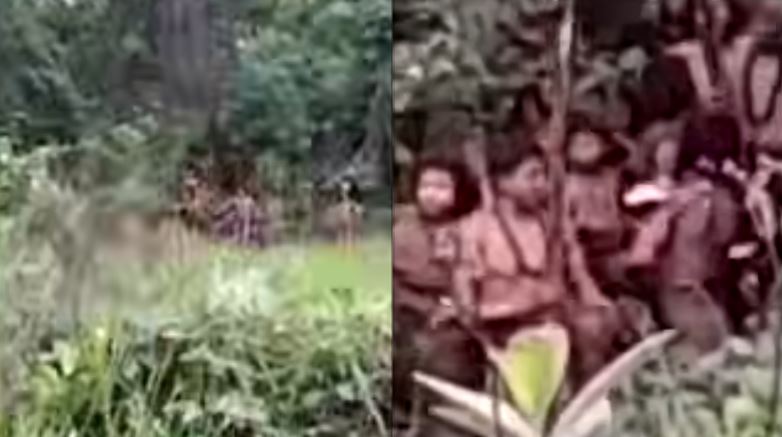
Twenty Awá people who had avoided contact with outsiders for decades walked out of the Amazon rainforest on November 16 and asked a government team for food, then carried what they were given back into the forest.
The indigenous rights group Survival International released video of the encounter on Tuesday and said nothing like it has been seen from the Awá in decades.
The meeting took place near the Araribóia Indigenous Land in Brazil’s northeastern state of Maranhão. According to Reuters, the group approached a government work team and a nearby Guajajara village, asked for staples including yams, and returned to the forest the same day.
Survival International, which is headquartered in Britain, defines “uncontacted” peoples as groups that know the outside world exists but deliberately avoid it and keep no permanent relations with it. The organization said the Awá have made no comparable voluntary approach in modern memory, and it linked the episode to pressure from illegal loggers, hunters and ranchers encroaching on their territory.
That pressure is the reason the encounter matters beyond its rarity. Survival International’s director, Caroline Pearce, said the Awá are being hemmed in on all sides.
“The Awá are under extreme pressure, with invaders closing in from all sides, squeezing them into an ever-smaller island of Amazon rainforest surrounded by destruction,” said Caroline Pearce, director of Survival International.
Brazil’s National Foundation of Indigenous Peoples, known as Funai, confirmed to Reuters that it is reviewing footage circulating on social media showing the Awá interacting with villages inside the Araribóia reserve. The agency said it has activated an emergency response plan for contact events, with reducing health risks to the indigenous group as its first priority.

Disease, not hunger, is the immediate fear
Funai stressed that the Brazilian government is not seeking contact with the group and that the country’s official policy of non-contact remains in place. The distinction matters because isolated peoples can lack immunity to common outside diseases, and an unplanned meeting can turn fatal for them within days.
The Maranhão indigenous organization COAPIMA issued its own warning on Tuesday. Any unplanned contact, the group said in a statement, “could pose enormous risks to isolated indigenous groups, mainly from exposure to outside diseases and other threats to the integrity of their groups.”
COAPIMA and Survival International both urged caution. Local indigenous organizations are worried about the group’s physical condition, but officials have not yet assessed the situation and it cannot be concluded that the Awá are facing famine.
Why the Awá left the forest
The Awá belong to the Tupi-Guarani language family of northwestern Maranhão, and some bands among them still live in voluntary isolation. Survival International said the images were released at the request of the Guardians of the Amazon, an indigenous group that fights illegal logging and cattle ranching in the region.
The organization’s reading of the event is blunt: the Awá did not come out to join the modern world. They came out because their food sources are failing as invaders shrink the forest they live in.
The numbers behind that claim are stark. Survival International counts 196 uncontacted indigenous groups across 10 countries in South America, Asia and the Pacific, with roughly 95 percent concentrated in the Amazon and 124 in Brazil alone, according to 香港01.
An island surrounded by cleared land
Each incursion cuts the territory the Awá can use and the game and forest foods they can reach. Survival International’s framing — an ever-smaller island of forest ringed by destruction — describes a group running out of room to stay hidden.
Funai’s response plan is the next step on record. The agency said it is monitoring the situation with other government bodies, and its stated priority — lowering health risks to the Awá — will govern how officials handle any further approach.
Whether the group returns remains unknown. What the record shows is what Survival International and COAPIMA both said it shows: a group that kept its distance for decades came out on November 16 to ask for food, and the organizations closest to the case say the forest around them is the reason.