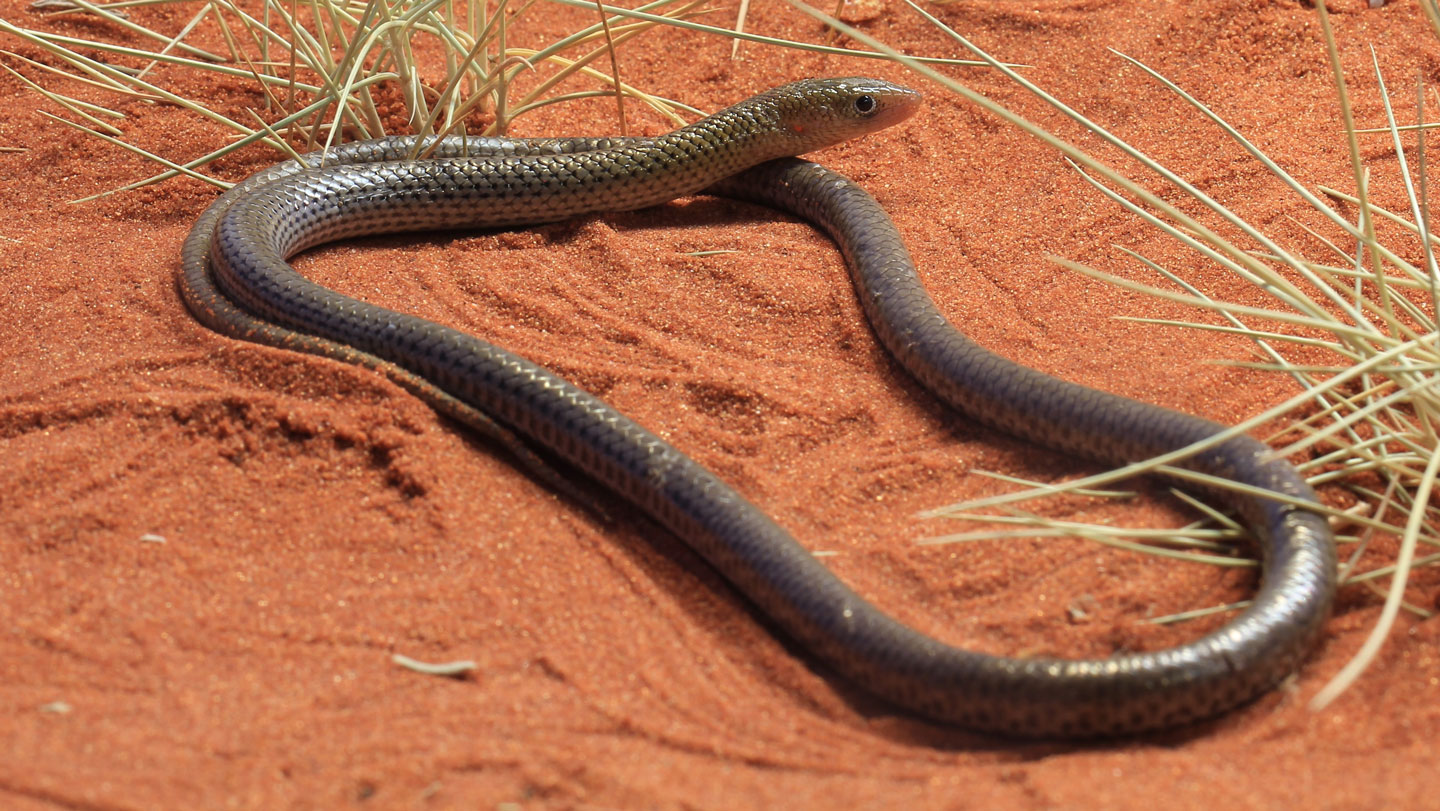
Australia’s Legless Geckos Evolved Patterns Like Snakes, Study Finds
“Pygopods were probably on a trajectory to do something spectacular, like snakes,” said Ian Brennan, an evolutionary biologist at the Queensland Museum Kurilpa in Brisbane, Australia.
Researchers have discovered that Australia’s limbless pygopod geckos evolved physical and dietary patterns remarkably similar to those of snakes, according to a study posted on bioRxiv.org on October 23.
While snakes are technically a highly modified group of legless lizards, pygopods represent a distinct evolutionary path. The team analyzed DNA from all 50 recognized species of pygopod geckos to generate an evolutionary tree.
By comparing this data against “over 3,100 lizard and snake species”, researchers found that pygopods utilize a dual strategy of lengthening both their bodies and tails. This approach, which contrasts with other limbless lizards that typically only extend their tails, has resulted in high physical diversity, including tails that exceed 400 percent of their bodies.
The dietary habits of these geckos further mirror those of snakes. The research team compared 1,738 lizard and snake species and found that pygopods possess a broad range of prey specialization. While most legless lizards consume whatever insects they encounter, some pygopods exhibit selective hunting behaviors, targeting specific prey like ants, termites, spiders, or scorpions.
The genus Lialis is particularly notable for swallowing other lizards whole, a trait facilitated by highly flexible jaws, according to Sonal Singhal, an evolutionary biologist at California State University, Dominguez Hills, who noted the need for further study into their skull mechanics.
| Group | Dietary Diversity | Evolutionary Origin |
|---|---|---|
| Pygopod Geckos | High (Exceeded only by monitor lizards and colubrid snakes) | 50 million years ago |
| Snakes | High (Broad specialization) | 160 million years ago |
The findings suggest that pygopods diverged from other Australian geckos approximately 50 million years ago. Brennan stated that these geckos likely occupied the ecological niches of small snakes in isolation before modern snake groups arrived on the continent. “They’re real oddballs,” Brennan said, noting that while geckos are traditionally known for climbing, this group moved in the opposite direction.
Most other legless lizards lengthen primarily by extending their tails.
“Pygopods were probably on a trajectory to do something spectacular, like snakes,” says Brennan. “But then all of these [snake] groups showed up in Australia and filled into those niches.”
Queensland Museum Kurilpa serves as the institutional base for evolutionary biologist Ian Brennan, who led the study analyzing DNA from all 50 recognized pygopod gecko species to generate an evolutionary tree. The museum’s research role facilitated the comparison of this data against over 3,100 lizard and snake species, revealing the group’s unique dual body-lengthening strategy.
Operating from its South Brisbane headquarters since 1986 and renamed Kurilpa in 2023, the museum holds custody of over 15.2 million items relating to the state’s natural heritage. Its collections and research centre at Hendra supports the specimen-based work underpinning Australian reptile studies, including the dietary analysis of 1,738 lizard and snake species that positioned pygopods alongside monitor lizards and colubrid snakes for prey specialization diversity.
For Brennan, the broader implication is that the loss of limbs does not necessarily limit evolutionary potential. Both snakes and pygopods “have diversified to do really interesting things, either due to or in spite of being limbless,” he said.
Worth a look