
Australian Open boss Andrew Abdo tells critics: ‘I’m not an outsider’
Andrew Abdo has officially assumed the dual role of Tennis Australia chief executive and Australian Open tournament director, marking a significant leadership transition for the 2027 grand slam. Following his appointment in August 2026, Abdo has focused his early tenure on increasing tournament capacity and spectator comfort, despite facing scrutiny over his background as a former rugby league administrator.
Tennis Australia Adds Seats and Shade for 2027
Heading into the 2027 season, Tennis Australia is prioritizing infrastructure upgrades to accommodate the record-breaking attendance numbers of recent years. The tournament sold more than 1.3 million tickets for the 2026 event, a surge of over 100,000 from the previous year. To manage the resulting congestion, Abdo announced the construction of the largest temporary grandstand constructed at Melbourne Park, which will add 700 seats on court six. The precinct will also feature a two-storey structure at Grand Slam Oval and a commitment to provide triple the amount of shade for attendees. Abdo stated that he intends to cap day pass sales to ensure the fan experience remains manageable, acknowledging that space is a primary constraint for the growing event.
Addressing the Outsider Perception
Abdo’s transition from rugby league to the top of the tennis hierarchy has prompted questions regarding his familiarity with the sport’s specific culture. During a launch address in Melbourne on Thursday, Abdo defended his credentials, stating, “I’m not an outsider to leading in sport, and I’m not an outsider to understanding how to surround myself with incredibly talented, hard-working people to get the best outcome.” He emphasized that his role is rooted in a relentless pursuit of growth and value for stakeholders. This perspective follows comments he made at the SportNXT conference last month, where he floated the idea of shortening men’s grand slam matches from the traditional best-of-five sets. That suggestion triggered immediate pushback from tennis traditionalists, leading the Australian Open’s social media channels to clarify that five-set tennis remains a permanent fixture of the tournament.
The Jannik Sinner Gaffe
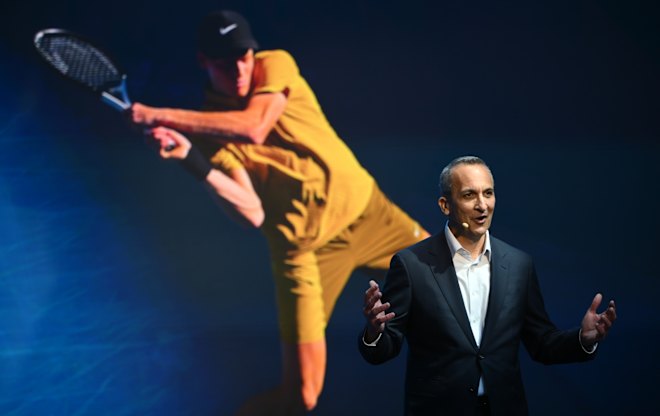
The launch event was marked by an incident involving the world No. 1 player. Abdo referred to Jannik Sinner as “Jacob Sinner” while discussing emerging rivalries, specifically mentioning a potential match against Carlos Alcaraz. While the slip-up drew immediate attention at the Rod Laver Arena function, Abdo later clarified to the media that he was fully aware of the player’s correct name. The incident highlighted the intensified scrutiny that accompanies the role of tournament director, a position that carries a significantly higher international profile than the ones Abdo held previously in the rugby league sector.
Future Outlook for Australian Talent
Beyond tournament logistics, Abdo faces the challenge of addressing the current state of Australian player performance. With only four men—led by top-10 player Alex de Minaur—and five women ranked inside the top 100, there is ongoing public discussion regarding the depth of local talent. Abdo expressed a desire for improvement, noting that while the situation is not as dire as some critics suggest, he is committed to higher standards. Looking toward the 2027 tournament, the organization is also preparing for the One Point Slam, an exhibition event that will feature amateur players competing against professionals, with Jannik Sinner expected to participate as he continues his recovery from a knee injury.
For large-scale events like the Australian Open, managing the influx of over a million visitors requires complex logistical coordination.
Disclaimer: The insights provided in this article are for informational and entertainment purposes only and do not constitute medical advice or sports betting recommendations.