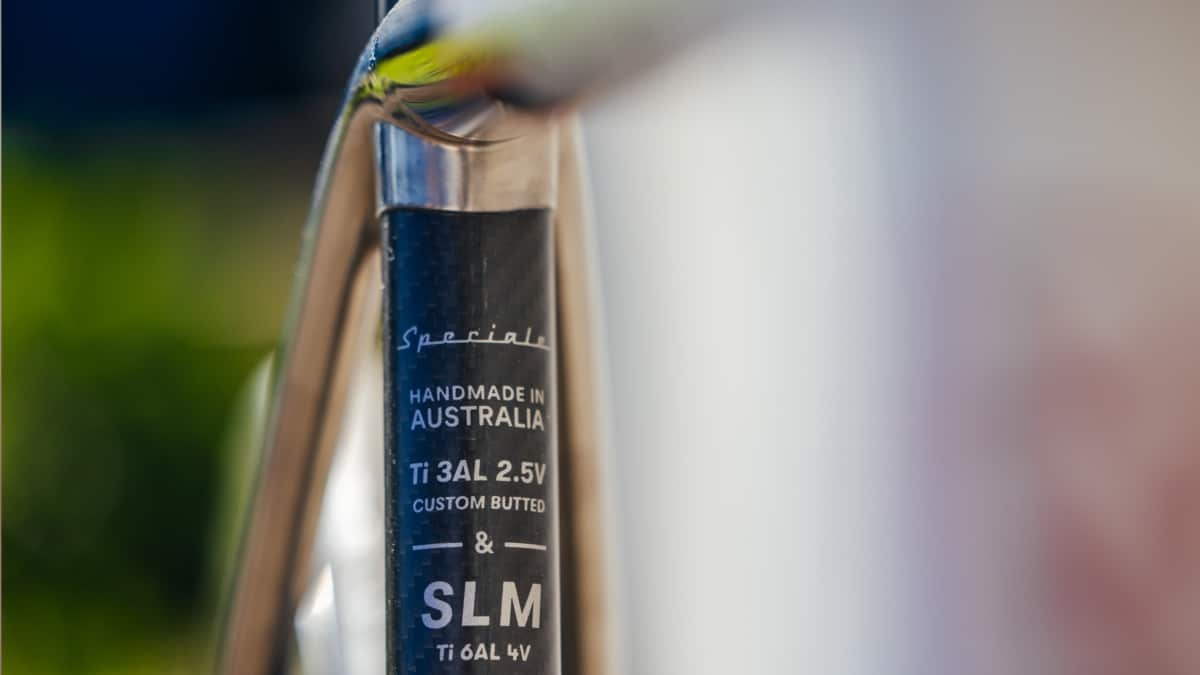
Australian Gravel Brands Bastion, Curve, Gothic, and Prova Redefine High-End Custom Engineering
Australian gravel bike manufacturers are shifting from niche local craft to global high-end contenders, utilizing advanced 3D-printing and hybrid material engineering.
Engineering beyond standard designs
The Australian gravel scene distinguishes itself through a departure from mass-produced carbon molds. BIKE – das Mountainbike Magazin reported that Bastion Cycles develops its Crossroad model through a collaborative process where the rider’s body measurements and riding style dictate the frame geometry. This custom development utilizes a virtual 3D-model visualization before physical production begins.
The technical pedigree of these firms often stems from outside the traditional cycling industry. Bastion founders brought experience from the automotive sector, incorporating high-end equipment like 3D-printers for titanium components into their workflow. According to BIKE – das Mountainbike Magazin, the manufacturing of a single frame requires over 130 machine hours and an additional 70 hours of manual labor.
Curve Cycling introduces hybrid CarboKev bike
While some brands focus on bespoke geometry, others are pushing the boundaries of material science. Curve Cycling has introduced the CarboKev, a hybrid bike that combines titanium in the head tube, seat stays, and bottom bracket areas with carbon fiber for the seat tube and chainstays. This approach aims to achieve stiffness in the drivetrain while maintaining the vibration-damping compliance associated with titanium.
The price points for these machines reflect their boutique manufacturing status. The Curve CarboKev starts at approximately 21,700 euros. In contrast, Gothic Cycles offers a more accessible entry point with its Aix model, starting at roughly 3,680 euros. The Gothic Aix emphasizes a distinct aesthetic, focusing on performance-oriented construction rather than marketing-driven trends.
Integration of 3D-printed titanium
Prova Cycles utilizes 3D-printing to solve specific mechanical constraints in gravel riding. The company employs a 3D-printed titanium yoke to provide clearance for tires up to 50 millimeters wide. This technology also allows for the integration of internal gearboxes, such as the Pinion system, by creating precise, custom-fitted housings that are then finished by hand.
These manufacturers demonstrate a clear contrast in their design philosophies. While Gothic prioritizes a raw, functional aesthetic, Prova focuses on the integration of complex drivetrain hardware into durable titanium frames. For riders seeking these specialized, high-performance machines, sourcing requires direct engagement with the manufacturer for custom fittings, a process similar to commissioning bespoke equipment in other high-precision technical fields.
Reflections on the Australian craft
The growth of these brands suggests a broader appreciation for the intersection of artisanal craftsmanship and modern engineering. BIKE – das Mountainbike Magazin editor Jan Timmermann noted his personal affinity for these designs, stating, “The Australians seem to have not only a wild nature and a preference for Vegemite, but also a knack for exquisite frame building.”
Bastion Cycles was founded in 2014 near Melbourne by Ben Schultz, James Woolcock and Dean McGeary, who brought experience from the automotive sector to apply additive manufacturing to custom bike frames.
The company initially outsourced titanium 3D printing to a local service bureau using a Renishaw AM250, but brought production in-house by purchasing its own AM250 system at the end of 2018 after reaching a critical sales volume. Their modular design pairs 3D-printed titanium lugs featuring internal lattice structures with carbon fibre tubing, a method developed to achieve the strength, weight and aesthetic standards required for market viability.
This sentiment highlights the cultural shift where gravel bikes are increasingly viewed as functional art pieces. As these frames move from Australian workshops to international trails, the emphasis remains on the rider’s specific requirements. The ability to customize everything from geometry to paint schemes remains a primary driver for the current demand for Australian-made gravel cycles.