
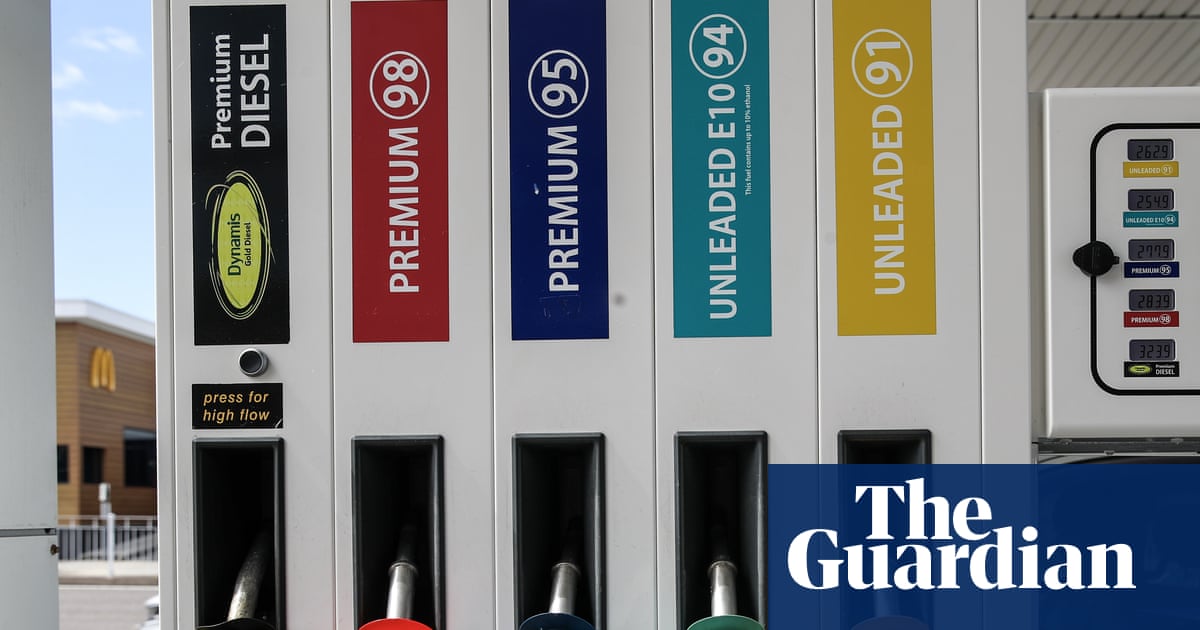
Australia Fuel Crisis: Coal, Ethanol & Excise – Are Solutions Realistic?
Australia’s escalating fuel costs are prompting reactive political measures – halving fuel excise, exploring coal-to-liquids technology, and promoting ethanol blends – that experts deem insufficient and, in some cases, counterproductive. These short-term fixes fail to address the underlying vulnerabilities in Australia’s energy security and commitment to emissions reduction, creating significant risk for logistics firms and prompting a surge in demand for supply chain risk assessment services.
The Illusion of Quick Wins: A Systemic Problem
The current crisis, exacerbated by geopolitical instability and refining capacity constraints, isn’t a temporary spike; it’s a symptom of a deeper structural problem. Australia’s reliance on imported refined fuels leaves it acutely exposed to global market fluctuations. The knee-jerk reactions from Canberra – a temporary excise cut and proposals for domestically produced, yet environmentally damaging, alternatives – are akin to applying a bandage to a fractured limb. The excise cut, while offering immediate relief at the pump, simply subsidizes consumption, delaying the inevitable transition to sustainable alternatives. According to data from the Australian Institute of Petroleum, petrol excise currently accounts for approximately 44.2 cents per litre, meaning the halving provides a temporary 22.1 cent reduction. This is a politically expedient move, but fiscally unsustainable and environmentally irresponsible.
Coal-to-Liquids: A Carbon-Intensive Detour
Andrew Hastie’s proposal to leverage Australia’s coal reserves through Fischer-Tropsch (FT) technology is particularly concerning. While the FT process, historically used in Germany during WWII and apartheid-era South Africa, can convert coal into liquid fuels, it’s a carbon-intensive undertaking. Michael Brear, a professor of mechanical engineering at the University of Melbourne, rightly points out that the lifecycle emissions from coal-to-liquids are significantly higher than those from conventional crude oil. A 2009 study published in Environmental Science & Technology (https://pubs.acs.org/doi/10.1021/es8002074) demonstrated that FT diesel can increase greenhouse gas emissions by 50-100% compared to petroleum diesel. Establishing FT plants requires substantial capital investment and lengthy lead times – a timeframe that doesn’t align with the urgency of the current crisis. “You can make more money selling coal and natural gas as coal and natural gas, than you can turning it into something that competes with crude oil,” Brear stated. This highlights a fundamental economic flaw in the proposal.
“The energy transition isn’t about finding new fossil fuels; it’s about fundamentally reshaping our energy systems. These proposals are a distraction from the real work that needs to be done.”
— Dr. Eleanor Vance, Head of Sustainable Energy Research, Zenith Capital.
Ethanol: A Limited Solution with Agricultural Implications
The promotion of ethanol as a fuel additive, while seemingly more benign, also faces limitations. Currently, ethanol accounts for a minuscule 0.2% of Australia’s oil consumption (https://www.energy.gov.au/sites/default/files/2025-08/australian_energy_update_2025.pdf). Expanding ethanol production requires significant agricultural land and water resources, potentially competing with food production. Not all vehicles are compatible with higher ethanol blends, necessitating engine modifications. The NRMA’s advocacy for E10 is a step in the right direction, but it’s a marginal improvement, not a systemic solution. The logistical challenges of scaling up ethanol production and distribution are substantial, requiring significant investment in infrastructure and supply chain optimization. This creates opportunities for specialized logistics providers experienced in handling biofuels.
The Excise Cut: A Fiscal Misstep
Prime Minister Albanese’s decision to halve the fuel excise, while providing temporary relief to consumers, is a fiscally questionable move. Professor Jago Dodson of RMIT University argues that Australia already has one of the lowest fuel excise rates globally, and reducing it further simply subsidizes driving, exacerbating the problem of car dependence. Lower fuel prices discourage the adoption of alternative transportation modes, such as public transport, walking, and cycling. This policy contradicts long-term sustainability goals and undermines efforts to reduce carbon emissions. The excise revenue lost will need to be recouped elsewhere, potentially through cuts to essential public services or increased taxes. The long-term economic consequences of this short-sighted policy are likely to outweigh any immediate benefits. The Australian Treasury’s latest economic forecasts (https://treasury.gov.au/publication/economic-forecasts) project a significant decline in excise revenue over the next fiscal year, further straining the government’s budget.
The B2B Impact: Risk, Regulation, and Resilience
This volatile energy landscape presents significant challenges for businesses, particularly those reliant on transportation and logistics. Supply chain disruptions, increased fuel costs, and regulatory uncertainty are creating a perfect storm of risk. Companies are increasingly seeking expert guidance to navigate these complexities. The demand for robust risk management frameworks, including fuel hedging strategies and alternative transportation planning, is surging. The evolving regulatory environment – with potential carbon taxes and stricter emissions standards – requires businesses to proactively adapt their operations. This is driving demand for specialized legal counsel from firms specializing in energy and environmental law to ensure compliance and mitigate legal risks.
A Path Forward: Beyond Band-Aids
The current approach to Australia’s fuel crisis is characterized by short-term fixes and a reluctance to embrace transformative change. A sustainable solution requires a multi-faceted strategy focused on reducing fuel consumption, diversifying energy sources, and investing in alternative transportation infrastructure. This includes accelerating the transition to electric vehicles, expanding public transport networks, and promoting active transportation modes. It also requires a long-term commitment to renewable energy sources and a willingness to phase out fossil fuel subsidies. The political will to implement these measures is currently lacking, but the economic and environmental consequences of inaction are too great to ignore. The next fiscal quarter will be critical in determining whether Australia can break free from its fossil fuel dependence and build a more resilient and sustainable energy future.
Navigating this complex energy transition requires strategic partnerships and access to specialized expertise. The World Today News Directory connects you with vetted B2B providers – from supply chain risk assessors to corporate legal advisors – who can help your organization mitigate risk, ensure compliance, and capitalize on emerging opportunities. Don’t let energy volatility derail your business; explore our directory today.