August 12 Solar Eclipse: How to Watch the Total and Partial Eclipse Online and In Person
<>
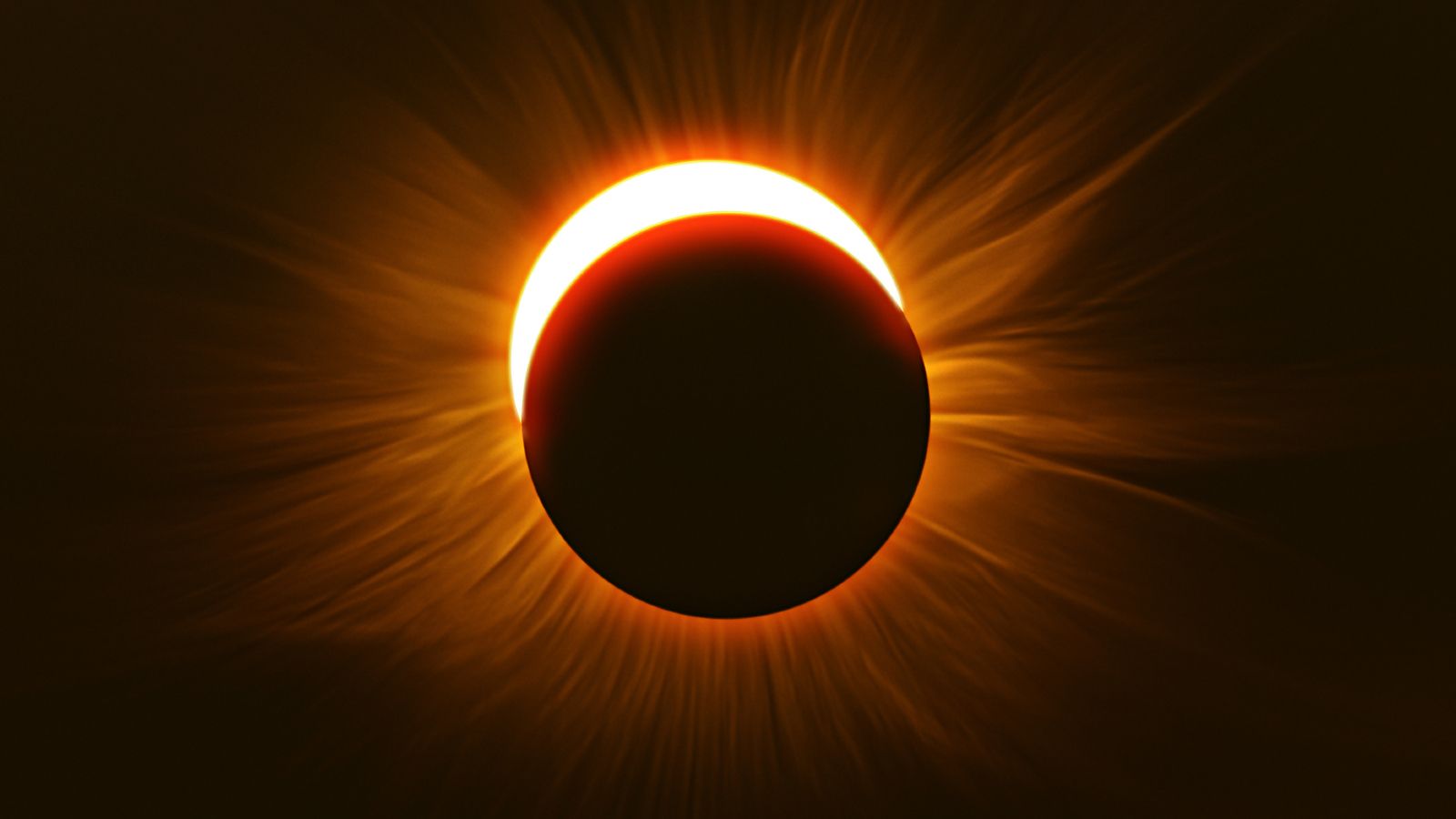
Millions of skywatchers across North America and Europe are preparing to witness a total and partial solar eclipse, with the new moon crossing directly in front of the sun to cast a shadow stretching from Iceland and Greenland to northern Spain. According to NASA and the European Space Agency, the celestial alignment provides a rare opportunity for both direct viewing within the path of totality and broad partial observation across neighboring continents.
- Certified solar eclipse glasses must be worn during all partial phases to prevent irreversible photokeratitis and solar retinopathy.
- The path of totality offers brief, seconds-long windows where naked-eye viewing is safe, specifically in locations like Reykjavik, Iceland, and León, Spain.
- Numerous scientific institutions, including NASA and the ESA, are providing global livestreams for populations outside the visual footprint.
Geographic Trajectory and Viewing Windows for Totality
The path of totality for the upcoming eclipse traces a complex arc originating in far northern Siberia near the North Pole, descending through Greenland, western Iceland, and terminating in southern Spain. Specific regional timings dictate precise observation schedules for those positioned directly beneath the lunar shadow. According to astronomical tracking data, Scoresby Sund in Greenland experiences totality at 4:35 p.m. WGST for up to 2 minutes and 17 seconds. Further south, observers in Reykjavik, Iceland, capture a 60-second window of totality at 5:48 p.m. GMT.
European mainland viewing centers on Spain, where totality touches León at 8:28 p.m. CEST for 1 minute and 36 seconds.
Ocular Safety Protocols and Certified Filtration Standards
Direct retinal exposure to concentrated solar radiation without appropriate attenuation mechanisms leads directly to thermal retinal injury, commonly known as solar retinopathy. Clinical consensus dictates that protective eyewear must remain in place throughout all partial phases of the eclipse. Unfiltered optical instruments, including standard binoculars or telescopes, amplify light intensity and exacerbate potential damage unless outfitted with certified solar filters.
Totality remains the sole window during which viewers positioned strictly within the narrow shadow path can safely remove certified solar filters. Outside this specific zone, even regions experiencing a 99% partial obscuration require continuous wear of protective lenses.
Partial Eclipse Distribution Across North America and Europe
While North American observers experience a more modest visual event, several northeastern and northern localities register measurable lunar coverage. Iqaluit, Nunavut records a 61% eclipse at 1:24 p.m. NDT. Western viewing sites include Fairbanks and Anchorage in Alaska, registering 37% and 28% coverage respectively during morning hours. In the United States, Bangor, Maine reaches 23%, Boston records 16%, and New York experiences a 9% partial eclipse at 1:54 p.m. EDT.
European populations encounter substantially deeper partial phases, accompanied by measurable drops in ambient temperature and atmospheric dimming. Madrid reaches a 99.9% partial eclipse at 8:32 p.m. CEST, while Lisbon, Dublin, Cardiff, Belfast, Paris, London, and Edinburgh record obscurations ranging between 91% and 94%. Regulatory health bodies across these regions emphasize adherence to standard safety guidelines despite the heavy cloud cover or atmospheric dimming expected during peak hours.
Digital Access and Digital Public Health Broadcasts
For populations situated outside optimal viewing corridors, major space agencies and broadcast networks are deploying comprehensive digital streaming infrastructure. NASA initiates live coverage featuring feeds from Iceland and Spain starting at 1:15 p.m. EDT via its official web portal and digital channels. Simultaneously, the European Space Agency broadcasts feeds from the Astrophysical Observatory of Javalambre in Teruel, Spain, while CNN originates coverage from Spanish observation points beginning at 1:00 p.m. EDT.
Looking ahead, astronomical tracking confirms that this solar event coincides with a deep partial lunar eclipse occurring two weeks later on August 27-28 across North and South America. Furthermore, institutional planning is already underway for the longest total solar eclipse of the century, scheduled for August 2, 2027, across southern Spain and northern Africa.