Atlantic Cold Blob Threatens Gulf Stream 2040 Ice Age Risk
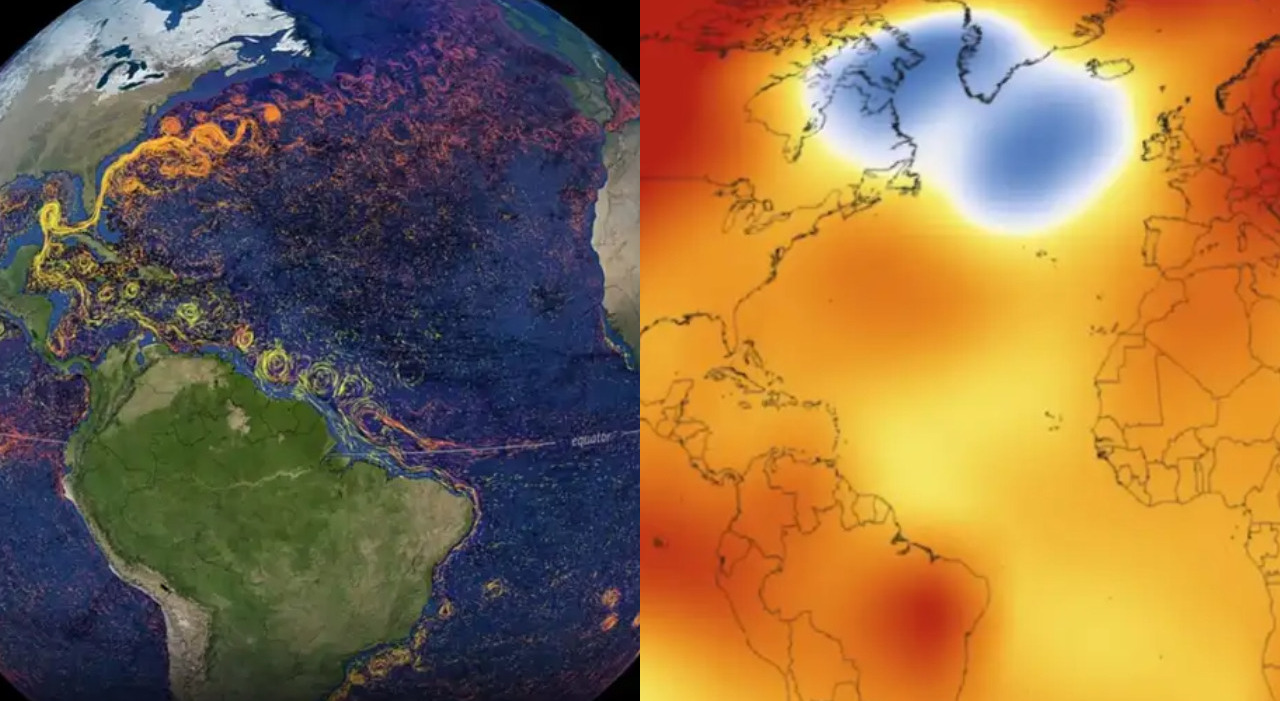
Oceanographic data indicates the emergence of a persistent “cold blob” in the North Atlantic, a region of anomalously low water temperatures that researchers link to the potential weakening of the Atlantic Meridional Overturning Circulation (AMOC). This cooling trend challenges regional climate stability, with models suggesting significant shifts in European weather patterns by 2040.
The Mechanics of the North Atlantic “Cold Blob”

The “cold blob” refers to a specific sector of the North Atlantic where sea surface temperatures have failed to rise in alignment with global warming trends. According to reports from *La Nuova Ecologia*, this phenomenon is primarily driven by an influx of freshwater from melting Arctic ice, particularly from Greenland. This freshwater is less dense than saline ocean water, which inhibits the vertical mixing process that typically carries heat from the equator to the higher latitudes.
While global ocean temperatures have reached record highs, this localized cooling zone remains an outlier. Scientific observations suggest that the lack of heat transport is directly affecting the efficiency of the AMOC, the current system responsible for the relatively mild climate experienced across Western Europe.
Projected Impacts on European Climate
Projections regarding the potential collapse or significant slowing of the AMOC have gained traction in recent climate modeling. *Il Messaggero* reports that if the current degradation of the circulation system continues at the observed rate, parts of Europe could face a drastic cooling effect by 2040. This shift would mark a departure from the warming trends seen in other parts of the world, potentially leading to more severe winters and altered precipitation patterns across the continent.
The distinction between the two sources lies in their focus: *La Nuova Ecologia* emphasizes the physical properties of the “cold blob” as an environmental indicator, while *Il Messaggero* highlights the long-term socioeconomic risks associated with the potential disruption of the Gulf Stream. Both outlets agree that the cooling of the North Atlantic is a critical variable in predicting regional climate outcomes for the next two decades.
Institutional Monitoring and Scientific Uncertainty

The scientific community remains focused on the rate of freshwater input and the precise thresholds at which the AMOC might reach a tipping point. Current research relies on satellite altimetry and deep-sea sensor arrays to track the salinity and velocity of these currents.
Despite the modeling outputs, climatologists emphasize that natural variability makes the exact timing of such shifts difficult to pinpoint. The Intergovernmental Panel on Climate Change (IPCC) continues to evaluate the probability of a total shutdown of the circulation system, which currently remains the subject of ongoing peer-reviewed studies rather than a consensus on immediate occurrence. No formal international policy response has been triggered to mitigate the cooling of the North Atlantic, as research institutions continue to gather data to confirm whether the observed cooling is a temporary oscillation or a permanent shift in oceanic circulation.