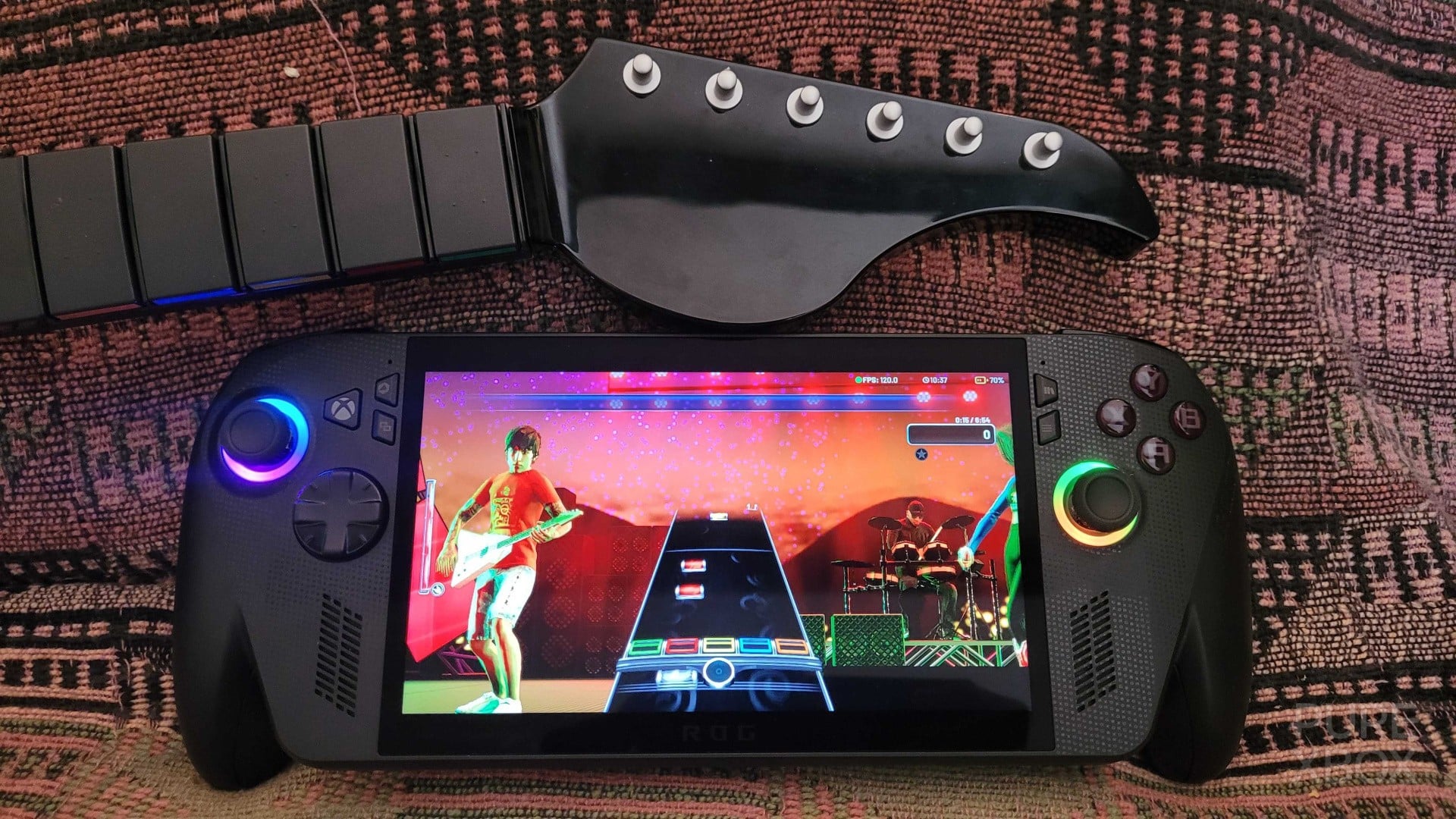
ASUS ROG Ally X Six-Month Review: Long-Term Performance Test
Six months into the deployment of the ROG Xbox Ally X (RC73XA), the honeymoon phase of “console-like” gaming has evaporated, leaving behind a raw analysis of what happens when you cram a high-TDP x86 architecture into a handheld chassis. It was marketed as the definitive Windows handheld, but the reality is a complex trade-off between raw silicon power and the persistent friction of a legacy OS.
The Tech TL;DR:
- Silicon Leap: The AMD Ryzen AI Z2 Extreme provides a measurable performance uplift over the Z1 Extreme, specifically in AAA titles like Indiana Jones and the Great Circle.
- UX Pivot: The Xbox Full Screen Experience successfully abstracts Windows 11, though the underlying OS still introduces stability variables.
- Hardware Trade-offs: 24GB of LPDDR5X and an 80Wh battery mitigate the power hunger of the Z2 Extreme, but thermal throttling remains a physical constant.
The fundamental problem with Windows-based handhelds has always been the impedance mismatch between a touch-first, joystick-driven user experience and an OS designed for a mouse and keyboard. For the senior developer or CTO, this isn’t just a convenience issue; it’s a latency and stability bottleneck. The ROG Xbox Ally X attempts to solve this via the “Xbox Full Screen Experience,” a console-inspired UI that aims to eliminate the desktop friction. However, the real story lies in the SoC architecture and how it handles power delivery under load.
The Hardware Stack: Z2 Extreme vs. Z1 Extreme
Moving from the RC72LA (Z1 Extreme) to the RC73XA (Z2 Extreme) isn’t just a clock-speed bump. The integration of an NPU (Neural Processing Unit) suggests a pivot toward local AI workloads, though current gaming implementations are primarily focused on frame generation and efficiency. Looking at the benchmark data provided by ROG Global, the delta in performance is most evident in Turbo mode (35W AC).
| Game (1080p, Default Settings) | ROG Xbox Ally X (Z2 Extreme) – Turbo | ROG Ally X (Z1 Extreme) – Turbo | Delta (%) |
|---|---|---|---|
| Doom: The Dark Ages | 41 FPS | 28 FPS | +46% |
| Indiana Jones and the Great Circle | 61 FPS | 38 FPS | +60% |
| Cyberpunk 2077 | 41 FPS | 31 FPS | +32% |
These gains are significant, but they come at the cost of thermal headroom. While the 35W Turbo mode delivers the numbers, the shift to Performance mode (17W DC) reveals the efficiency curve. In Cyberpunk 2077, the Z2 Extreme maintains 33 FPS compared to the Z1’s 22 FPS, proving that the new architecture handles lower power envelopes with better grace. For those managing fleets of these devices or deploying them for field testing, the physical durability is a concern. The white chassis of the base model is noted for attracting grime, making professional consumer electronics repair services essential for maintaining hardware longevity in high-use environments.
Architectural Analysis: NPU and Memory Bandwidth
The inclusion of 24GB of prompt LPDDR5X memory is the unsung hero of the RC73XA. In a unified memory architecture, the GPU and CPU fight for the same pool. By increasing the capacity beyond the standard 16GB, ASUS has reduced the frequency of memory swapping, which is often the primary cause of micro-stutter in AAA titles. This makes the device surprisingly viable as a portable workstation for light containerization or running local LLMs via GitHub-hosted toolkits, provided the thermal profile is managed.
“The Asus ROG Xbox Ally X is the definitive Windows handheld to buy right now. It’s fast, comfortable and provides a great gaming experience thanks to its Ryzen Z2 Extreme chip.” — Trusted Reviews
However, the “Windows flexibility” mentioned by Best Buy is a double-edged sword. While it allows for full software installation, it introduces the risk of driver conflicts and OS bloat. For enterprise users utilizing these as edge devices, this creates a need for managed IT service providers to implement strict configuration profiles and remote monitoring to ensure stability.
The Implementation Mandate: Power Profile Optimization
To truly optimize the Z2 Extreme, relying on the GUI is insufficient. Power users often need to bypass the standard presets to manage the TDP (Thermal Design Power) more granularly. For those looking to audit the current power state or force a specific performance profile via the CLI, the following PowerShell approach is standard for Windows-based handheld tuning:
# Check current power scheme GUID and active profile powercfg /getactivescheme # Set the system to High Performance mode to minimize latency during AAA execution powercfg /setactive SCHEME_MIN # High Performance GUID # Audit battery discharge rate to analyze Z2 Extreme efficiency powercfg /batteryreport /output "C:battery_health_report.html" This level of control is necessary due to the fact that, as noted by Tom’s Hardware, the lower-end models have suffered from sleep/wake functionality issues. While the Ally X has improved, the underlying ACPI (Advanced Configuration and Power Interface) states in Windows 11 still occasionally fail to transition correctly, leading to “phantom” battery drain.
The Competitive Matrix: X vs. The Field
Comparing the Ally X to the Steam Deck OLED is an exercise in contrasting philosophies. The Steam Deck relies on a highly optimized, stripped-down Linux environment (SteamOS), which provides superior sleep/wake stability and a more cohesive UI. The Ally X, conversely, bets on raw horsepower and the x86 ecosystem. According to the technical breakdown in the source material, the Ally X’s Z2 Extreme chip makes it one of the “beefiest options yet,” outclassing the Steam Deck in raw Teraflops and compute capability, even if it lacks the seamlessness of Valve’s software stack.
The MSI Claw A8 also utilizes the Z2 Extreme, but the ROG Xbox Ally X holds the edge due to the “Xbox Full Screen Experience.” By treating the device as a portal to the Xbox ecosystem rather than just a tablet with controllers, ASUS has mitigated the primary pain point of the Windows handheld: the feeling that you are using a compromised PC rather than a dedicated console.
the ROG Xbox Ally X is a piece of high-performance hardware fighting against the gravity of its own operating system. It is a powerhouse for those who need the x86 instruction set and the 24GB memory overhead, but it requires a level of technical stewardship that a closed-loop system doesn’t. As we move toward more integrated NPU-driven experiences, the Ally X serves as a blueprint for the future of the handheld PC—provided the software can finally catch up to the silicon.
Disclaimer: The technical analyses and security protocols detailed in this article are for informational purposes only. Always consult with certified IT and cybersecurity professionals before altering enterprise networks or handling sensitive data.
Related reading