
Astronomers Achieve Space-Telescope-Level Clarity with Ground-Based Upgrade
HONOLULU – A team of astronomers has achieved a breakthrough in ground-based telescope technology, producing images with a level of detail previously attainable only through space-based observatories like teh James Webb Space Telescope. The advance, detailed in a new study, centers around a device called a photonic lantern, which dramatically enhances the resolving power of existing telescopes. Researchers at the University of Hawaiʻi at Manoa and Caltech demonstrated the technology by observing a surprisingly lopsided disk of dust and gas surrounding a nearby star, revealing details previously hidden by atmospheric distortion.
This innovation promises to democratize access to high-resolution astronomical observations, offering a cost-effective choice to building larger and larger telescopes or relying solely on limited space-based resources. The ability to achieve comparable results with existing ground infrastructure could accelerate discoveries across numerous fields, from exoplanet research to the study of distant galaxies. The team plans to expand testing to other objects and telescopes, possibly revolutionizing how astronomers gather data and understand the universe.
the photonic lantern, a small device added to instruments on larger telescopes, works by collecting light from a wide area and funneling it into a single, narrow beam. This process effectively overcomes the blurring effects of Earth’s atmosphere, allowing for significantly sharper images. “In astronomy, the sharpest image details are usually obtained by linking telescopes together,” explained lead researcher Hwajeong Kim. ”But we did it with a single telescope.”
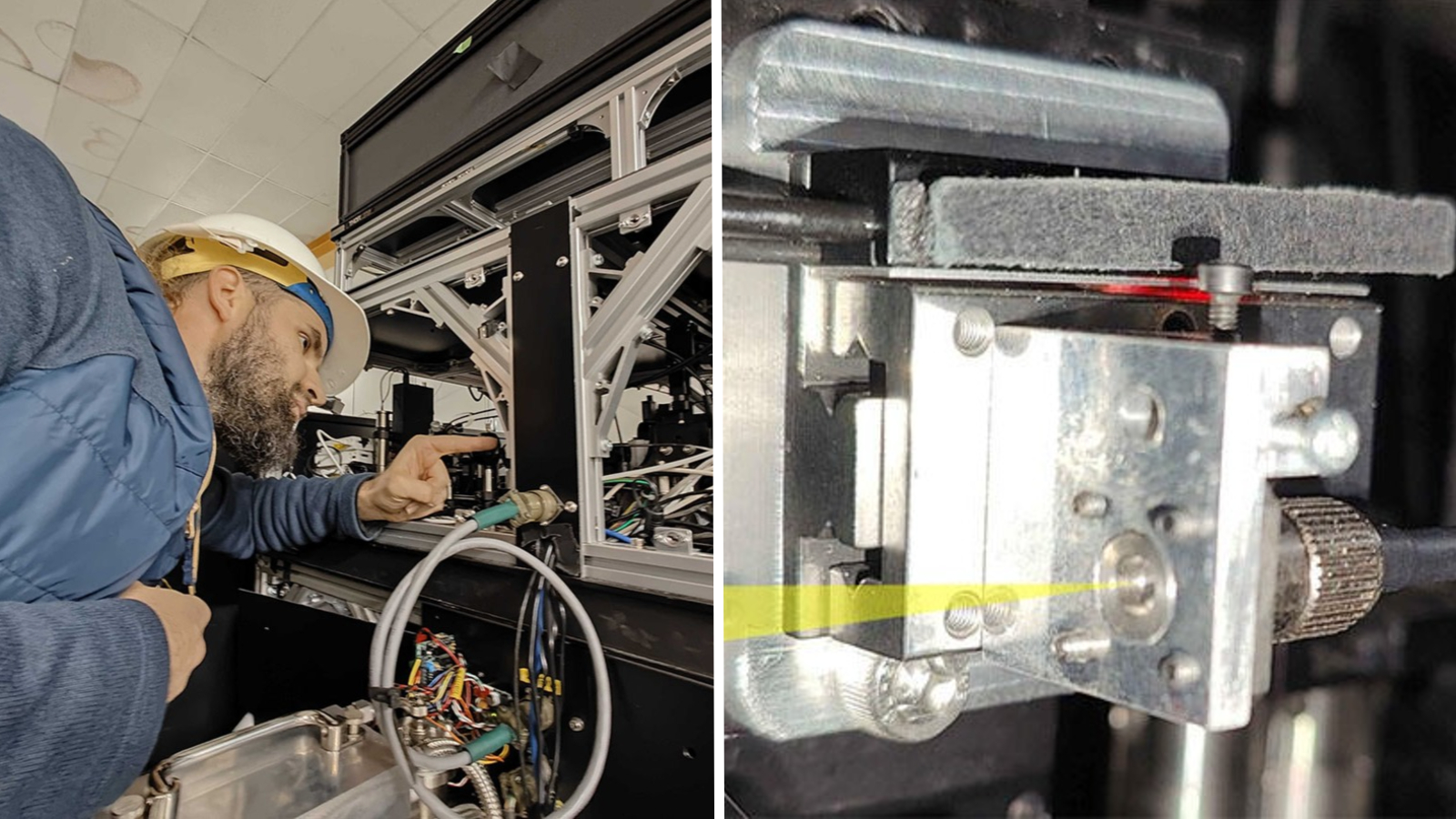
The team tested the device on a star located 500 light-years away, revealing an unexpectedly asymmetrical disk of material orbiting it. The findings, published recently, showcase the lantern’s ability to resolve fine structures and provide insights into the dynamics of planetary systems. The yellow line in an accompanying image represents light entering the photonic lantern device.
“Normally, this type of insight is only available to space-based assets - like the James Webb Space Telescope – which don’t have to contend with atmospheric disturbance, or by stacking together multiple images from different ground-based telescopes,” the researchers stated.
Study co-author Nemanja Jovanovic, an astronomer and photonics expert at Caltech, emphasized the potential for future discoveries. “we are just getting started,” Jovanovic said. “The possibilities are truly exciting.” The team is now focused on applying the technology to a wider range of astronomical targets and collaborating with other observatories to replicate their results.
