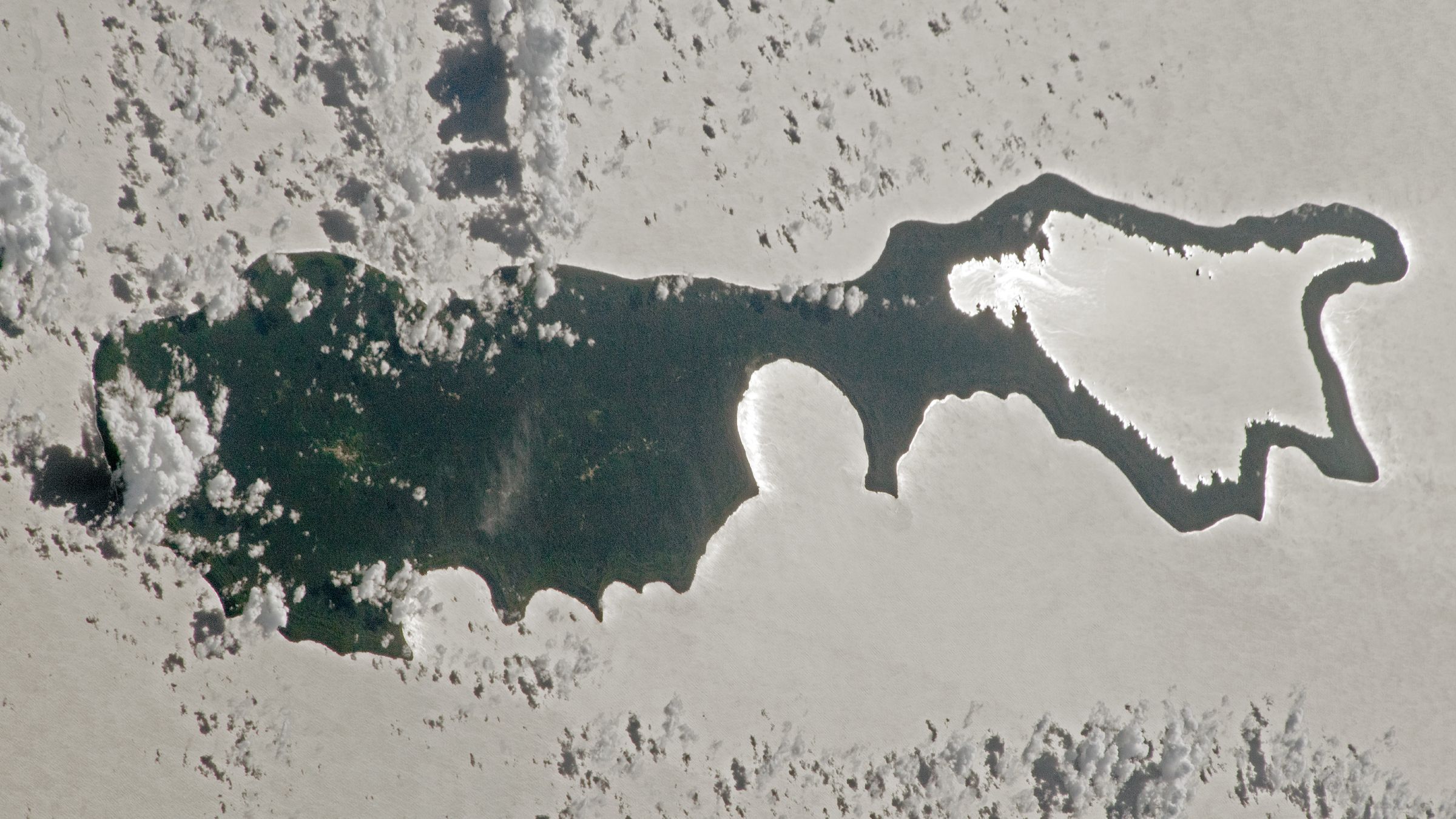
Astronaut Photo Captures Rare Sunglint Over Solomon Islands’ Rennell Island
On January 8, 2023, an unnamed astronaut aboard the International Space Station photographed a meteorological and optical phenomenon known as a sunglint, which transformed the Solomon Islands’ Rennell Island and its surrounding waters into a massive metallic magnifying glass visible from low Earth orbit. The high-altitude photograph captures sunlight reflecting directly off the Pacific Ocean and Lake Tegano, rendering the water surfaces into a shimmering, silver-hued mirror marked by drifting cloud shadows.
- Geographic Scope: The phenomenon occurred on Rennell Island, the world’s tallest atoll, located within the Solomon Islands archipelago.
- Optical Mechanics: A sunglint effect caused by mirrored surface reflections obscured local topographical features, including fringing coral reefs and interior islets.
- Scientific Utility: According to the National Oceanic and Atmospheric Administration (NOAA), space-based sunglint analysis assists researchers in detecting subsurface oceanographic phenomena, though it frequently requires digital mitigation during atmospheric monitoring.
At the southeastern end of the landmass sits Lake Tegano, encompassing roughly 60 square miles of brackish water enclosed by a steep, forest-topped ring of coral. These specific zones possessed the stillest, most wind-sheltered water surfaces, optimizing specular reflection directly toward the orbiting camera.

Sunglints serve a dual purpose in earth sciences. While space and aerial imaging specialists often program digital filters to remove glare during severe weather tracking, oceanographers utilize these reflective events to map hidden marine features. According to observational data from NOAA, persistent sunglint patterns expose subsurface currents, internal wave action, and chemical anomalies such as oil slicks, translating invisible aquatic dynamics into stark, high-contrast visual records.
Beyond its optical properties, the region surrounding Lake Tegano holds recognized ecological significance as a biodiversity sanctuary. Designated as a UNESCO World Heritage Site under the name East Rennell, the local ecosystem hosts more than 20 endemic bird species. It also supports specialized aquatic populations, including the Crocker’s sea snake (Laticauda crockeri), a native elapid currently classified as vulnerable to extinction per the Earth Observatory. The intense glare captured in the January 2023 photograph temporarily erased these surrounding habitats from satellite view, swallowing the light-blue and turquoise bands of the fringing coral reefs that typically define the island’s perimeter.

Observational monitoring of remote island ecosystems like Rennell remains essential for environmental baseline tracking and ecological preservation.
As remote sensing technologies evolve, the analysis of optical anomalies like sunglints continues to refine our comprehension of land-sea interactions from orbital altitudes.
*Disclaimer: The information provided in this article is for educational and scientific communication purposes only and does not constitute medical advice. Always consult with a qualified healthcare provider regarding any medical condition, diagnosis, or treatment plan.*