Asset Securitization: Transforming Illiquid Loans for Banks
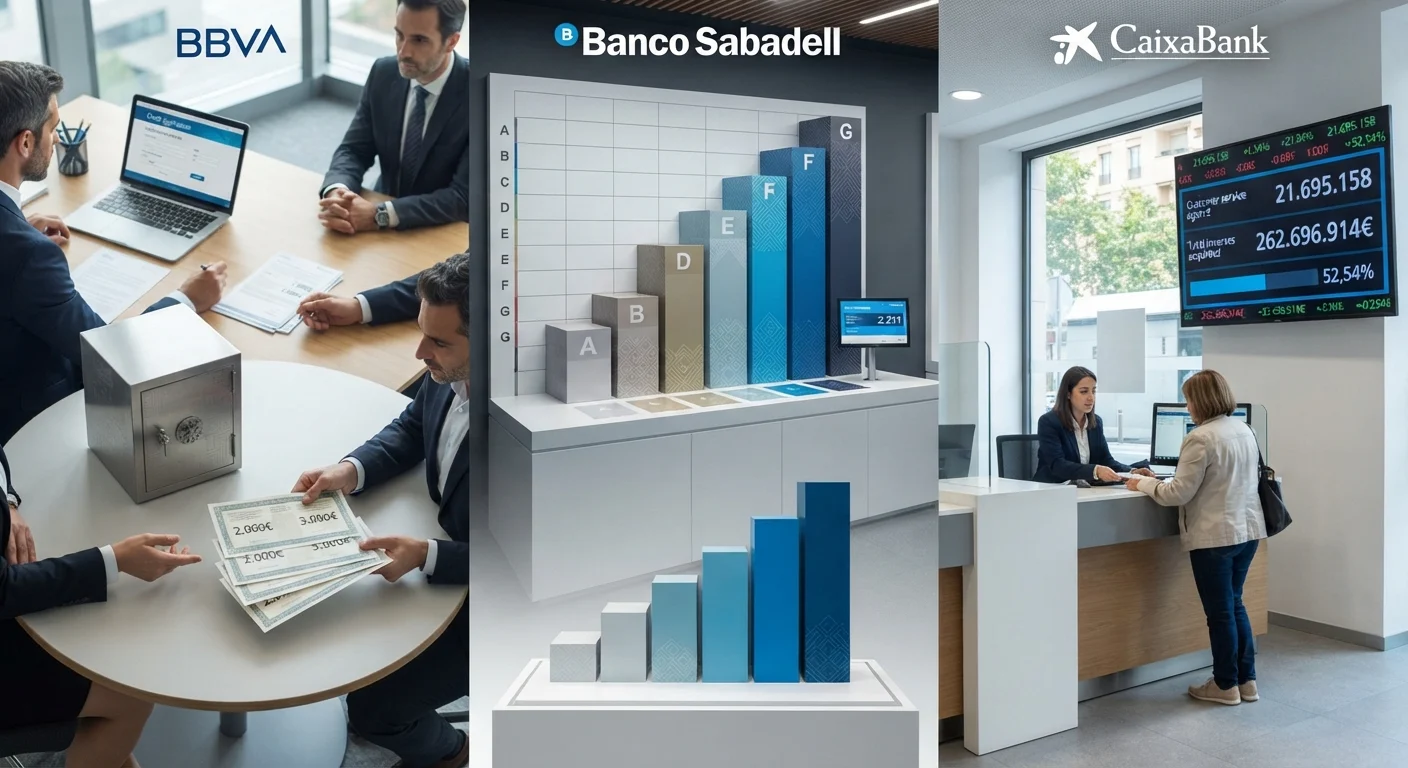
BBVA and Banco Sabadell have initiated a strategic push to offload loan portfolios into the secondary market, a move mirrored by CaixaBank’s recent €262 million securitization. These maneuvers reflect a broader industry trend among Spanish financial institutions to optimize capital buffers, reduce risk-weighted assets, and improve liquidity ratios as interest rate volatility persists through late 2026.
The Mechanics of Balance Sheet Optimization
Securitization serves as the primary mechanism for these institutions to transform illiquid credit assets into tradable instruments. By packaging loans—ranging from commercial credit to residential mortgages—into special purpose vehicles (SPVs), banks effectively shift risk off their balance sheets. This process is essential for maintaining compliance with Basel III and subsequent regulatory capital requirements, particularly as European Central Bank (ECB) monetary policy maintains a restrictive stance on credit expansion.
According to recent regulatory filings, the current cycle of portfolio sales is driven by a need to free up capital for high-growth lending segments. For firms navigating this shift, the complexity of legal and financial restructuring often necessitates the intervention of specialized financial advisory firms to ensure that asset valuation models align with current market risk premiums.
Market Liquidity and the Yield Curve
The decision by BBVA and Sabadell to move significant tranches of debt into the market suggests a proactive approach to managing the yield curve. By shedding lower-yielding, legacy assets, these banks can reallocate capital toward more profitable ventures. The €262 million transaction executed by CaixaBank underscores a market-wide appetite for structured credit, provided the underlying collateral meets stringent underwriting standards.
Market analysts note that the secondary market for these loans is currently characterized by high selectivity. “Institutional investors are no longer looking for volume alone; they are performing deep-dive credit analysis on every sub-portfolio,” says Marcus Thorne, a senior debt strategist at a London-based investment boutique. “Banks that can demonstrate superior data transparency in their loan tapes are seeing tighter spreads during the syndication process.”
Regulatory Pressures and Institutional Strategy
The European banking sector faces persistent pressure to maintain robust Common Equity Tier 1 (CET1) ratios. As the cost of funding remains elevated, the ability to recycle capital becomes a competitive advantage. This environment creates a bottleneck for mid-market firms that rely on traditional banking channels for credit, as banks tighten their risk appetite to preserve capital adequacy.

When institutions undergo such rapid deleveraging, the operational burden on legal and compliance departments spikes. Organizations facing these transitions frequently engage top-tier corporate law firms to manage the intricate documentation and regulatory filings required for cross-border asset transfers. Managing the fallout of these portfolio shifts requires precise execution.
Strategic Outlook for the Coming Fiscal Quarters
As we head into the final months of 2026, the trend of active portfolio management is expected to accelerate. Banks are increasingly viewing their balance sheets as dynamic ecosystems rather than static repositories of risk. This pivot toward active management allows for greater agility in response to macroeconomic shifts, though it also increases the operational complexity of daily treasury management.
For B2B service providers, the current market climate presents a distinct opportunity. As major banks continue to divest, the need for third-party auditing, valuation services, and portfolio management software grows. Companies that provide enterprise risk management solutions are uniquely positioned to capture value as banks seek to quantify the remaining exposures within their portfolios.
The trajectory for the remainder of the year is clear: liquidity is king. Institutions that fail to streamline their assets risk being sidelined by the high-velocity requirements of modern capital markets. Firms looking to partner with experts in restructuring, compliance, or capital optimization should consult the World Today News Directory to identify vetted partners capable of navigating these complex fiscal landscapes.