Assessing Accuracy of ACPGBI Polyp Cancer Risk Assessment Tool
Colorectal cancer screening protocols rely heavily on accurate risk stratification during colonoscopy procedures, particularly when managing discovered polyps. A retrospective analysis published in the peer-reviewed medical journal Cureus examines the clinical efficacy and diagnostic accuracy of the Association of Coloproctology of Great Britain and Ireland’s (ACPGBI) risk assessment tool for polyp cancer management. The study evaluates how effectively the scoring system identifies malignant potential in gastrointestinal lesions, offering vital data for gastroenterologists and surgical oncologists striving to minimize false negatives and unnecessary surgical resections.
Key Clinical Takeaways:
- The retrospective study evaluates the diagnostic precision of the ACPGBI risk assessment model for managing colorectal polyps.
- Researchers analyzed patient datasets to measure the tool’s sensitivity, specificity, and overall predictive value in identifying malignancy.
- The findings underscore the ongoing clinical need for standardized, validated scoring systems to guide decisions between endoscopic mucosal resection and radical surgery.
Evaluating the Diagnostic Accuracy of the ACPGBI Scoring Model
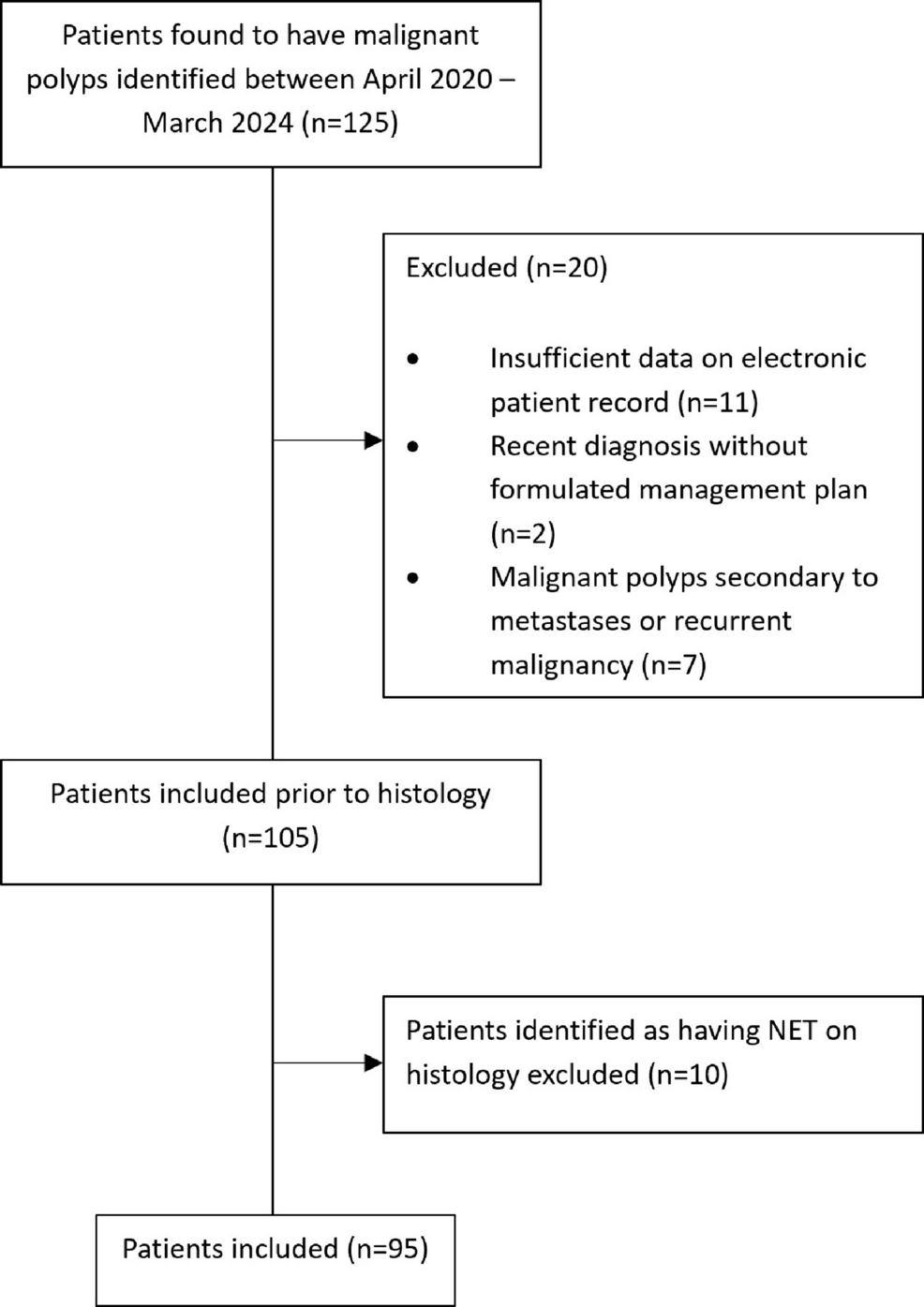
The retrospective evaluation focuses on how the ACPGBI risk assessment tool performs in real-world clinical environments when stratifying patients with detected colorectal polyps. Colorectal polyps present diverse histological features, ranging from benign hyperplastic lesions to advanced adenomas harboring invasive carcinoma. Distinguishing between lesions that can be safely managed via advanced endoscopic techniques and those requiring formal oncological resection remains a central challenge in modern gastroenterology. According to the data published in Cureus, the study reviews historical patient cohorts to determine whether the ACPGBI framework accurately predicts malignancy based on preoperative and intraoperative variables.
In clinical practice, misclassifying a malignant polyp can lead to delayed oncological intervention, whereas overestimating risk exposes patients to the morbidity of major bowel resection. The analysis investigates the rate of concordance between the ACPGBI tool’s risk categorization and the final histological diagnosis established by pathologists. By examining sample sizes, true positive rates, and false negative outcomes, the research provides a clear appraisal of the tool’s reliability within colorectal multidisciplinary teams.
Implications for Endoscopic Management and Pathology Standards
The management of complex colonic polyps requires tight collaboration between endoscopists, pathologists, and colorectal surgeons. When risk stratification models demonstrate variable accuracy, clinical pathways face friction. For patients undergoing surveillance or therapeutic polypectomy, ensuring that high-grade dysplasia or early invasive cancer is caught early prevents progression to advanced stages of disease. Healthcare providers managing complex lower gastrointestinal cases frequently consult with specialized board-certified colorectal surgeons to review complex polyp pathology and determine optimal surgical thresholds.
Furthermore, standardizing pathology reporting and integrating validated scoring systems help mitigate subjectivity in polyp evaluation. Diagnostic centers focusing on advanced gastrointestinal pathology utilize structured templates to record mucosal margins, depth of invasion, and lymphovascular invasion. Ensuring that multidisciplinary tumor boards have access to precise risk metrics reduces clinical uncertainty. Clinicians seeking accredited diagnostic evaluations can coordinate with advanced gastrointestinal diagnostic laboratories to ensure high-fidelity histological assessments.
Future Directions in Colorectal Cancer Risk Stratification
As clinical research refines risk assessment methodologies, the integration of objective scoring tools into electronic health records will likely expand. Future prospective trials and multi-center validations are required to enhance the predictive power of existing surgical association guidelines. Refining these diagnostic tools ensures that patients receive tailored, evidence-based interventions that balance oncological safety with minimal procedural morbidity. Healthcare institutions updating their internal protocols for polyp management should collaborate with clinical quality improvement consultants to audit current diagnostic workflows and align with emerging peer-reviewed benchmarks.
*Disclaimer: The information provided in this article is for educational and scientific communication purposes only and does not constitute medical advice. Always consult with a qualified healthcare provider regarding any medical condition, diagnosis, or treatment plan.*