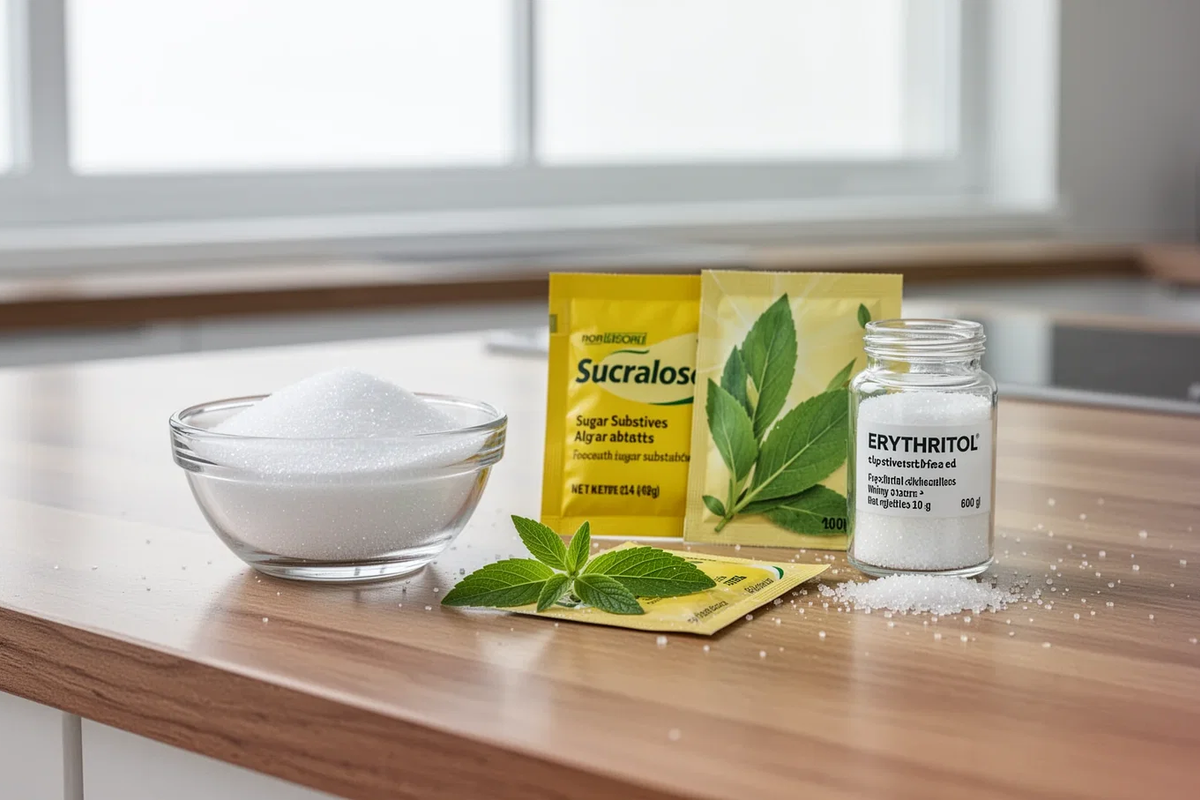
Artificial Sweeteners: Safety, Weight Loss, and Health Facts
The European Food Safety Authority (EFSA) has concluded its rigorous re-assessment of sucralose (E 955), reaffirming its safety profile for consumers within existing regulatory frameworks. This updated opinion provides critical clarity for both the food industry and healthcare providers managing patients with dietary restrictions.
Key Clinical Takeaways:
- EFSA confirms that sucralose (E 955) remains safe for its currently authorized uses as a food additive.
- The re-evaluation included a proposed extension of sucralose use within “fine bakery wares” (Food Category 7.2).
- New proposed amendments to purity criteria and specifications aim to further ensure consumer safety and chemical integrity.
For decades, the medical community has grappled with the paradox of sugar reduction: how to mitigate the morbidity associated with high sucrose intake without introducing unforeseen toxicological risks. The recent EFSA opinion addresses this gap, providing a data-driven update on one of the most ubiquitous non-nutritive sweeteners in the global food supply. By evaluating the additive against modern safety standards, the authority has bridged the gap between legacy approvals and contemporary clinical evidence.
The Regulatory Mandate and Hazard Characterisation
The re-evaluation of sucralose is not an isolated event but part of a systemic audit established by the European Commission (EC) to review all food additives approved before January 20, 2009. This program ensures that additives previously cleared by the EU’s Scientific Committee on Food (SCF)—which last evaluated E 955 in 2000—are scrutinized using current scientific methodologies.
The EFSA Panel on Food Additives and Flavourings (FAF Panel) employed a structured protocol focused on hazard identification and hazard characterisation. This process involves determining the minimum amount of a substance in the diet that could potentially harm a healthy person and assessing the actual level of exposure within the EU population. To reach this conclusion, the panel analyzed a vast dataset, including studies published between January 1999 and March 2025, as well as specific data submitted by applicants seeking to expand the additive’s use.
“Sucralose (E 955) is a food additive used as a non-nutritive sweetener. It provides sweetness without adding calories or nutritional value.”
This rigorous approach ensures that the “safe” designation is not merely a carry-over from previous decades but is supported by a comprehensive literature review and updated toxicological data. For pharmaceutical and food enterprises navigating these evolving EU regulations, maintaining strict adherence to these updated safety protocols is paramount. Many organizations are currently retaining healthcare compliance attorneys to ensure their additive profiles and labeling meet the latest EFSA specifications.
Purity Criteria and the Expansion into Bakery Wares
A pivotal aspect of the February 2026 opinion is the EFSA’s suggestion to amend the specifications of sucralose, particularly regarding purity criteria. In the realm of food chemistry, purity is not merely a quality metric but a safety imperative; ensuring that the manufacturing process does not introduce harmful by-products is essential for maintaining the additive’s non-toxic status.
The FAF Panel also addressed the proposed extension of sucralose use in “fine bakery wares,” categorized as Food Category (FC) 7.2. Under Regulation (EC) No 1333/2008, sucralose use in this category was previously restricted to cornets and wafers for ice-cream that contained no added sugar. The current evaluation sought to determine if expanding this use to other fine bakery products would increase consumer exposure to unsafe levels. Given that sucralose is approximately 600 times sweeter than sucrose, the volume required to achieve sweetness is minimal, which supports the safety of such an extension.
While the EFSA’s findings are reassuring, the clinical application of non-nutritive sweeteners varies significantly based on a patient’s metabolic health. For individuals navigating the transition from high-sugar diets to artificial alternatives, professional guidance is necessary to avoid nutritional imbalances. It’s highly recommended that patients consult with board-certified nutritionists to create a sustainable dietary plan that leverages these safe alternatives without compromising overall metabolic wellness.
The Broader Landscape of Non-Nutritive Sweeteners
The re-evaluation of E 955 is part of a broader trend of sweetener scrutiny. The EFSA has systematically reviewed several other additives to ensure they meet current safety benchmarks. This timeline of re-evaluations includes:
- Aspartame (E 951) in 2013
- Thaumatin (E 957) in 2021
- Neohesperidine DC (E 959) in 2022
- Erythritol (E 968) in 2023
- Saccharins (E 954) in 2024
- Acesulfame K (E 950) and Neotame (E 961) in 2025
This iterative process reflects a commitment to evolving scientific evidence. It acknowledges that as our understanding of the human microbiome and endocrine response evolves, so too must our regulatory thresholds. The consistency of these findings—confirming the safety of these sweeteners in their authorized uses—provides a stable framework for public health initiatives aimed at reducing global sugar consumption.
However, the medical community remains attentive to the nuances of additive use. For instance, concerns regarding the thermal stability of certain sweeteners, such as the potential for harmful substances to form when heated above 120 °C, underscore the importance of using these additives according to specified guidelines. Patients with complex endocrine profiles or those managing chronic glycemic instability should not rely on general safety declarations alone. Working with specialized endocrinologists allows for a personalized approach to sugar replacement that considers individual hormonal responses and long-term health outcomes.
The EFSA’s reaffirmation of sucralose’s safety provides a critical baseline for the food industry and a reliable data point for clinicians. As the scientific community continues to explore the long-term interaction between non-nutritive sweeteners and human physiology, the focus will likely shift toward personalized nutrition and the precision of purity standards. For those seeking to integrate these findings into a clinical practice or a corporate compliance strategy, utilizing vetted healthcare professionals ensures that the transition toward sugar-free alternatives is both safe and scientifically grounded.
Disclaimer: The information provided in this article is for educational and scientific communication purposes only and does not constitute medical advice. Always consult with a qualified healthcare provider regarding any medical condition, diagnosis, or treatment plan.