
Artemis II: NASA’s Lunar Mission Return and Solar Eclipse Highlights
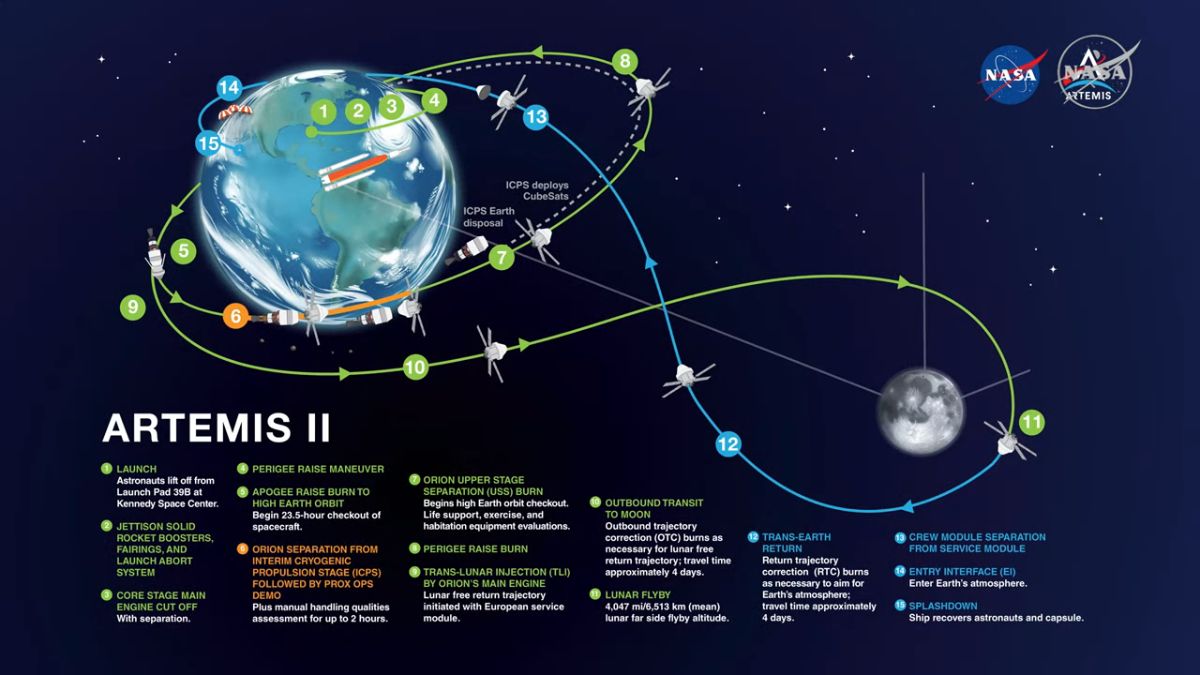
The crew of NASA’s Artemis II mission has begun their transit back to Earth after completing a lunar flyby, capturing high-resolution imagery of a solar eclipse and the Earth from deep space.
During the return leg of the journey, the astronauts aboard the Orion spacecraft established communication with the International Space Station (ISS), marking a critical coordination point as the vessel exits the lunar vicinity. The mission’s trajectory allowed the crew to witness a solar eclipse, an event documented in the first official photographs released from the sobrevuelo lunar, which also feature the Earth viewed from a distance.
Lunar Far Side and Scientific Objectives
The mission’s path provided the crew with a unique vantage point of the far side of the Moon. Unlike the near side, which is tidally locked toward Earth, the far side remains hidden from terrestrial observation, making it a primary target for scientific investigation. Researchers prioritize this region to study the Moon’s crustal asymmetry and to conduct radio astronomy shielded from the electronic interference emanating from Earth.
Orion Spacecraft Status and Trajectory
The Orion spacecraft is currently executing the maneuvers required for atmospheric reentry. Following the lunar swing-by, the vehicle is utilizing its propulsion systems to align with the precise entry corridor necessary for a safe descent. NASA flight controllers are monitoring the spacecraft’s telemetry to ensure the heat shield and navigation systems are prepared for the transition from the vacuum of space to Earth’s atmosphere.
The next phase of the mission involves the final descent and the scheduled recovery of the crew and the Orion capsule by recovery teams.