Artemis II Moon Mission: Key Highlights and Astronaut Reflections
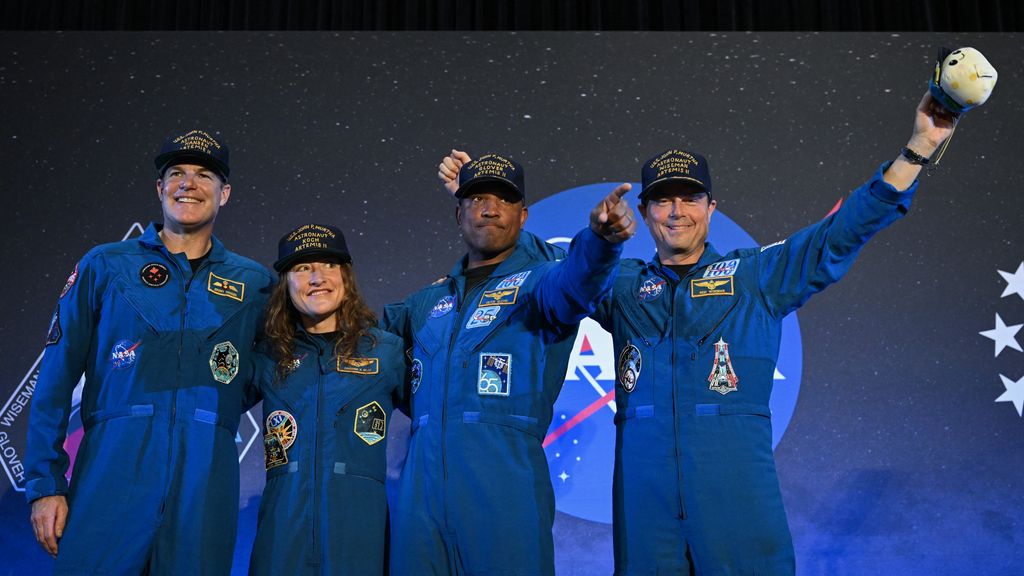
The Artemis II crew splashed down in the Pacific Ocean off the coast of California on Friday, April 10, 2026, concluding a mission that marked the first crewed lunar flyby in 50 years. The four astronauts—Reid Wiseman, Victor Glover, Christina Koch, and Jeremy Hansen—returned to Earth after a journey lasting 9 days, 1 hour, and 32 minutes.
Launched on April 1 aboard the Space Launch System (SLS) rocket, the crew traveled in the Orion spacecraft, which the astronauts named Integrity. The mission reached its primary objective on Monday, April 6, when the crew completed a seven-hour lunar flyby. During this phase, the astronauts captured images of the lunar far side and witnessed a solar eclipse from the Moon.
Upon returning to Earth’s atmosphere, the Orion capsule reached speeds approximately 32 times the speed of sound. The descent concluded at 8:07 p.m. EDT on Friday, following a series of critical maneuvers, including a final trajectory-course-correction burn and the configuration of the cabin for reentry.
Reflecting on the experience after reuniting with their families in Houston, the crew described the perspective gained from deep space. One astronaut characterized Earth as a “lifeboat in the universe,” even as others noted the distinct feeling of returning to the planet. During the flyby, the crew described the view of the lunar surface as “sci-fi.”
The mission was not without technical complications, including reports of a clogged toilet aboard the spacecraft. Despite this, NASA confirmed that the flight successfully tested deep space systems and the Orion vehicle’s capability to sustain a crew during a lunar transit.
The Orion spacecraft is designed as the primary exploration vehicle for the Artemis program, intended to carry crews to the Moon and eventually serve as a stepping stone for missions to Mars. This flight served as a critical test of the ground systems and the heavy-lift capabilities of the SLS rocket.
The data collected during the flight and the successful recovery of the crew now provide the baseline for NASA’s planned lunar surface missions.