
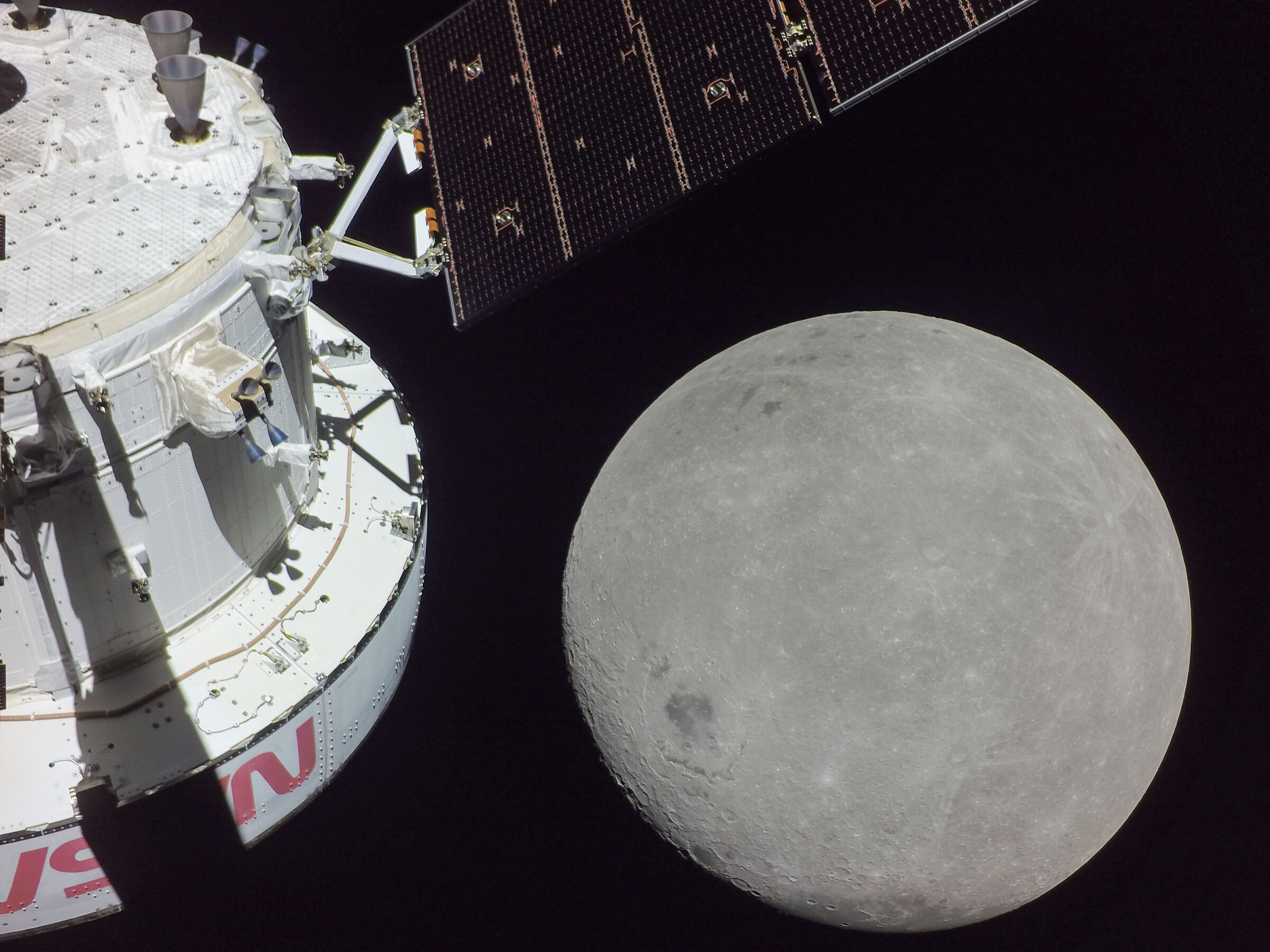
Artemis II Mission: New Space Distance Record Before Lunar Far Side Flyby
Four astronauts aboard the Orion spacecraft completed a flyby of the Moon on April 6, 2026, marking a critical milestone in NASA’s Artemis II mission.
The crew—comprising Americans Reid Wiseman, Victor Glover, and Christina Koch, and Canadian Jeremy Hansen—traveled more than 400,000 kilometers from Earth, establishing a record distance in space before reaching the lunar vicinity.
Lunar Proximity and Communications Blackout
The Orion spacecraft executed its lunar flyby at an altitude of approximately 6,500 kilometers above the surface. This trajectory enabled the crew to observe the Moon’s far side, a region that remains invisible from Earth. During this passage, the physical position of the Moon blocked all signals, resulting in a communications blackout that lasted approximately 40 minutes.
While positioned behind the Moon, the astronauts observed distinct reliefs and marked craters, noting subtle variations in shadow across the lunar landscape. The crew similarly witnessed both an Earthrise and an Earthset from their vantage point in deep space.
Mission Infrastructure and Historic Context
Artemis II is the first crewed mission to travel toward the Moon since Apollo 17, the last manned lunar mission in 1972. To facilitate public monitoring of the event, NASA utilized the Artemis Real-Time Orbit Website (AROW), an interactive tool that allowed for the real-time visualization of the Orion spacecraft’s position, and trajectory.
The crew is currently on the return journey to Earth.