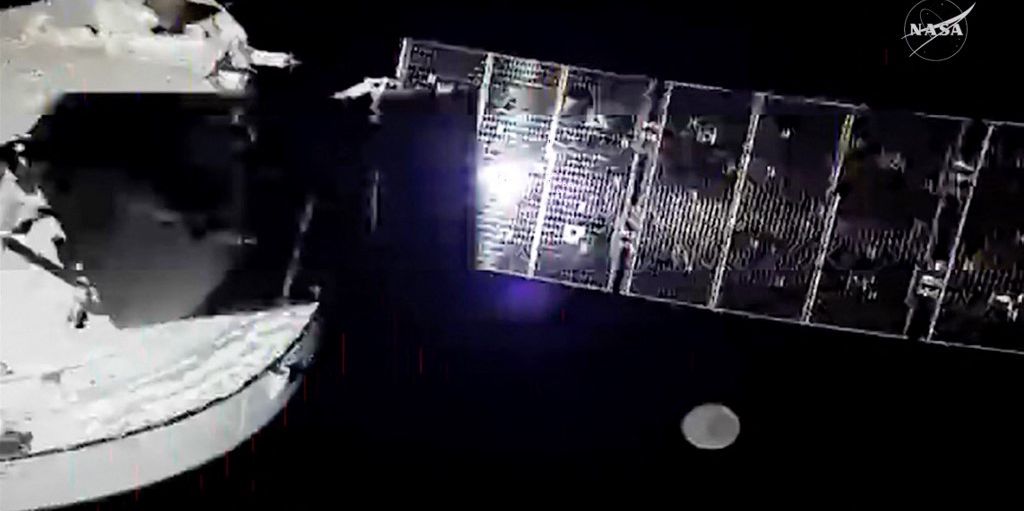
Artemis 2 Astronauts Break Human Distance Record During Moon Flyby
The Artemis 2 crew has surpassed the furthest distance ever traveled by humans in space, exceeding a record of 400,171 kilometers as they begin their flyby of the Moon.
This milestone marks the first time in more than 50 years that astronauts have returned to the vicinity of the lunar surface. The mission represents a critical phase of the Artemis program, testing the capabilities of the spacecraft and the endurance of the crew in deep space environments before future attempts to land humans on the lunar south pole.
Lunar Mapping and Commemoration
Concurrent with the mission’s trajectory, a lunar crater has been officially named “Carroll.” The designation serves as a tribute to the spouse of the Artemis 2 mission commander, integrating personal recognition into the formal cartography of the lunar surface.
Mission Objectives and Trajectory
The crew is currently executing a lunar flyby, a maneuver designed to validate the life-support systems and communication arrays of the Orion spacecraft. Unlike the Apollo missions of the previous century, the Artemis 2 flight is a crewed demonstration intended to ensure all systems are operational for the subsequent Artemis 3 mission, which aims for a crewed lunar landing.
The achievement of the distance record is a technical requirement of the flyby trajectory, pushing the crew beyond the previous boundaries of human exploration to ensure the spacecraft can safely navigate the transit back to Earth from deep space.
The mission continues toward its scheduled return, with NASA monitoring the telemetry and health of the crew as they maintain their course away from Earth.