Ars Live: Cloud Data Centers Become Military Targets in Iran War, Ukraine
Amazon data centers in the Middle East faced military attacks for the first time this year, while Russia and Ukraine exchanged an unprecedented flurry of drone strikes on each other’s digital infrastructure, according to Ars Technica.
These strikes highlight the vulnerability of cloud services that modern societies rely on daily.
To examine the future of these networks, Ars Technica hosted a live discussion featuring Joseph Jarnecki of the Royal United Services Institute, speaking with tech reporter Jeremy Hsu. Jarnecki explained why public and private cloud data centers have increasingly turned into military targets during the 2026 Iran war and the ongoing full-scale invasion of Ukraine.
“We see an increasing acknowledgement and fact of dual use in particularly the public cloud, but also just across the board in private cloud data centers as well,” said Joseph Jarnecki of the Royal United Services Institute.
Militaries utilize compute functions inside these cloud services for everyday tasks such as human resources and resource management, alongside battlefield management systems. Jarnecki said that once a military relies on civilian infrastructure, international law and standard targeting principles can classify it as a military object of interest to an adversary.
Relatively cheap kamikaze drones can inflict disproportionate economic damage and trigger widespread cloud outages, Jarnecki stated during the live event.
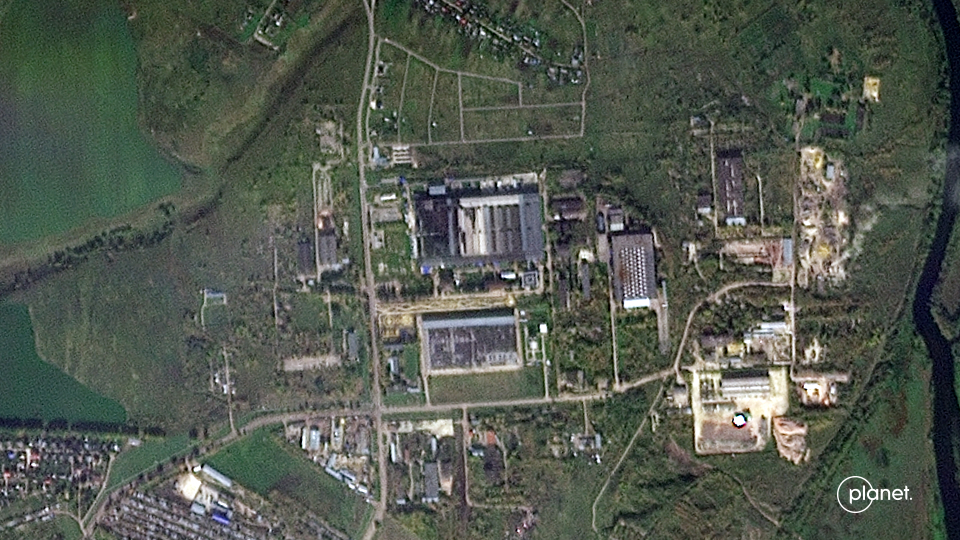
“The second reason that we’ve seen targeting particularly in Russia’s largest data centers or some of Russia’s largest public cloud data centers like Yandex, as well as American hyperscalers that are based in the Gulf, is to impose economic cost in a way that would be disadvantageous for an adversary and would otherwise be quite difficult to impose in other ways,” Jarnecki told Ars Technica.
Jarnecki estimated that the cost ratio between cheap munitions and high-value installations is substantial. Comparing Iranian Shahed drones to the heavy investments made by Amazon Web Services and other hyperscalers in the Gulf, he put the ratio “very, very conservatively at 100X or even more.”

Hyperscalers like Amazon, Google, Microsoft, and Meta face growing pressure to secure their infrastructure. When Russian President Vladimir Putin ordered the full-scale invasion of Ukraine in February 2022, Ukraine anticipated these risks and carried out a large-scale cloud migration to safeguard its digital assets.