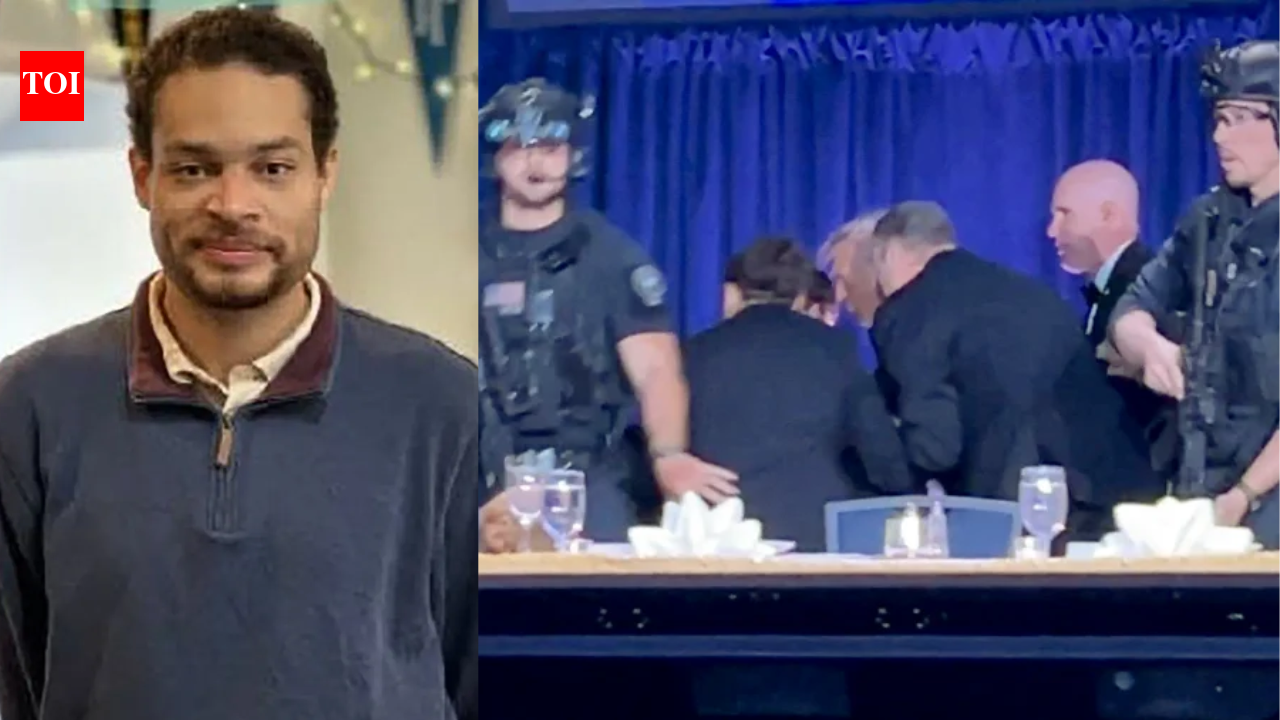
Armed Suspect Breaches White House Correspondents’ Dinner Security, Engages Law Enforcement Before Arrest
On April 25, 2026, a man staying at the Hilton Washington DC hotel breached outer security perimeters, entered the White House Correspondents’ Association dinner venue armed, and exchanged fire with law enforcement before being subdued by Secret Service agents near a checkpoint—exploiting a critical vulnerability in layered security protocols that allowed an individual with no prior criminal record to bypass metal detectors and approach a high-profile gathering of journalists, politicians, and celebrities.
The incident has reignited a national debate over event security at politically sensitive gatherings, particularly those hosted at hotels rather than federal facilities. Even as the White House Correspondents’ Dinner has historically relied on a hybrid model—combining Secret Service oversight with private venue security—the 2026 breach exposed gaps in the outer perimeter screening process, where guests and staff entering through hotel entrances were not subjected to the same magnetometer checks applied at the main event entrance. Investigators confirm the suspect, identified as 34-year-old Daniel Reeves of Arlington, Virginia, checked into the Hilton on April 23 and moved freely between the hotel lobby, ballroom corridors, and the dinner venue without triggering alarms, despite carrying a concealed 9mm semi-automatic pistol. This failure is not isolated. In 2019, a similar incident occurred when a protester breached security at the Gridiron Club dinner using a press credential loophole. Yet unlike that non-violent intrusion, the 2026 shooting resulted in two law enforcement officers sustaining non-life-threatening injuries and raised urgent questions about the adequacy of current security frameworks for events hosted at private hotels that serve as de facto extensions of federal security zones. According to a 2024 Government Accountability Office report, over 60% of high-profile political gatherings in Washington D.C. Now occur at hotels or conference centers, creating jurisdictional ambiguities between federal protective services and private security contractors.
“When a hotel becomes an extension of a National Special Security Event zone, the burden of screening cannot fall solely on private contractors using inconsistent protocols. We demand federal standards that apply uniformly across all access points, not just the main ballroom doors.”
— Maria Thompson, former Deputy Assistant Director of the U.S. Secret Service, now Senior Fellow at the Bipartisan Policy Center The fallout extends beyond immediate safety concerns. Local businesses in the Foggy Bottom and West Conclude neighborhoods report increased anxiety among patrons, with hotel occupancy rates for upcoming diplomatic events already showing a 12% decline compared to the same period in 2025, according to data from the D.C. Hotel Association. Municipal leaders are now reviewing Chapter 24 of the D.C. Municipal Regulations, which governs private security operations at public events, to determine whether current licensing requirements for contracted guards are sufficient to detect concealed weapons in high-risk environments.
“We’re not just talking about adding more metal detectors. We need integrated threat assessment—behavioral analysis, AI-assisted surveillance, and real-time communication between hotel staff, private security, and federal agents. Right now, those systems don’t talk to each other.”
— Councilmember Kenyan McDuffie, Chair of the D.C. Council’s Committee on Judiciary and Public Safety This incident underscores a growing challenge for urban centers hosting national events: how to maintain accessibility without compromising safety. For event planners, corporate security teams, and municipal agencies, the solution lies in upgrading layered defense strategies. Facilities seeking to close these gaps are turning to emergency planning consultants to conduct vulnerability assessments and redesign access control flows. Simultaneously, organizations are consulting civil rights attorneys to ensure enhanced screening measures comply with Fourth Amendment protections and public accommodation laws—particularly as proposals for mandatory bag checks and biometric screening at hotel entrances gain traction. Long-term implications extend into the hospitality industry’s liability landscape. Hotels hosting NSSE-designated events may soon face new federal mandates under the Support Anti-Terrorism by Fostering Effective Technologies Act (SAFETY Act), which could require certification of private security vendors and standardized screening protocols. Legal experts anticipate a wave of litigation if future incidents reveal negligence in duty of care, pushing hospitality chains to invest in integrated security platforms that combine weapon detection, facial recognition, and real-time threat intelligence—services increasingly provided by specialized urban security integrators operating in the D.C. Metro area. As Washington recalibrates its approach to securing semi-public events, the 2026 Correspondents’ Dinner shooting serves as a stark reminder that security is only as strong as its weakest link—and in an era of evolving threats, that link often lies not at the front door, but in the side entrance of a hotel ballroom. For professionals tasked with safeguarding public gatherings, the path forward demands not just more technology, but better coordination, clearer accountability, and a renewed commitment to treating every access point as a potential vulnerability—one that can be addressed only by engaging verified experts in security planning, legal compliance, and threat mitigation through trusted directories that connect need with capability.